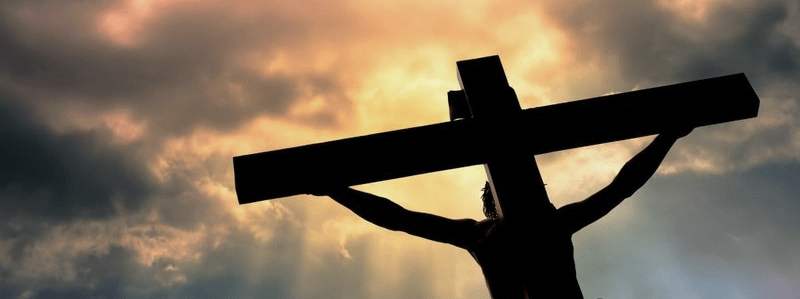
This April 2025 Christians will celebrate Easter. This feast is a celebration and commemoration of what took place in history, almost exactly 2,000 years ago in Jerusalem. It can be considered as the pivot of world history, bringing in a change that reverberates still around the world today.
In this blog post and the next I want to explore the deep meaning first of Jesus’ death, and then of his resurrection from the dead, for these are the events we commemorate each Easter.
Jesus’ death was, in one sense, a grave miscarriage of justice: the Roman governor, pressured by self-righteous jealous religious leaders who stirred up the crowd against Jesus, condemned the innocent holy prophet to die. But there is much more to it than this. Jesus himself, the night before his crucifixion, said that his blood would be shed “for the forgiveness of sins”.
It is a little-known fact that on three occasions the Gospels relate how Jesus predicted not only his death but also his resurrection! Referring to his death he said he would “give his life as a ransom for many”, and as the “Good Shepherd” he would “lay down his life for his sheep”. In other words, in Jesus’ understanding, his death was for the benefit of others, indeed for their salvation, for he came, he said, “to seek and to save the lost”.
The reason why Christians celebrate the death of Christ and make an instrument of torture – the Cross – a symbol of their faith, is that they see it as having accomplished a work of atonement for their sins. Most religions see that sins have to be punished or “paid for”, and our conscience admits that as guilty offenders we deserve God’s righteous punishment. But while other religions propose that we can obtain salvation by the good works that we are able to do to “pay for” our sins, Christianity gives us a vitally different message. We need to realise that we cannot ever “pay for” our sins however much good we seek to do, because we ought to do those good things anyway. Instead it is Jesus who came to “pay for our sins”, to make atonement, and he did that by dying “for us”.
This is why the Christian message is called “Good News”. This is why the death of Jesus is celebrated in churches throughout the world. It was the accomplishing of our salvation, as Jesus’ work of atonement makes possible the forgiveness of our sins. It is the only objective grounds upon which a holy and just God can offer free forgiveness while fully respecting the demands of justice: the just penalty we deserve was taken by Jesus. Why? Because he loves us! His death for our salvation is the supreme demonstration of God’s love and mercy towards us.
On the cross Jesus cried out, “It is finished!” He was telling us that he has finally accomplished his atoning work. In anticipation he had said in prayer to God his Father the night before he died: “I have finished the work you gave me to do”.
This does not mean that everyone is thereby automatically forgiven; every one of us needs to ask our Saviour to forgive us personally, on the basis of his death for us. We need to turn from our sins and turn to Jesus in prayer; we need to thank him for his sacrifice which makes forgiveness possible. Then we must receive him as our Saviour and commit ourselves personally to follow him as the new Lord of our lives.
Clive Every-Clayton
 Authentic Hope for Answers
Leave a comment