Some inescapable basics

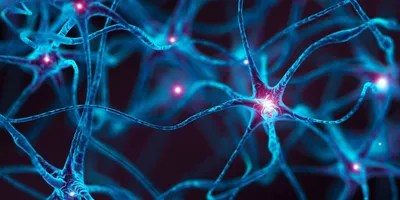
Our desire for authentic answers shows that we are rational thinkers, curious to understand our world and ourselves (and others). We are endowed with a mind which in some undecipherable way works in and through our brain. Our brain is the most complicated thing known to mankind; we all have one, and its performance capacity is amazing. Where did it come from? How is the mind involved in the atomic movements within the brain? These questions are beyond human understanding; they are the very mystery of human life.

Atheistic scientific materialism would have us believe that all our personal thinking is nothing other than the complex movements of the brain – that ultimately, we do not have personal freedom to think and understand truth because we are simply part of the cosmic machine. But we find that explanation unacceptable; it reduces us to robots with no freedom of choice, no real love, and ultimately no meaning either. The philosophy of scientific materialism does not provide any serious authentic answers to our very real hunger for finding truth about ourselves. Such “answers” undermine any hope for truth about our human reality. That is why societies dominated by that philosophy are struggling with mental health issues, because without some acceptable answers our human existence is bound to suffer both individually and in our social sphere. Bereft of wise moral absolutes, without meaning or purpose to their human existence, people don’t know where they are going and have no uplifting hope for their future. 

This is why people are more seriously reconsidering the Christian framework in which our many existential questions do find answers that are both reasonable and fulfilling. There is authentic hope for answers in studying the Bible: if it is the inspired communication of our Creator God, it should provide the answers our hearts long for. Does it? Well, yes, it does! This is what Christians realise, and though Christian believers do not necessarily understand all the answers, their source-book, the Bible, furnishes light enough to lead them out of the darkness of uncertainty and insecurity, into a life – when one believes in Jesus as Lord and Savour – that is the most fulfilling life possible. Jesus said, “I have come that they might have life, and have it abundantly”. He declared “I am the way, the truth, and the life”; and again, “whoever believes in me has eternal life” (John 10.10, 14.6, 3.36). He was so perfect in life that when he was killed, he came back to life. He, of all people who have ever lived, is totally worth following, and untold millions throughout the world have found that he does indeed bring into our lives a spiritual dynamic that makes sense and provides deep joy.

As the scientific materialist worldview has no absolute source of wisdom for moral questions, the typical outcome is to adopt a hedonistic outlook, living for personal pleasure. This is just selfishness by another name, and though it seems promising at first, its promises turn out to be illusions of a happiness that is never fulfilled, always wanting more, and never at peace. It takes the wisdom of the Bible to teach us that true happiness, blessedness, and fulfilment come not by giving free rein to our lusts, but by denying our evil tendencies and committing to follow that which is good. And who defines the true good? Well, only God: he alone is perfectly good, and wants to lead us into the true, deep, and meaningful happiness that comes from the real good life, a life that the Bible calls blessed.

Clive Every-Clayton

God – an unavoidable inconvenience?

When an atheist like André Comte-Sponville admits he’d like to be able to believe in a God who loves him and is kind and gives good things to him, he commits two mistakes. Firstly, his definition of God sums up only the positives of the best kind of God he could envisage, voluntarily overlooking God’s more distasteful attributes.  Secondly, he seems to think that people can just imagine God anyhow they like – little realising that God is objectively how he is (existing, really there, with all his divine attributes intact), whatever people may think about him.

More logical atheists have other ways of ousting God, one of which is to deny that he is the Creator of mankind, pretexting that evolution, including macroevolution, suffices to explain our human existence. Erudite philosopher and theologian R.C. Sproul, writing concerning modern secularists who adopt this evolutionary viewpoint, asks: “Why would they be happy to find out that they are a cosmic accident and that their final destiny is annihilation?” This, for many who have no clear Christian faith, is the logical outcome of their atheistic presupposition; they accept unthinkingly that they must have issued forth from a mass of confused and chaotic matter which gives them neither purpose, nor meaning, nor hope. Why do people believe in such a worldview? Dr. Sproul esteems there is “only one answer: evolution offers people an escape from accountability. When we die it is over. We don’t have to worry about facing a holy and righteous Creator.”  

The deep-down human fear of such accountability is an unpleasant apprehension underlying the rejecting of God: the simple way to deal with the dread of an ultimate divine judgment on our lives is to deny that there is a Creator and Judge. “But if macroevolution is in fact true,” the theologian-philosopher continues, “we should be in utter despair: we would have to recognise that we are utterly insignificant and that our lives and labour are meaningless”.

Jordan B. Peterson in his latest book intelligently proposes that the reality of personality is fundamental to existence, and particularly to our human reality: he reminds his readers that this chimes well with the Bible’s basic statement that we were created in the image of God, so ultimate reality (God himself) would be personal. “The idea that we are reflections of the divine nature is valid,” he concludes.  

He strikingly goes on to propose that “perhaps our reductive materialism is a reflection of something worse than mere ignorance: maybe we insist on the deadness and intrinsic meaninglessness of the world to rationalise our unwillingness to accept the immense burden of opportunity and obligation that a true understanding of our place in a truly meaningful world would necessitate”. He dares to conclude: “Perhaps it is not religion that is the opiate of the masses. Perhaps it is instead that a rationalist, materialist atheism is the camouflage of the irresponsible”!!  

As modern intellectual leaders like Peterson discern and expose the atheism that causes our present hopelessness and meaninglessness, some are turning again to the inspired basis of Genesis 1.26-27: “God said, ‘Let us make man in our image, after our likeness’ … So God created man in his own image, in the image of God he created him; male and female he created them”. This foundational fact – and this alone – furnishes the rational basis for our human value and meaning. Our species has the high calling of having been created in God’s likeness at the beginning – though we have fallen away from that likeness by turning from God. Without this key we cannot understand ourselves.

Clive Every-Clayton

Answering the problem of suffering (part 1)

Many atheists think that the problem of suffering is sufficient to prove that a good God doesn’t exist. They are wrong again here, and I will tell you why.

Firstly, let’s think about a “good” God. Goodness is not only kindness and compassion, but also uprightness, justice, decency, holiness. The good God who exists is both loving, and holy. His wisdom leads him to regulate human conduct by his commandments which issue both from his holiness and from his love. This means that the holy human life, keeping God’s commandments, is actually the happiest; it is the best way for human beings to enjoy life and find fulfilment. It follows that sinful behaviour is not the way of true happiness.

Secondly, God has put his creatures in a context where they are answerable to him for the way they behave. He is discontent with human disobedience and sin but in his kindness, he warns people (by their conscience as well as by his Word) that their evil deeds will be sanctioned. This is an inescapable element of our reality. God did not create us all so we could harm people and wreak havoc with his creation with impunity. He is and ever will be the ultimate Master of all his creation and the judge of all his creatures. This is an element of the Christian position that is seldom raised in dealing with the atheist’s objection concerning the problem of pain and suffering, but it is essential to the biblical answer.

Thirdly, punishment is not nice. By its very nature it must hurt, or it is no penalty at all. The ultimate punishment for unrepentant sinners is eternal hell, and this is depicted as terrible suffering. Indeed, it is so awful that biblical prophets, apostles, and the Lord Jesus himself warn everyone most earnestly to turn from the way of wickedness and find the full and free forgiveness that God in his grace offers them, through the work and promises of Jesus. The fact that forgiveness and acceptance and eternal life is graciously offered by our Saviour shows that God is no monster – he is glad to forgive and welcome the sinner who repents and turns to him. But the Christian cannot escape the difficulty by saying that all will go to heaven in the end: what the believer can say is that God will judge rightly. The biblical expression, “God will render to each one according to his deeds” enshrines the principle of exact justice: no one will be punished more (or less) that they deserve, according to the light they received and their actual behaviour.

Now no warning that God might give about this eternal suffering would make any impact – nor could even be understood – if there was no such thing as suffering in this life. God therefore allowed suffering to be a part of our experience, so that we can correctly understand what eternal suffering would be like, in order to avoid it. He has chosen not to make our present suffering correspond exactly to our misdeeds; if he did, we would rightly complain that he is forcing us to be good. He desires that our obedience should be disinterested as far as our present circumstances are concerned. He even warns his children that they will suffer for being good in an evil world. He encourages them to be holy not for the gain they will get, but to give pleasure to their Master. Many of Jesus’ apostles suffered for their faith, and the holiest person ever – Jesus – suffered worst of all!

Clive Every-Clayton

The best argument

I listen occasionally to podcasts where Christian apologists discuss with atheists about the existence of God. They are always stimulating and stretch the mind as the arguments flow from side to side. The protagonists are often erudite professors, renowned unbelievers and very able defenders of the faith, yet the atmosphere remains convivial rather than adversarial. One can learn a lot from following such debates, in which Christians like Justin Brierly and Glen Scrivener excel. 

And yet, time and again, I feel that there is a false debate going on; the discussion remains at a theoretical level – a purely philosophical effort to find the best argument. Sometimes the same old reasons come round again and again, like the so-called problem of evil and suffering: how could a good God allow such horrors? Some good answers are proposed, but I think to myself, there is a dimension that is seriously missing to this debate. Let me explain.

It is one thing to discuss the possibility of there being a divine ultimate Being, the Creator of the universe with extraordinary intelligence who made man in his image, responsible to him. It is quite another to affirm that this God has actually showed up on earth, has walked and talked among us, and has left a lot of wisdom that we might do well to listen to. The person of Jesus, the incarnate Son of God, is too often absent from these debates, and they remain purely theoretical, with little consideration given to how understanding Jesus would make any difference to our lives. Because if God became incarnate in Jesus, there are many serious consequences that need to be taken into account.

In fact, the apologists who support the Christian faith would do better if they shared more of who Jesus was and what he does in the lives of those who believe. I firmly believe that when all is said and done, the best “argument” for God’s existence is the person and ministry of Jesus 2,000 years ago in history. We have four reliable accounts of his teaching, his miracles, his claims, his holiness of life – accounts that complement and confirm each other and have the ring of truth. Those who spend time in philosophical speculations would do well to change their whole attitude and dare to listen carefully to the extraordinary words of Jesus and properly weigh up their truth.

We’ve all heard the phrase “the truth shall make you free” which is often quoted by the likes of Jordan Peterson and other modern thinkers. What is not so often made clear is the full context of that quotation. It was actually Jesus who said it; but more importantly he preceded it by insisting that it is his words that bring the truth. Here’s the full quote as he addresses those who are beginning to believe in him: “If you hold to my teaching, you are really my disciples. Then you will know the truth, and the truth will set you free” (John 8.31-32). This astounding claim could come only from one who knows absolute truth! Jesus is saying that he brings truth – like truth revealed from God himself – and when we grasp and hold onto his truth, we will be made free.

His Jewish listeners rightly wondered what they would be free from, claiming they had never been slaves to anyone, so Jesus explains that he can deliver us from slavery to sin! This also brings the theoretical discussion down to a challenge to turn from sin to good living that would test the sincerity of the seeker!

Clive Every-Clayton

Atheism’s hollow response

Following on from the eight areas where Genesis 1.26-28 lays a positive basis for understanding various aspects of our human situation, it is interesting to see how the scientific materialist worldview compares. While it seems that the biblical worldview corresponds very well with our aspiration for human flourishing, what can be the result of taking an atheistic position as our starting point? Let’s take up the same eight points again.

  1. Does atheistic materialism honour our human capacity for rationality? C.S. Lewis saw with his clear rational thinking that you cannot value human reason on the basis of materialistic evolution. “Something beyond Nature operates whenever we reason”, he wrote. “When you are asked to believe in Reason coming from non-reason, you must cry ‘Halt!’, for if you don’t, all thought is discredited.” Rational thought cannot come from mindless, material, godless evolution.
  2. The question of man’s meaning has no answer if the haphazard evolutionary process is all that brought us into being. If we are here by the fortuitous activity of various chemicals, there can be no ultimate meaning for our existence.
  3. Our human value is also reduced to nothing if we are merely a conglomerate of various chemicals. C.E.M. Joad famously listed the chemicals composing our bodies and worked out the modest value of the phosphorus, potash, lime, magnesium, fat, iron, sugar and sulphur! Jesus taught that our value comes from our soul, though our bodies are also valued in Christian thought.
  4. If there is no divine mind behind the creation of humans, there can be no purpose to our existence. We are people who formulate purposes for our daily activity; how could such purposeful persons come forth from purposeless primeval slime? Forming a purpose is the activity of a person. If there is no personal creator, there is no purpose to our existence.
  5. The question of sexual mores, in the absence of revealed Divine wisdom, easily becomes a simple question of personal choice. There may be social pressures ordering our sexual decisions, but ultimately there is no reason why hedonism would not prevail, bringing with it its lot of sexually transmitted diseases and undecipherable feelings of guilt. Louise Perry brings wisdom to this question in her book, “The Case against the Sexual Revolution”.
  6. Our moral judgments can also have no absolute grounding if there is no Creator God. Again C.S. Lewis has some wisdom to share: “If we are to continue to make moral judgments (and we shall) we must believe that the conscience of man is not a product of Nature.” Moral judgment “can only be valid,” he affirms, “if it is an off-shoot of some absolute moral wisdom…which…is not a product of non-moral, non-rational Nature”.
  7. What place to give to God? The atheist, by definition, has no place for God. We are left to our own devices (or vices). All religion is then groundless nonsense. 
  8. What of the essence of religion, if it is not to be in relationship with God? In a godless universe, religious practice is a waste of time and effort, even if 90% of humans practice some kind of religion.

Let me pose two questions as I close. Which of the two worldviews appears the most fulfilling, the most fitting to our human reality? There is a choice to make here.

Then why do people choose atheism? The answer to that question is both simple and vital. “God is light”, says the Bible. Light symbolises truth and holiness. Human people, suffering the effects of man’s fall into sin, do not want to approach a holy God who may well be their judge. They don’t want to be bothered with commandments that limit their freedom to act according to their sinful propensities. Hence the real reason, though admittedly unconscious, why atheists reject God, is that they prefer to go their selfish way without being bothered by the divine requirements. Jesus – who said, “I am the light of the world” – unmasks their hidden motivation: “Light has come into the world,” he said, “and people loved the darkness rather than the light because their works were evil. For everyone who does wicked things hates the light and does not come to the light, lest his works should be exposed” (John 3.19-20).

Clive Every-Clayton

Humanity’s supreme value (part 2)

We continue on the areas where the Genesis statement that God created man in his own image brilliantly illuminates our self-understanding. This key also reveals:

  1. The best arrangement for sex and family life. The verse just following the Creator’s word making man “male and female”, Genesis 1.28, says: “God blessed them and said to them, ‘Be fruitful and multiply’”. He it was who gave humans their sexual appetites and capacity for procreation. He thus instituted the family by bringing Eve to meet Adam, enunciating the principle, “for this reason a man shall leave his father and his mother, and shall cleave to his wife; and they shall become one flesh.” God created the body of the man and the counterpart body of the woman for the purposes of bringing into existence more human beings – in the image of their parents. Sex was God’s idea; he knows how best we should enjoy it – in the security of a committed, unique relationship of mutual love, with a view to founding a family and bringing up children. In the family we can even discern the reflection of the image of a triune God.
  2. The gaining of a due regard for moral truth. God’s holiness is reflected in our conscience. Whether we like it or not, moral truth is inscribed into our inner being, and the voice of conscience makes us aware of the evil of temptation, and the duty of following the good. No materialist explanation of our existence can properly account for this inherent reality we all experience. The biblical fact of being created in the image of a good and holy God alone justifies the supreme value of our conscience (even though it can be tarnished and downgraded by being unheeded). God’s creature works best when following the dictates of holiness that he communicated in his Word by the Holy Spirit.
  3. The understanding of the important place to be given to God. Coming from the hand of a Creator God means that our essential orientation is towards God. All our miseries are ultimately due to man’s turning away from God himself and spurning his wise commandments. The first two of the Ten Commandments insist that God be given the prior place that is his due in our thoughts, worship and behaviour. This is basic wisdom. We “work” best when we follow the Makers instructions. Ignorance of God’s wise and good commands is the way of folly and frustration, not human fulfilment.
  4. The essence of true religion: it lies in our human relationship with God. Man is lost and suffering if he is not in relationship with God – or rather, if that relationship is bad rather than harmonious. True blessedness comes from being loved. God loves his creation, but he detests human wickedness. So long as our hearts are set on selfish disobedience to God’s will, he is displeased with us and we suffer dysfunction. When in repentance we commit to doing his will, expressed in his commandments, we find that he welcomes us and leads us into the way of true happiness. So long as we wander far from God in the selfishness of our sin, our hearts are restless, disquieted, burdened, guilty. But when we see at what cost God seeks to bring us back into a good relationship with himself – when we see the gift of his Son, Jesus Christ, suffering on the cross as he bears our sin and expiates our guilt – and when we hear and heed his call to repent and believe in our Saviour, then we can start a new relationship with God. He forgives our past sins and gives us power to live a life that pleases him, that reflects afresh his holy character and brings us to fulfil the divine purpose and find true fulfilment.

Clive Every-Clayton

Humanity’s supreme value (part 1)

God has given us a key to understanding ourselves and getting the true answers to all the key issues we are concerned about as human beings. That key is on page 1 of the Bible: “God created man in his own image, in the image of God he created him; male and female he created them” (Genesis 1.27). This fundamental fact has remained hidden from philosophers who pay no attention to the Word of God, and this is the cause of their failure to find adequate answers to our existential questions, and the deep reason for our feelings of confusion and lostness. 

To those however who receive this basic truth as wisdom revealed by God himself, this Bible verse proves to be the key to personal fulfilment that eludes atheists and agnostics. It is the essential guideline, the unique basis, for a wide-ranging, wise, beneficial assessment of our human reality in the following eight areas. 

The revelation that at the beginning man was made in God’s image is:

  1. The basis for the value and validity of man’s thinking. If we were the result of an age-long unguided process of chemical matter complexifying itself, there would be no way of fathoming how our physical brain could ever serve the cause of truth. Organic physical material cannot produce rationality. Neither can it create consciousness. The only rational basis for attributing value to our reason is to see our minds as created to reflect the mind of God. Atheistic materialism, if it seeks by reason to justify its philosophy, is obliged to acknowledge that philosophy cannot ground its own value: the value of reason requires the Christian, biblical basis, the revealed fact that we are made in the likeness of an intelligent Creator.
  2. The proper orientation for finding man’s meaning. Godless evolution cannot furnish us with any credible meaning to our existence. Chance can provide neither meaning nor purpose. If we feel that our existence is meaningless, it is because we have missed the essential starting point – we come from the hand of God. Our Creator knows the meaning of his creation.
  3. The proper orientation for our value. Why is a human of more value than a thistle? Both were created by God, but the human was made in God’s image. This gives him supreme value. If you damage a thistle, or kill a cow, no-one turns a hair, but if you kill a human, that’s serious! Man is the crown of God’s creation, the most glorious of all his creatures. The Creator himself attributes such value to man. Jesus said it like this: “What does it profit a man to gain the whole world and forfeit his soul?” (Mark 8.36).
  4. The proper orientation for finding man’s purpose. Chance is haphazard, purposeless. Only a person can formulate a purpose. The great Creator formulated his purpose for human beings when he said that he was creating them in his own image. Man was destined to be a reflection, at the human level, of the divine character – to exhibit God’s holiness and love. Whatever activity people might be engaged in, it is not the work itself that is the essence of their purpose, but the way they do that work. The New Testament calls believers to “do all for the glory of God” (1 Corinthians 10.31). That means in all our human activities we are supposed to show forth something of the glory of God’s nature, his kindness, compassion, goodness, truthfulness and grace.

[Continued in next post]

Clive Every-Clayton

Science points to the Creator

Atheism suffers from ignorance of the most important thing in the entire universe. There are numerous indications of God’s wisdom and power in creation, facts that science has uncovered that prove there must be a supreme Mind behind this amazing creation. Stephen Meyer in his book “Return of the God hypothesis” deals thoroughly with three scientific facts that require a divine Mind. Let me summarise his reasons in simple language.

First, the Big Bang requires Someone who began it: you cannot evoke matter to explain the origin of matter, he writes. The Creator must have been immaterial (spirit), powerful, eternal, and personal. Secondly, the mind-boggling numbers of the constants of physics are so extraordinarily precise that life would not be possible if they were altered even just a tiny bit. Explosions normally result in much disorder and confusion: how then did the Big Bang issue in a created world where order and scientific laws abound, to say nothing of the beauty and the immense number of life forms? Our minds may easily conclude that this must involve an infinite Mind at work. Thirdly, the DNA discovered in every cell of our bodies possesses information encoded in what resembles a language. Scientists realise that wherever we see a language we have to acknowledge the agency of persons. The Creator of DNA must possess personal characteristics.

These three relatively recent scientific discoveries form the basis of a case for the return of the God hypothesis. People are led to believe in God on the basis of scientific facts for which no better explanation can be found. Indeed, scientists who want to hold persistently to their atheism have a hard time refuting these claims that Stephen Meyer backs up with his profound scientific reasoning. 

Atheists cannot simply close their eyes to these discoveries of science and what they imply. Rejecting as a matter of course the very notion of God is to ignore the most important factor in the universe: on the other hand, opening up to the probability of God would open the way to the meaningful and vital answers we need. God our Creator knows those answers. We do well to listen to him. And even if you’re not convinced, it’s worth taking a serious look at the Bible to check it out. There is wisdom to be found on every page!   

It may surprise atheists to know that the Christian faith is evidence based. It is not in conflict with science: rather, modern science developed in the West in the 17th century because the generally accepted Christian faith had established a consensus that the Creator was wise and intelligent and therefore his creation would yield scientific knowledge to those who studied it carefully.

But scientific facts are not the only things that point to God. It is astonishing that so many intelligent people do not grasp the vital fact that the historic person of Jesus Christ was none other than an incarnation of God the Creator! All who take the time and trouble to read and to seriously consider what Jesus said about himself in chapters 5 to 8 of John’s Gospel must admit he made divine claims. And a reading of his life and deeds in the Gospels also reveals his miraculous divine power, his unique sinless holiness and his brilliant teaching on all sorts of things we need to know. God sent his Son into the world to tell us truth we need to understand. Just consider what Jesus said before Pontius Pilate: “For this reason I was born and for this reason I came into the world, to testify to the truth” (John 18.37).

Clive Every-Clayton

Away with religion?

The New Atheists were dedicated to eradicate religion from any place of influence in society. In this they were following in the footsteps of Karl Marx. Marx’s position is bluntly summed up by Professor Carl Truman, in these terms: “if religion is one major means by which the current unjust set of economic relations is maintained, then at the heart of any drive to transform society must lie a pungent and effective criticism of religion”.

It seems to me useful to discern here a principle that deserves to be exposed. Modern-day atheists, thinking that religion is the root of a lot of evil, attack it tooth and nail. “Religion”, of course, is an easy target to hit, for the word englobes all kinds of, quite honestly, ridiculous world-views with some kind of divinity attached (there are approximately 4,000 religions in the world). So under the heading of “religion”, one can find plenty to validly criticise.

I just want to make two points. The first is to consider where Karl Marx’s anti-religion stance ended up: huge persecution against millions of good-living people who, after suffering immense horrors, saw the collapse and failure of the whole atheistic Soviet enterprise. It is worth considering therefore, whether the modern atheistic attack on “religion” may also harm a large number of essentially decent folk, and also bring about a kind of godless society which, instead of raising the total sum of human happiness, actually brings society down to bizarre and awful horrors. Indeed, are we not already witnesses to the effective decline brought on by the insistence on godless “freedom” where selfishness replaces Jesus’ ennobling call to “deny yourself”, where immorality brings about so many broken homes and broken lives, where children suffer most of all, and antagonism and hatred of others replaces the basic principle essential for a harmonious and positive society – “love your neighbour as yourself”? The godless and religion-less influence we see undermining our erstwhile peaceful and relatively happy society should give us pause for thought.

The second point I want to make was well made by Blaise Pascal three centuries ago when he noted: “I see a number of religions in conflict, and therefore all false, except one” (§198/693). I find that “pensée” very clever. Whereas atheists would say, as they find all kind of religions in conflict, that they throw them all out, Pascal has the genius to see that that does not follow logically: one may – indeed could well be – the true one coming from the one true God. “Religions want to be believed on their own authority”, Pascal adds, and they make threats against those who refuse to believe: “I do not believe them on that account”, he wisely says. “But I see Christianity, and find its prophecies” (numerous fulfilments of biblical prophecies he catalogues in several pages of his Pensées); he concludes, “no other religion can do that!”

Society needs a Transcendent Authority to maintain peace, order, and stability; that authority may come from “religion”. But not just any religion will do. We need a “decent religion” such as even Richard Dawkins recognises Christianity to be. We need the one true religion, the religion that comes from our Creator God, a God who is objectively there and who speaks both wisdom, truth, and goodness into the world he created; not “the god of philosophers and scholars” – as Pascal put it in his Memorial; rather, “the God of Jesus Christ” who transformed the thinker’s life as he submitted to his lordship. That’s what we need, both individually and as a guide to society.

Clive Every-Clayton

A better story

I have been busy these last weeks preparing and giving lectures here in the Highlands of Scotland on a better way to conceive of our human reality.

Whether we like it or not, we in the West live in an atmosphere fashioned by a secular mind-set, and through this grid we seek to understand the way people think and behave. Some months ago, certain leading intellectual thinkers, politicians and academics meeting in London insisted that we have not been well served by the modern secular “story” – the worldview beclouding our western society with its morose and unhelpful ideas about our human meaning and value.

These thinkers are proposing a different approach, and although not all would adhere to a religion, there is a basic realisation that without a Transcendent framework, society tends to descend into a kind of hopeless moral relativism that brings on the anguish we see increasingly in the West.

As a Christian, I wholly concur that we need a “better story”, and my lectures have been addressing that need in various areas of our self-understanding. My basic thesis has been that the atheistic materialism underlying the secular story is unhelpful and psychologically damaging. It is a factor contributing to people’s confusion about their human reality, the rise of mental ill health, and the prevailing sense of hopelessness and despair. It is the hidden cause of a lot of the deterioration of our modern society that we have been sadly witnessing these last fifty years or more. 

Why is the materialist-atheist scenario so harmful? Because it proclaims that we all have come ultimately from an impersonal beginning – an immense explosion of energy and matter which, over billions of years, instead of obeying the second law of thermodynamics and deteriorating progressively into total disorder, has somehow managed – by some unaided process – to actually bring about the world we see around us with all its life, variety, beauty, and splendour. The essential blind spot of this “story” is its absence of any original personal Creator as the valorising ground of our human personality.

Dr Francis Schaeffer discerned this years ago, when, commenting on the thesis that “man is the product of the impersonal, plus time plus chance”, he wrote: “no-one has succeeded in finding personality on that basis, though many have tried. It cannot be done”.

This means that if you begin by adopting the atheistic materialist explanation of the origin of all things in an impersonal explosion of matter and energy, there is no way you are going to be able to establish the reality of human personality. That first assumption leads inexorably to an understanding of the human condition which cannot account for – and indeed undermines – all the marvellous enjoyable realities of our personal existence: our intelligence and rationality, our emotional nature, the reality of love, freedom to choose and to exercise our own will, our ability to communicate, and our moral sensitivity. All these much appreciated aspects of our personal lives have no real basis following the story told by secular materialism; it contradicts our well-known reality and would undermine our true personhood. This makes evident the falseness of that story: we know that our personal faculties are real and precious, so any explanation that cannot account for them must be wrong. 

Instead of assumptions that do not explain in positive terms who and what we are – but rather confuse us – what a relief to turn to the “better story” that an infinite and personal Creator made humankind in his image; that both valorises us and truly explains who we really are.

Clive Every-Clayton

Blog at WordPress.com.

Up ↑