The implications of atheism

Atheism is a futile and failing faith, and the sooner society realises that, the better it will be for us all. Yes, atheism is a faith-system, a negative faith perhaps, but a belief which carries serious implications with it. It is failing, because it cannot bear the weight of expectation placed upon it to provide a meaningful and hopeful worldview. So it is futile to trust in such a baseless ideology.

In another blog post I brought out the implications of God being our Creator; now I want to think through some of the implications of atheism.

Atheism denies the Creator; what is left in his place? Chance and necessity. All that exists is the outcome of chance – from the Big Explosion onwards. Guided by no divine mind or wisdom, everything that exists is the result of the hazardous movement of matter and energy.

What then are we? Humans are merely the accumulation of accidental collocations of atoms, thrown up by pure chance. No intelligence guided the process of our evolution; no value can be put on our personal reality – rather we are either sophisticated beasts or impersonal machinery. Our human value is zero, despite our seemingly great capacities.

What is our purpose? Chance can create no purposes. Purposes are the fruit of an intelligent creative mind, such as God’s; but without such a Creator of humankind, there can be no purpose in our existence, no meaning to our lives. This is the deep cause of the rising existential crisis in societies where atheism’s bleak philosophy exerts a predominant influence. Here is the reason for the increasing mental health difficulties experienced by those without any wiser guidelines to show the way. They are psychologically lost.

What use is our intelligence? Can we think or reason our way forward? Impersonal matter – which must be what we are if there is no personal and infinite Creator – has no intellectual capacity at all. The brain merely reacts to impulses; it doesn’t think any more than computers do. But since we do think, the atheistic basis proves unsatisfactory. We can think our way out of atheism, to seek how the Creator has made himself known.

What about moral values? If there is no absolute divine holy and good Creator, there is no objective source for discerning right from wrong. We are simply left with the relativism where each decides for himself; and to prevent the moral chaos that would ensue, authoritarian governments impose what they think is good – the politically correct. And this is often far from the wisest guidance, leading to profound discontent and bitter argument.  

What about truth? The good old definition of truth was, “reality as seen by God”. Now if there’s no God, it becomes just what you or your opponent may “see” as true. So we enter the “post truth” era – the minefield of “your truth” and “my truth”; because there is no absolute truth if God cannot be the grounds for it. And “your truth” or “my truth” may well be merely falsehood or error in disguise.

What about freedom? In the atheist’s materialistic universe there can be no freedom, which is why some thinkers turn to determinism, saying that while we may think we are free, our actions are merely the result of hazardous impacts made on our impersonal brain cells. 

What about suicide? An atheist’s life, thus considered, seems not worth living. This means not that life really is meaningless, but that atheism is hopeless and unliveable. 

Our Creator God, conversely, gives meaning, value, truth, freedom, and purpose to our existence.

Clive Every-Clayton
Reason and revelation

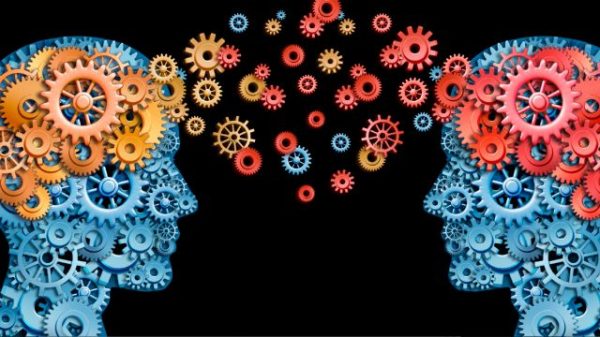
In the search for authentic answers to our existential questions, we can obtain understanding from two sources. The first – that we use every day – is the human faculty of reason. In his book “Miracles”, Oxford don C.S. Lewis wrote: “All knowledge depends on the validity of reasoning… Unless human reasoning is valid, no science can be true”. This seems obvious, when you think about it. You cannot argue against the value of reason; that would be using reason to deny reason. 

So we use our reasoning powers to try to understand what our life is all about. But then C.S. Lewis raises the question of where our human reason came from, and he asserts that the presence of human rationality in the world is a miracle. He was inspired by Professor Haldane who wrote, “If my mental processes are determined wholly by the motions of the atoms in my brain, I have no reason to suppose that my beliefs are true… and hence I have no reason for supposing that my brain be composed of atoms”.

Atheism crashes profoundly against this rational argument, for C.S. Lewis concludes, “we must believe that the consciousness of man is not a product of Nature” – not the result of a long chain of chance, aimless, material processes since the dawn of time. “Nature”, he repeats, “is quite powerless to produce rational thought”.

Yet we are rational beings. Andrew Marr ended his TV programme on evolution by saying, “Man is the truth-seeking primate”. We use our reason every day to test what we think is true. That is the way we are. And the only logical source of those reasoning powers is not impersonal matter, but the Supreme Intelligence of the personal and infinite Creator who made us “in his image”.

So our reasoning faculty itself points us to a reasonable, wise Creator. And God has come to our rescue as we vainly search for something solid on which to ground our search for true answers. He has revealed truth that we need to know. Truth about ourselves, and truth about God.

So as we seek answers to the big questions of life, our reasoning is valid, since it is given to us by our Creator and reflects the supreme Reason with which he acts. Yet our reason has its limits; it needs the enlightenment that can only come from God’s revelation. God’s truth has been revealed in the Bible. “The whole Christian theistic position,” wrote Cornelius van Til, is “the only system of thought that does not destroy human experience to something meaningless”. Atheistic philosophy leads to that meaninglessness; this is the woe of our supposedly post-Christian generation. 

It is reassuring to note, in our supposedly post-truth age, that thinkers are now returning to realise that God alone can furnish the basis for true understanding. Atheism is on the way out; a return to the God of revelation is on the up. And the key truth now more and more put in evidence as the only basis for a hope-filled vision of our human reality, is there on page 1 of the Bible: “In the beginning, God created the heavens and the earth… God created man in his own image, in the image of God he created him; male and female he created them” (Genesis 1.1, 27). 

As God made us and gifted us with reason and speech, so he is ultimate Reason, and he reveals his truth though speech: “In the beginning was the Word (the logos, Reason)”… The Word was God… The Word became flesh” in Jesus (John 1.1-14).

Clive Every-Clayton

Truth and lies

I have noticed that some public figures dare to use the word “lies” to warn the public of sayings and worldviews that do not serve their best interests. A friend of mine was recently deceived by a scam. Quickly realising his mistake he blocked his bank account and so lost no money. We render a great service to people when we warn them of deceit, mistaken thinking, “fake news”, erroneous opinions and false, futile philosophies.

So, for example, the catholic professor Peter Kreeft in a commencement address to students in America, gave a list of ten lies not to believe. Among these lies were, for example, “To think that the most important person in the world is you”; or again, “You need not search for positive truth but for your own truth”, or to see “The exaltation of freedom as an end, not a means to an end”. The young listeners seemed to appreciate such frank talk.

Another erudite thinker is Sharon James whose powerful book is entitled, “The Lies we are told and the Truth we must hold”. Among the lies she warns against are, “That there is no God and no Absolute Morality”, and that “There is no universal truth”. She quotes an astute word of Roger Scruton: “A writer who says that there are no truths, or that all truth is ‘merely relative’, is asking you not to believe him. So don’t”.

Another important book has come from the pen of Rosaria Butterfield. If you don’t know of her already, you ought to. Radically converted from a life-style she would characterise as immoral, this Professor of English has become a very able spokesperson bringing God’s wisdom to bear on the issues of today. Her book is entitled, “Five Lies of our Anti-Christian Age”, and she boldly – and with real experience from where she is coming from – challenges the idea that homosexuality is normal and such sexual orientation represents a person’s core truth. She wisely and winningly contests the idea that feminism is good for the church and for the world, and grasps the nettle of transgender issues. 

So there are big lies out there these days! In John’s Gospel 8.44, Jesus taught that lying is a trait of the Evil One: the devil twists and hides the truth because he realises that God’s truth is that which sets people free – free not only from error and misunderstanding, but free from the devil’s clutches, free from the grip of bad habits, from wicked tendencies, and foul addictions.

The Bible says that “God does not lie” (Titus 1.2) – indeed, “it is impossible for God to lie” (Hebrews 6.18). If we are to get authentic answers to the big questions of our existence, we need TRUTH! And only God knows and can communicate absolute truth. Only he can give us the much needed moral truth too. 

Jesus said, “I am the way, the truth and the life” (John 14.6). He said he brought us “the truth that I heard from God” his Father (John 8.40). Here and here alone is the source of reliable truth and authentic answers. If you haven’t read the Gospels, get a hold of them and read them for yourself. If you come with an open mind, you will be enlightened!

And as you read, pray the prayer of the psalmist: “Guide me in your truth and teach me, for you are God my Saviour and my hope is in you” (Psalm 25.5).

Clive Every-Clayton

The folly of determinism

The other day I heard a Professor of Stanford University, interviewed on BBC’s Radio 4 Today programme, putting forward the notion that everything in the universe is determined, and there is no freedom really. This is the logical outcome when the presupposition of atheistic scientific materialism is accepted: everything comes down to the haphazard movement of atoms of matter since the original Big Bang.

Being interviewed, the Professor frankly acknowledged how “dismal” this seems, when you come to assessing your own life and realise “there’s no ‘Me’ in there”. The interviewer, normally very astute in dealing with current affairs, oddly failed to ask the obvious question that would have unsettled the American author: “What do you yourself think and feel about this philosophy of yours?”

Such a question would reveal the inherent contradiction between the Professor’s thesis and his daily reality. It is impossible to really live in accordance with such a vision of things, which demonstrates the utter stupidity of determinism as a philosophy about real life. No one can, nor does, live according to such a theory. Why did the Professor write his books? Was he determined to do it?? Or what does he make of counter-arguments that propose that a man is free, for example, to execute his writing projects or organise his career moves according to his own best interests?

Determinism is a self-defeating philosophy with no leg to stand on. However profound and sophisticated may be the wording of the author’s thesis, it remains unbelievable because it is unliveable. Even the Professor admits it is “dismal”, but in fact he lives out a lifestyle in his professional sphere in a way that negates his own materialistic atheism.

No wonder atheism is losing steam these days: materialistic scientific atheism reduces man to irrational stuff, logically undermining the value of his reason; so in atheism itself there is a systemic contradiction in its epistemology. It is an unbelievable faith-system!

The biblical account of man’s creation in the likeness of an intelligent, wise and rational God, on the other hand, is a solid foundation – indeed, the only possible foundation – for man’s personality and his rationality – to say nothing of his freedom. The evidence for God as Creator and Saviour is set forth for all to check out in the Bible, notably in the life, teachings, death and resurrection of the Lord Jesus Christ. He was living and walking around Palestine as a young man exactly 2,000 years ago, and the positive influence of his ministry has improved the world more than any other historic person.

Those who hold to determinism would do well to ponder Jesus’ famous statement: “If you hold to my teaching, you are really my disciples. Then you will know the truth, and the truth will set you free”. In the context Jesus teaches we are all “slaves” – not to our genes or to fate or to our circumstances: “I tell you the truth,” he says, “everyone who sins is a slave to sin… but … if the Son sets you free, you will be free indeed” (John 8.31-36). 

Though we are thus “slaves”, we are not caught inexorably in a hopeless determinism. Millions throughout the world can testify how Jesus delivered them from the grip of addictions, whether to drugs, alcohol, pornography, lying, bitterness, hatred… Still today, the risen Christ sets people free.

Clive Every-Clayton

Three human needs

Humans have numerous needs – physical, social, emotional… and I want to highlight three.

First we desire, and need, some kind of purpose or aim in life. We are so constituted that we are purposeful: all the time we envisage what we want to accomplish and set out to achieve it. To have no aim in life is the gateway to despair. Now it is odd that on atheistic assumptions, where the universe is supposedly just the result of chance and therefore purposeless, that it should have given birth to persons whose very fibre is to seek to fulfil their purposes. We must be clear: if there is no God, there is no purpose to anything. The fact that we do live by purposes, however, fits in well with the biblical vision that we are made in the likeness of a Creator who has a purpose for us, his creatures.

Secondly, human beings, from the cradle to the grave, need love. A purely materialist origin of the universe and mankind cannot account for this personal need we all have. But if “God is love” (1 John 4.8) one can easily see that persons made in his image are capable of loving and are in need of love. “God loved the world”, Jesus tells us (John, 3.16): he loves us all. Here our need for love can be uniquely satisfied. If we are loved by God, we must love him in return – and this is the most important commandment of Scripture, according to Jesus. Blaise Pascal wrote: “The sign of the true religion must be that it obliges men to love God… No other religion than ours has done so” (Pensée §214/491). You cannot really oblige or force people to love God; love must be won. But God can be loved when we first receive strong evidence that he loves us. This evidence is supremely provided by Jesus: “God proved his love towards us, in that while we were yet sinners, Christ died for us” (Romans 5.8). That verse is so full of rich truth I will come back to it another time to explain it more fully, for it speaks of divine love that alone fully satisfies our needy heart. The apostle who wrote it also said: “the Son of God loved me and gave himself for me” (Galatians 2.20). To grasp what that means will deliver you forever from despair and aimlessness.

Our third need is for intellectually satisfying answers – in other words, we need truth we can rely on. We are rational beings and our reason requires true answers to our basic vital questions. There can be no satisfaction to this need except through the infinite wisdom of God’s mind; he alone can answer our dilemma. The atheistic materialist has problems here: “on his assumptions,” said Cornelius Van Til, “his own rationality is a product of chance.” If our brains resulted from chance movement of atoms and molecules, there is no real intelligence, only an illusion of personality. Without a rational creator on whom we can ground the validity of our rationality, we are for ever lost in confusion, for the very value of our mental processes would be undermined. God’s rationality alone can justify the value of human rationality. “Unless God is back of everything, you cannot find meaning in anything” (Van Til). 

All three of these needs are met by our Creator God. His wisdom specialises in revealing truth to satisfy our minds. His loves is like none other, to satisfy our hearts. His purposes are the best for us as the true way to find fulfilment.

Clive Every-Clayton

The real purpose of our lives

There is a crucial fact that God our Creator told us from the very beginning of his revelation in the chapter of Genesis that Jesus quoted: it is that we are made “in his image”. Our purpose in life must correspond to what we really are – and we are image-bearers of our Creator God.

An image is a reflection, a likeness to, or a copy of, the original; we are meant to be like God – not in his infinite power and greatness, but in his personal character of love and goodness. God wants to see his virtues reflected in his human creatures. So as we go about our work and fulfil our family responsibilities, we are to show forth something of the glorious nature of our perfect God.

If this seems too idealistic to be feasible – and we all seem to fall short – I shall shortly deal with that issue. But I am starting out these explanations by looking at the pure and pristine creation of man and woman at the very start, before any imperfection arose; we’ll look again shortly at our difficulty actually living this out.

There are actually two aspects to this deep purpose of our existence: not only to be in God’s likeness, but also to be in good relationship with him. Here we are dealing (finally!) with the very essence of what it means to be a human being in the plan of God our Maker.

We should wonder – what does God want, in making people in his likeness? First, he wants to see his goodness reflected in his personal creatures – so we are to be kind, loving and holy as God is kind, loving and holy. This is absolutely fundamental to our human fulfilment.

But just as vital, is God’s desire to have a harmonious relationship with his personal creatures. Our personality enables us to enjoy personal relationships not only with other people, but also with God himself. Again, the fact that many know nothing of this in their experience does not mean that it is impossible: we’ll come back to that later. But a real relationship with God – what might that look like?

First, it means receiving God’s love for us, and loving him in return. I will develop this glorious theme in time to come; but our Creator loves us, and desires that we love him. In that relationship is the key to the greatest possible fulfilment and happiness that we can know.

Second, it means seeking to live a life that does indeed reflect God’s goodness and his kindness, his love and his holiness, in the world in which we live. When God as it were looks down on us, what does he want to see? People being kind to each other. Not for nothing did Jesus insist on his commandment to love our neighbour as ourselves. God is love, and he wants to see love – true, godly love – reflected in his creatures.

Thirdly, God wants us to share his purposes and collaborate with him in the world to see those purposes come to pass. We may be co-labourers with God to the end of seeing his will done on earth, his good and righteous will. And we begin by committing ourselves to it in response to his love for us. 

Clive Every-Clayton

Atheists are purposeless

If there is no Creator God, and if atheists are right, there can logically be no purpose for our human existence. I hold that only the Creator could have a purpose in mind for his human creations; if there is no Creator God, there can be no purpose either for the whole universe to exist or for our human life. Atheism therefore has no answer to our deep desire to find the reason for our existence. No God, no purpose. Atheists have no ultimate reason for living; they may seek to do what they think is right and good, or they may give themselves over to a hedonistic lifestyle to get the maximum of pleasure before they die; but it is all meaningless, utterly without any overarching scheme or goal.

We don’t, however, believe in God’s existence as our Creator because of this kind of argument, but because God sent his Son into the world that we might hear his truth on the important questions of our existence. Jesus told us God is our Creator; that is an essential truth that we must take on board.

God’s purpose for our lives is profound. In Genesis chapter 1, as I have mentioned, the basic tasks God gave humankind are to multiply (have families) and to govern the world under his guidance. This means that both family and work are instituted by God and blessed by him, though he also insists, in that same chapter, on the importance of periodic rest from work.

Human work takes many forms: it includes developing our natural God-given talents, in study and education, in the affairs of men, business, politics and economics. It includes cultural activities like writing, composing, singing and dancing, music and art. From the start it involved cultivation, care for animals, agriculture and care for the planet, and developed in so many areas to beautify life, including bringing up children and caring for people, and much more.

All good works are thus ennobled, valorised and blessed in God’s good purposes, and we find satisfaction both in work and in family life.

All this leaves unsaid the most important aspect of the purpose of our lives: “all things were made by God and for God. He was before all things, and he maintains all things in existence”. That is what the New Testament says and it provides the key to God’s real deep purposes for our lives. We exist for God. He made us for himself. We find fulfilment only when we are in contact with God. That is why our hearts are so desperate for love, meaning, understanding, and true fulfilment: it is also why human societies everywhere are religious – there is a “God-shaped void” in our existence. We somehow know that he must be there, but we reach out after him in vain so much of the time, or we just follow the religious traditions into which we were born. The principle remains, however: if we are not in meaningful relationship with our Creator, the God who made us for himself, we will be forever frustrated, and that is the sad experience of so many people.

Atheists may seek all the pleasures this world affords, yet they still miss out on that which alone satisfies the human heart – a friendly relationship with the God who made us for himself. Indeed, their very refusal to envisage such a relationship damns them to a life of profound dissatisfaction – unless they think again.

Clive Every-Clayton

Blog at WordPress.com.

Up ↑