Ultimate reality

What is finally and absolutely real and true? Philosophers and wise men throughout history have grappled with the “impossible” task of grasping ultimate reality. It appears impossible because no great thinker has ever been able to come up with the complete answer to the enigma of what is really real. After centuries of deep reflexion no-one has brought us the final answer. Renowned apologist Os Guinness gives his considered judgment: “There is no completeness, finality or scientific level of proof in any philosophical argument, and those who have claimed to find one have always fallen on their faces. All philosophical claims can be countered with refutation. All positions can be ridiculed and rejected”.

This sounds a pretty damning assessment, but it is true: history has proved it. All philosophical propositions, and also all scientific understanding, are ultimately based on a faith-assumption. Every foundational proposal is established first and foremost on a postulate taken on faith; why then should the Christian position be excluded because it requires faith? What makes the difference between the Christian worldview and that of all philosophy is that it starts out from a “given” set forth as a word revealed by the all-knowing God. Admittedly this requires faith; but it differs from all the other faith systems proposed by human thinkers in that it postulates an omniscient God, actually there and able to communicate, as the source of the fundamental truths it sets forth.

Let’s put it this way: if there is (as science tends to lead us to believe) an almighty super-intelligent Creator at the origin of this amazingly structured universe, it is well conceivable that he may have communicated some of the truth he knows to us who can receive it. In “Return of the God Hypothesis”, scientist Stephen Meyer sets out three scientific discoveries: the “Big Bang”, necessitating a Beginner; the extraordinary and mind-boggling fine-tuning observable in the universe, indicating an amazing mathematical Intelligence; and the mysterious language of DNA that must require an infinite Mind. Consideration of these scientific facts leads Meyer to conclude that the hypothesis of a Creator God has amazing and unique explicatory power and is therefore a strong contender for foundational truth about reality.

But to our great surprise, at the beginning of the New Testament Gospel of John, we have a statement that in all simplicity reveals Ultimate Reality: “In the beginning was the Word” (John 1.1). Not, in the beginning God created something, or did something; that was already stated in Genesis 1.1. Rather this refers to what was, right at the beginning. John goes on to add, “The word was God”. He is the ultimate reality. 

Is this a mere supposition? John continues: “The Word was made flesh and dwelt among us; and we have seen his glory, the glory of the one and only God, full of grace and truth”. Here he states that the Word – God – became incarnate, uniquely, in Jesus. And not only is this a theory: he and the other disciples saw his glory as uniquely God and man, as he walked the roads of Palestine 2,000 years ago, healing the sick , raising the dead, teaching the crowds, giving his life on the cross, and rising triumphant over death three days later to return into the glory that he left in coming into the world. 

John concludes: “We know that the Son of God has come and has given us understanding so that we may know him who is true” (1 John 5.19).

Ultimate reality has come down to us; we do well to pay attention!

Clive Every-Clayton

God – an unavoidable inconvenience?

When an atheist like André Comte-Sponville admits he’d like to be able to believe in a God who loves him and is kind and gives good things to him, he commits two mistakes. Firstly, his definition of God sums up only the positives of the best kind of God he could envisage, voluntarily overlooking God’s more distasteful attributes.  Secondly, he seems to think that people can just imagine God anyhow they like – little realising that God is objectively how he is (existing, really there, with all his divine attributes intact), whatever people may think about him.

More logical atheists have other ways of ousting God, one of which is to deny that he is the Creator of mankind, pretexting that evolution, including macroevolution, suffices to explain our human existence. Erudite philosopher and theologian R.C. Sproul, writing concerning modern secularists who adopt this evolutionary viewpoint, asks: “Why would they be happy to find out that they are a cosmic accident and that their final destiny is annihilation?” This, for many who have no clear Christian faith, is the logical outcome of their atheistic presupposition; they accept unthinkingly that they must have issued forth from a mass of confused and chaotic matter which gives them neither purpose, nor meaning, nor hope. Why do people believe in such a worldview? Dr. Sproul esteems there is “only one answer: evolution offers people an escape from accountability. When we die it is over. We don’t have to worry about facing a holy and righteous Creator.”  

The deep-down human fear of such accountability is an unpleasant apprehension underlying the rejecting of God: the simple way to deal with the dread of an ultimate divine judgment on our lives is to deny that there is a Creator and Judge. “But if macroevolution is in fact true,” the theologian-philosopher continues, “we should be in utter despair: we would have to recognise that we are utterly insignificant and that our lives and labour are meaningless”.

Jordan B. Peterson in his latest book intelligently proposes that the reality of personality is fundamental to existence, and particularly to our human reality: he reminds his readers that this chimes well with the Bible’s basic statement that we were created in the image of God, so ultimate reality (God himself) would be personal. “The idea that we are reflections of the divine nature is valid,” he concludes.  

He strikingly goes on to propose that “perhaps our reductive materialism is a reflection of something worse than mere ignorance: maybe we insist on the deadness and intrinsic meaninglessness of the world to rationalise our unwillingness to accept the immense burden of opportunity and obligation that a true understanding of our place in a truly meaningful world would necessitate”. He dares to conclude: “Perhaps it is not religion that is the opiate of the masses. Perhaps it is instead that a rationalist, materialist atheism is the camouflage of the irresponsible”!!  

As modern intellectual leaders like Peterson discern and expose the atheism that causes our present hopelessness and meaninglessness, some are turning again to the inspired basis of Genesis 1.26-27: “God said, ‘Let us make man in our image, after our likeness’ … So God created man in his own image, in the image of God he created him; male and female he created them”. This foundational fact – and this alone – furnishes the rational basis for our human value and meaning. Our species has the high calling of having been created in God’s likeness at the beginning – though we have fallen away from that likeness by turning from God. Without this key we cannot understand ourselves.

Clive Every-Clayton

Jesus, the Word of God

Another profound revelation given in the first chapter of John’s Gospel that is often read at Christmas time is the use of the expression, “Word” to signify the Lord Jesus Christ. This is clear in John 1.14: “The Word became flesh and dwelt among us”. 

The Gospel opens with the words “In the beginning was the Word, and the Word was with God, and the Word was God”. This is a phrase both dense and difficult to fathom – but it deals with both the nature of God and the incarnation, both of which are supernatural themes not easy to access. Let’s examine it more closely.

“In the beginning was…” – this both evokes the first verse of the Bible, “In the beginning God created…”; and yet the verb “was” depicts not an action but a presence. “In the beginning” brings us back to the very dawn of creation – or even to the deep mystery before creation took place. The “Word” was already there!

“The Word was with God”. Here the “Word” appears separate from God, but closely connected with him. “He was in the beginning with God” (verse 2). But who ever could have been there with the Creator at the beginning of creation? The Word was in eternity at God’s side; could he be God’s equal?

“The Word was God”. Now we are really confused: the Son, Jesus (the Word made flesh, v14) was not only with God. He was God! Later in the chapter John recounts the testimony of John the Baptist at the start of Jesus’ public ministry: “I have seen and have borne witness that this is the Son of God” (v34). The beginning of this Gospel therefore introduces us to the Son of God who was with God the Father at the eternal moment prior to creation. Christian theologians, reflecting on this and other passages of the New Testament where mention is made of “the Spirit of God”, concluded that in the one divine true God there is a tri-unity of Father, Son, and Spirit. This has always seemed out of reach of our human understanding, but that is the whole point: a god you can fully comprehend does not deserve the title of God. The Almighty Creator must always exceed our human grasp. “My thoughts are higher than your thoughts”, he says in Isaiah 55.8-9.

Next, John reveals that the Word was none other than the Creator: “All things were made by him, and without him nothing was made that was made” (verse 3). The Word, the eternal Son of God, was uncreated; indeed, he was the Creator of “all things”! So in Jesus’ birth, we see the Creator visiting his creation – even entering his own creation like the “undercover Boss”!

All this is true of that tiny babe in Bethlehem! “God contracted to a span, incomprehensibly made man”. Or as John puts it, “The Word became flesh and dwelt among us, and we have seen his glory, glory as of the only-begotten Son of the Father, full of grace and truth” (verse 14). Well may the angels of heaven burst out to worship at the sight of the one who had forever dwelt in the heights of heavenly glory taking on the nature of humanity! 

John evokes however the greatest of tragedies: “He [the Word] was in the world, and the world was made by him, yet the world did not know him” (verse 10). Some, however, did come to know him, and to receive him and love him. Are you one of them?

Why not take time to read and meditate on those first 18 verses of John’s Gospel?

Clive Every-Clayton

Humanity’s supreme value (part 2)

We continue on the areas where the Genesis statement that God created man in his own image brilliantly illuminates our self-understanding. This key also reveals:

  1. The best arrangement for sex and family life. The verse just following the Creator’s word making man “male and female”, Genesis 1.28, says: “God blessed them and said to them, ‘Be fruitful and multiply’”. He it was who gave humans their sexual appetites and capacity for procreation. He thus instituted the family by bringing Eve to meet Adam, enunciating the principle, “for this reason a man shall leave his father and his mother, and shall cleave to his wife; and they shall become one flesh.” God created the body of the man and the counterpart body of the woman for the purposes of bringing into existence more human beings – in the image of their parents. Sex was God’s idea; he knows how best we should enjoy it – in the security of a committed, unique relationship of mutual love, with a view to founding a family and bringing up children. In the family we can even discern the reflection of the image of a triune God.
  2. The gaining of a due regard for moral truth. God’s holiness is reflected in our conscience. Whether we like it or not, moral truth is inscribed into our inner being, and the voice of conscience makes us aware of the evil of temptation, and the duty of following the good. No materialist explanation of our existence can properly account for this inherent reality we all experience. The biblical fact of being created in the image of a good and holy God alone justifies the supreme value of our conscience (even though it can be tarnished and downgraded by being unheeded). God’s creature works best when following the dictates of holiness that he communicated in his Word by the Holy Spirit.
  3. The understanding of the important place to be given to God. Coming from the hand of a Creator God means that our essential orientation is towards God. All our miseries are ultimately due to man’s turning away from God himself and spurning his wise commandments. The first two of the Ten Commandments insist that God be given the prior place that is his due in our thoughts, worship and behaviour. This is basic wisdom. We “work” best when we follow the Makers instructions. Ignorance of God’s wise and good commands is the way of folly and frustration, not human fulfilment.
  4. The essence of true religion: it lies in our human relationship with God. Man is lost and suffering if he is not in relationship with God – or rather, if that relationship is bad rather than harmonious. True blessedness comes from being loved. God loves his creation, but he detests human wickedness. So long as our hearts are set on selfish disobedience to God’s will, he is displeased with us and we suffer dysfunction. When in repentance we commit to doing his will, expressed in his commandments, we find that he welcomes us and leads us into the way of true happiness. So long as we wander far from God in the selfishness of our sin, our hearts are restless, disquieted, burdened, guilty. But when we see at what cost God seeks to bring us back into a good relationship with himself – when we see the gift of his Son, Jesus Christ, suffering on the cross as he bears our sin and expiates our guilt – and when we hear and heed his call to repent and believe in our Saviour, then we can start a new relationship with God. He forgives our past sins and gives us power to live a life that pleases him, that reflects afresh his holy character and brings us to fulfil the divine purpose and find true fulfilment.

Clive Every-Clayton

The real truth about human nature

The all-knowing Creator who made humankind “in his image” is the one – the only one – capable of telling us who we really are as human beings. Of course, there are billions of different versions of humans throughout the globe; yet there is a commonality to our humanity that our Creator knows well. His kind wisdom gives us the vital indications we need in order to understand ourselves truly.

These indications, revealed in the Bible, were well grasped by the great French thinker Blaise Pascal, and his “thoughts” are very illuminating on this theme.  He calls people to “know… what a paradox you are to yourself. Be humble, impotent reason! Be silent, feeble nature! Learn that man infinitely transcends man, hear from your master your true condition, which is unknown to you. Listen to God. Is it not clear that man’s condition is dual?” 

Pascal encourages humility, which means to consider ourselves according to truth. Pride is considering ourselves as better than we are. Discouragement comes from considering ourselves as worse than we are. Humility strikes the balance, seeking both to assess and to accept the true reality of who we are. And Pascal’s profound insight is to recognise that this our human reality is “dual”. There are two essential sides to our human nature.

 “There are two equally constant truths”, writes Pascal: “one is that man in the state of his creation, or in the state of grace, is exalted above the whole of nature, made like unto God and sharing in his divinity. The other is that in the state of corruption and sin he has fallen from that first state and has become like the beasts. These two propositions,” he concludes, “are equally firm and certain” (Pensée §131/434). It is wisdom for us to recognise both these aspects of our human nature.

Realising how our self-image impacts our mental health, Pascal comments further, “It is dangerous to explain to man how like he is to the animals without pointing out his greatness. It is also dangerous to make too much of his greatness without his vileness. It is still more dangerous to leave him in ignorance of both, but it is most valuable to represent both to him” (Pensée §121/418). So we really need to take on board both features of our reality – our nobleness and our vileness. We are great – the greatest of God’s creation, made in the likeness of God; yet we are perverted, twisted, fallen from our pristine glory. And that is true of you as it is true of me.

A final more amusing thought from Blaise Pascal: “Man is neither angel nor beast, and it is unfortunately the case that anyone trying to act the angel acts the beast”! (Pensée 678/358) He would thus pinprick the bubble of our pride. We are both wonderful, yet wicked; both marvellous and malevolent; both glorious in humanity’s origin and yet tragically fallen from such grace.

So what can we do with this vital double assessment? Realise, first of all, that God does not love you because he finds you perfect, but he loves you in his grace despite your sinfulness. Secondly, when we invite our Saviour, Christ, to come and dwell in our hearts by faith, the Holy Spirit progressively develops within us the desire to overcome our sins and to grow in Christ-likeness. The biblical Christian is encouraged to “put off the old self which… is corrupt through deceitful desires, and put on the new self, remade in the likeness of God in righteousness and holiness” (Ephesians 4.22-24).

Clive Every-Clayton

A better story

I have been busy these last weeks preparing and giving lectures here in the Highlands of Scotland on a better way to conceive of our human reality.

Whether we like it or not, we in the West live in an atmosphere fashioned by a secular mind-set, and through this grid we seek to understand the way people think and behave. Some months ago, certain leading intellectual thinkers, politicians and academics meeting in London insisted that we have not been well served by the modern secular “story” – the worldview beclouding our western society with its morose and unhelpful ideas about our human meaning and value.

These thinkers are proposing a different approach, and although not all would adhere to a religion, there is a basic realisation that without a Transcendent framework, society tends to descend into a kind of hopeless moral relativism that brings on the anguish we see increasingly in the West.

As a Christian, I wholly concur that we need a “better story”, and my lectures have been addressing that need in various areas of our self-understanding. My basic thesis has been that the atheistic materialism underlying the secular story is unhelpful and psychologically damaging. It is a factor contributing to people’s confusion about their human reality, the rise of mental ill health, and the prevailing sense of hopelessness and despair. It is the hidden cause of a lot of the deterioration of our modern society that we have been sadly witnessing these last fifty years or more. 

Why is the materialist-atheist scenario so harmful? Because it proclaims that we all have come ultimately from an impersonal beginning – an immense explosion of energy and matter which, over billions of years, instead of obeying the second law of thermodynamics and deteriorating progressively into total disorder, has somehow managed – by some unaided process – to actually bring about the world we see around us with all its life, variety, beauty, and splendour. The essential blind spot of this “story” is its absence of any original personal Creator as the valorising ground of our human personality.

Dr Francis Schaeffer discerned this years ago, when, commenting on the thesis that “man is the product of the impersonal, plus time plus chance”, he wrote: “no-one has succeeded in finding personality on that basis, though many have tried. It cannot be done”.

This means that if you begin by adopting the atheistic materialist explanation of the origin of all things in an impersonal explosion of matter and energy, there is no way you are going to be able to establish the reality of human personality. That first assumption leads inexorably to an understanding of the human condition which cannot account for – and indeed undermines – all the marvellous enjoyable realities of our personal existence: our intelligence and rationality, our emotional nature, the reality of love, freedom to choose and to exercise our own will, our ability to communicate, and our moral sensitivity. All these much appreciated aspects of our personal lives have no real basis following the story told by secular materialism; it contradicts our well-known reality and would undermine our true personhood. This makes evident the falseness of that story: we know that our personal faculties are real and precious, so any explanation that cannot account for them must be wrong. 

Instead of assumptions that do not explain in positive terms who and what we are – but rather confuse us – what a relief to turn to the “better story” that an infinite and personal Creator made humankind in his image; that both valorises us and truly explains who we really are.

Clive Every-Clayton

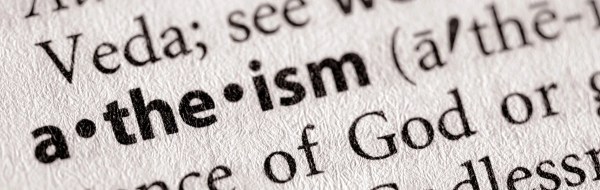
The implications of atheism

Atheism is a futile and failing faith, and the sooner society realises that, the better it will be for us all. Yes, atheism is a faith-system, a negative faith perhaps, but a belief which carries serious implications with it. It is failing, because it cannot bear the weight of expectation placed upon it to provide a meaningful and hopeful worldview. So it is futile to trust in such a baseless ideology.

In another blog post I brought out the implications of God being our Creator; now I want to think through some of the implications of atheism.

Atheism denies the Creator; what is left in his place? Chance and necessity. All that exists is the outcome of chance – from the Big Explosion onwards. Guided by no divine mind or wisdom, everything that exists is the result of the hazardous movement of matter and energy.

What then are we? Humans are merely the accumulation of accidental collocations of atoms, thrown up by pure chance. No intelligence guided the process of our evolution; no value can be put on our personal reality – rather we are either sophisticated beasts or impersonal machinery. Our human value is zero, despite our seemingly great capacities.

What is our purpose? Chance can create no purposes. Purposes are the fruit of an intelligent creative mind, such as God’s; but without such a Creator of humankind, there can be no purpose in our existence, no meaning to our lives. This is the deep cause of the rising existential crisis in societies where atheism’s bleak philosophy exerts a predominant influence. Here is the reason for the increasing mental health difficulties experienced by those without any wiser guidelines to show the way. They are psychologically lost.

What use is our intelligence? Can we think or reason our way forward? Impersonal matter – which must be what we are if there is no personal and infinite Creator – has no intellectual capacity at all. The brain merely reacts to impulses; it doesn’t think any more than computers do. But since we do think, the atheistic basis proves unsatisfactory. We can think our way out of atheism, to seek how the Creator has made himself known.

What about moral values? If there is no absolute divine holy and good Creator, there is no objective source for discerning right from wrong. We are simply left with the relativism where each decides for himself; and to prevent the moral chaos that would ensue, authoritarian governments impose what they think is good – the politically correct. And this is often far from the wisest guidance, leading to profound discontent and bitter argument.  

What about truth? The good old definition of truth was, “reality as seen by God”. Now if there’s no God, it becomes just what you or your opponent may “see” as true. So we enter the “post truth” era – the minefield of “your truth” and “my truth”; because there is no absolute truth if God cannot be the grounds for it. And “your truth” or “my truth” may well be merely falsehood or error in disguise.

What about freedom? In the atheist’s materialistic universe there can be no freedom, which is why some thinkers turn to determinism, saying that while we may think we are free, our actions are merely the result of hazardous impacts made on our impersonal brain cells. 

What about suicide? An atheist’s life, thus considered, seems not worth living. This means not that life really is meaningless, but that atheism is hopeless and unliveable. 

Our Creator God, conversely, gives meaning, value, truth, freedom, and purpose to our existence.

Clive Every-Clayton

Male and female he created them

The first page of the Bible gives us much key information, vital for our personal self-understanding. A lot of unnecessary stress and confusion results from the inability to grasp the biblical basis for our identity and reality.

Some of that confusion has to do with our sexuality. Abandoning the sound basis of the Creator’s wisdom and guidelines leads human sexuality into all sorts of distortion, immorality, abuse, and perversion. Without the Bible’s light, human efforts have proved to be totally unable to invent better moral guidelines for their sexual behaviour.

The Bible’s foundational truth that God made humans “male and female” is no banal statement: it is one of immense importance. It means, to begin with, that men are not women. That was obvious all along, of course, but now it has scientific basis: God created the two sexes with different chromosomes that distinguish them from each other. There is an essential biological difference between the sexes. 

When God designed the human body, he made a distinction between the male and the female body. The woman’s body is unique in its capacity for giving birth to babies; the male body has the unique capacity of impregnating the female. God’s design is blatantly obvious in the way the sexual organs of the two sexes complement each other in sexual union. It is in this way that God planned for new human beings to come into existence. Indeed, his words of encouragement and blessing, right from the start in Genesis 1.28, indicate his plan for his human creatures to enjoy an intimate sexual relationship with a partner of the opposite sex, with a view to having children. That is not the only reason for sexual intimacy in marriage: it is also blessed as a means of expressing love between the couple.

The Creator and Designer of sex had a wise purpose in view – so his creatures would enjoy the blessing of his gift of sexuality as they follow his instructions.

Unsurprisingly, throughout the Bible, sins like adultery, homosexuality, prostitution, fornication, and other forms of sexual immorality are proscribed. These acts deviate from God’s will and purpose for his creatures, and they bring upon those who practice them a lot of dysfunction physically, emotionally, and psychologically. They also separate offenders spiritually from God’s blessing and cut them off from the highest human fulfilment God wants for them.

  How blessed, by contrast, are those who, following the Maker’s instructions, remain chaste before marriage and faithful within marriage! This is how sex was supposed to be enjoyed – free from all the fearful and harmful hang-ups that come from immoral behaviour.

Sexual temptations, the seductions of our uncontrolled desire, the weakness of our resistance to sin, and the pressures of an immoral society, are such that many fall into sexual misconduct and find sex to be a source of suffering. The number of cases of gonorrhoea has never been so high in the UK since statistics were first kept. Other sexually transmitted diseases cause people serious harm. Those abused and mistreated become bolder to go public with their sad stories. Too many broken marriages bring desolation and psychological stress to too many children. Couples just living together enjoy less peaceful trust that their relationship shall endure. And all who in any way fall into immorality have to manage somehow the guilt feelings that cause profound psychological distress, sometimes so deep in their subconscious they are scarcely discerned.

While God can forgive sexual sin, he would rather spare them from such agony, if only they paid heed to his instructions.

Clive Every-Clayton

Implications of creation

It is not for nothing that the Bible begins with the story of creation and specifically that of the man and the woman in God’s likeness. This is a key factor for our very basic need to know who we are and what our life is all about. There are far-reaching and vital implications of that introductory statement in Genesis 1:26-27: “God said ‘Let us make man in our image’… So God created man in his own image, in the image of God he created him; male and female he created them”.

The first is that God is actually the Creator of all that exists, as the context makes clear. This fact has further implications: God owns everything; he has rights over everything; he knows the purpose for which he made everything.

This leads to the further implication that God has a purpose for our human existence. He alone, as Designer and Maker, is able to give meaning and purpose to his creation. When we are confused about our raison d’être, we must refer to Him; our own guesses are not worth much, whereas he both knows and can correctly inform us about the aim of our lives.

Furthermore, he cares for his creation: he cares for us in providing the air we breathe, the life-giving food we eat, and human companionship – and a lot more besides. The further context in Genesis chapters 2 and 3 show how God is solicitous for his creatures, how he gives them instructions to follow and tasks to fulfil. He is not an absentee God: he is right there in communication with his personal creatures, talking to them and listening to them.

If human beings are made in God’s image, the Creator values them highly – indeed, they are the crown of his creative work. They are, one might even say, his pride and joy. Before they went astray, God was pleased to see his own image reflected in them.

Humans were made in the likeness of a God whose nature is holy, righteous, and loving. He would still like to see that holiness reflected in his image-bearers. If we are not holy and loving, we tarnish that image, we show off a false impression of our Maker. In other words, God is misrepresented by sinful humans. Sin cuts across our Creator’s purpose; sin displeases him and causes our dysfunction. Indeed, it brings about a whole lot of miseries that we suffer from. And it grieves God’s heart. He would like us to be better – not only in the sense of being good rather than sinful, but that we find true fulfilment which we will not know if we persist in our tacit or open rebellion against his will.

Will God stand by and wring his hands in hopeless sadness? No! He sets in motion a plan for recuperating and restoring his prize creature to its pristine glory. Even as he banishes the rebel human pair from his glorious presence, he promises he will find a way to bring people back into the harmonious relationship with him that they have lost. His kindness is such that he desires to restore them to an even more wonderful final end. 

That’s why the Creator came to earth to be the Saviour! And we will find true human fulfilment when we are saved by that Saviour, the Lord Jesus Christ, who was sent into the world to mend our brokenness. “Return to me,” he calls, “Come to me”. We can receive both mercy and true human fulfilment as we trust in him.

Clive Every-Clayton

Which God?

If, as I have been maintaining, the real purpose of our existence, and the way to true human fulfilment is to be in harmonious relationship with God, some may wonder which God I am referring to. I have emphasised that God is our Creator who designed our human faculties, making our species originally in his likeness. This first principle comes from the first page of the Hebrew Bible, to which Christians refer as the Word of God. 

It follows therefore, as is recorded in the same Bible, that the Creator continued to communicate with mankind, particularly to Abraham to whom the Lord promised offspring through which the whole world would be blessed. Further on in the Scriptures we read of God’s prediction of a coming Messiah, a descendant of King David, and when Jesus began his ministry it was known that he was of the offspring of Abraham and of the tribe of David.

“God so loved the world that he sent his only Son”, said Jesus, referring to himself. He many times referred to God as his Father, specifically as “my Father” and “the Father who sent me” (John 10.29, 5.37). “The Father knows me and I know the Father”, he declared (John 10.15), and he even asserted, “I and the Father are one” (John 10.30).

Jesus’ miraculous life, his unblemished holiness, his profound wisdom, his authoritative declarations about God, his unsurpassed excellence in moral teaching, his love in giving himself as a sacrifice for others, and his powerful resurrection from the dead – all unite to corroborate that here, for one time in history, there appeared on earth a man who had truly come from God.

What are we to make, then, of the gods that religious thinkers have set forth in the innumerable religions of the world? They all testify to the foundational reality about our human species – that we feel deep down that we were made by God and that he must be there. All religions are peoples’ various attempts to get in touch with God, to guess what his nature must be, to propound ways of pleasing him – because it is in our very human nature to discern that there must be a God “behind” this glorious creation.

But how to discover him? God has given signs of his existence in two complementary ways: first in his works of creation, and secondly in his words of revelation. “The heavens declare the glory of God”, wrote the biblical poet (Psalm 19.1). The beauty of nature, the mathematical precision of the universe, and the human conscience disclose something of the greatness, power, and holiness of God. But human minds are darkened in such a way that we cannot correctly perceive – from nature alone – who God is and how we can truly know, love, and worship him.

God therefore revealed himself in clearer ways – by communication in words to those like Abraham and the biblical prophets, notably Moses who received the Ten Commandments from God and saw his glory (Exodus chapters 20, 33 and 34). All this prepared the most astounding and unique revelation of God in world history, when “God sent forth his Son, born of a woman, born under the law, to redeem those under the law” (Galatians 4.4-5). Having “spoken” in previous ages “through the prophets, God has ultimately “spoken to us by his Son” (Hebrews 1.1-2). Jesus renders us the ultimate service of being the supreme revealer of his Father, “the one true God” who sent him (John 17.3), and also the unique redeemer of mankind.

Clive Every-Clayton

Blog at WordPress.com.

Up ↑