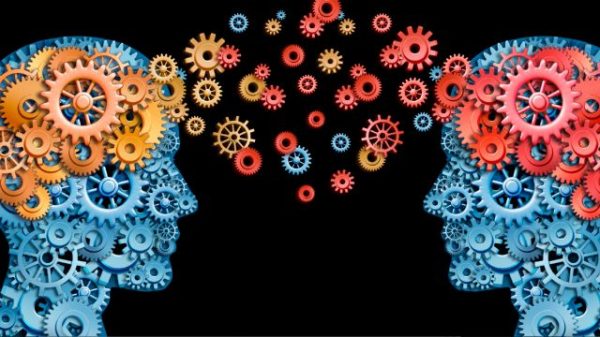
In the search for authentic answers to our existential questions, we can obtain understanding from two sources. The first – that we use every day – is the human faculty of reason. In his book “Miracles”, Oxford don C.S. Lewis wrote: “All knowledge depends on the validity of reasoning… Unless human reasoning is valid, no science can be true”. This seems obvious, when you think about it. You cannot argue against the value of reason; that would be using reason to deny reason.
So we use our reasoning powers to try to understand what our life is all about. But then C.S. Lewis raises the question of where our human reason came from, and he asserts that the presence of human rationality in the world is a miracle. He was inspired by Professor Haldane who wrote, “If my mental processes are determined wholly by the motions of the atoms in my brain, I have no reason to suppose that my beliefs are true… and hence I have no reason for supposing that my brain be composed of atoms”.
Atheism crashes profoundly against this rational argument, for C.S. Lewis concludes, “we must believe that the consciousness of man is not a product of Nature” – not the result of a long chain of chance, aimless, material processes since the dawn of time. “Nature”, he repeats, “is quite powerless to produce rational thought”.
Yet we are rational beings. Andrew Marr ended his TV programme on evolution by saying, “Man is the truth-seeking primate”. We use our reason every day to test what we think is true. That is the way we are. And the only logical source of those reasoning powers is not impersonal matter, but the Supreme Intelligence of the personal and infinite Creator who made us “in his image”.
So our reasoning faculty itself points us to a reasonable, wise Creator. And God has come to our rescue as we vainly search for something solid on which to ground our search for true answers. He has revealed truth that we need to know. Truth about ourselves, and truth about God.
So as we seek answers to the big questions of life, our reasoning is valid, since it is given to us by our Creator and reflects the supreme Reason with which he acts. Yet our reason has its limits; it needs the enlightenment that can only come from God’s revelation. God’s truth has been revealed in the Bible. “The whole Christian theistic position,” wrote Cornelius van Til, is “the only system of thought that does not destroy human experience to something meaningless”. Atheistic philosophy leads to that meaninglessness; this is the woe of our supposedly post-Christian generation.
It is reassuring to note, in our supposedly post-truth age, that thinkers are now returning to realise that God alone can furnish the basis for true understanding. Atheism is on the way out; a return to the God of revelation is on the up. And the key truth now more and more put in evidence as the only basis for a hope-filled vision of our human reality, is there on page 1 of the Bible: “In the beginning, God created the heavens and the earth… God created man in his own image, in the image of God he created him; male and female he created them” (Genesis 1.1, 27).
As God made us and gifted us with reason and speech, so he is ultimate Reason, and he reveals his truth though speech: “In the beginning was the Word (the logos, Reason)”… The Word was God… The Word became flesh” in Jesus (John 1.1-14).
Clive Every-Clayton
 Authentic Hope for Answers