God is not just a theory

Sometimes believers and apologists for the Christian faith give the impression that you can argue others into having faith. They compare the poor arguments of scientific atheism with their proposing the Christian faith and want to show that the Christian “theory” is more plausible than any other.

While there is truth in this, it may have the result of leading the unbeliever to conclude that Christianity is just another theory, which sooner or later will be shown to fall short of what is required. In other words, the whole discussion remains at the level of argument and speculation. But this is not the way Christianity truly functions, because it is not just a philosophical position, setting forth the theoretical existence of God as its basis. No – Christianity has as its unique basis in the historical life, teachings, death and resurrection of the extraordinary historical person, Jesus, the Christ, i.e. the Messiah, the incarnate Son of God.

The ministry of Jesus was totally unique in the history of the world. The work of “evangelism” that Christians are committed to do consists not of arguing for the truth of the Christian faith but of announcing the historic facts of Jesus’ life and ministry. There is profound truth in the expression: “Christianity is Christ”. The life and teaching of Jesus Christ is a phenomenon of world history which calls for assessment. Everyone should know that his life and ministry occurred – indeed, two thousand years ago exactly his feet were walking on our planet. 

When you examine other religions, you find that they may make reference to historic events, but their teachings are ultimately man-made propositions about God (or the gods) and what the divinity demands. They offer supposed rewards in the next life, particularly for those who obey their moral requirements. They claim that these commandments are specified by their gods, and that those who obey them will enter the equivalent of heaven. That positive final destination is held out to those who faithfully obey the laws laid down by that religion.

It appears there is a sensitivity in the human soul that responds to such hope-giving teaching; so everywhere there are devout people who do their best to follow the path set out, hoping that their recompense will be great beyond death. However, those who made those religious promises did so before they died, and were ultimately as ignorant of the after-life as all the rest of us. Their promises were unfounded.

Here, Jesus is in a class by himself, for after his death by crucifixion, he rose from the dead and continued to teach for another forty days before returning to heaven where he had come from. Jesus is also unique in his teaching that he had come from God in heaven in the first place. And on two occasions, the Gospels relate, God spoke out audibly from heaven affirming: “This is my beloved Son, with whom I am well pleased; listen to him” (Matthew 3.17, 17.5).

Clive Every-Clayton
Easter: the bizarre death of Jesus

This April 2025 Christians will celebrate Easter. This feast is a celebration and commemoration of what took place in history, almost exactly 2,000 years ago in Jerusalem. It can be considered as the pivot of world history, bringing in a change that reverberates still around the world today.

In this blog post and the next I want to explore the deep meaning first of Jesus’ death, and then of his resurrection from the dead, for these are the events we commemorate each Easter.

Jesus’ death was, in one sense, a grave miscarriage of justice: the Roman governor, pressured by self-righteous jealous religious leaders who stirred up the crowd against Jesus, condemned the innocent holy prophet to die. But there is much more to it than this. Jesus himself, the night before his crucifixion, said that his blood would be shed “for the forgiveness of sins”.

It is a little-known fact that on three occasions the Gospels relate how Jesus predicted not only his death but also his resurrection! Referring to his death he said he would “give his life as a ransom for many”, and as the “Good Shepherd” he would “lay down his life for his sheep”. In other words, in Jesus’ understanding, his death was for the benefit of others, indeed for their salvation, for he came, he said, “to seek and to save the lost”.

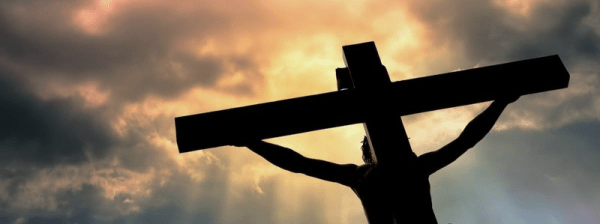
The reason why Christians celebrate the death of Christ and make an instrument of torture – the Cross – a symbol of their faith, is that they see it as having accomplished a work of atonement for their sins. Most religions see that sins have to be punished or “paid for”, and our conscience admits that as guilty offenders we deserve God’s righteous punishment. But while other religions propose that we can obtain salvation by the good works that we are able to do to “pay for” our sins, Christianity gives us a vitally different message. We need to realise that we cannot ever “pay for” our sins however much good we seek to do, because we ought to do those good things anyway. Instead it is Jesus who came to “pay for our sins”, to make atonement, and he did that by dying “for us”.

This is why the Christian message is called “Good News”. This is why the death of Jesus is celebrated in churches throughout the world. It was the accomplishing of our salvation, as Jesus’ work of atonement makes possible the forgiveness of our sins. It is the only objective grounds upon which a holy and just God can offer free forgiveness while fully respecting the demands of justice: the just penalty we deserve was taken by Jesus. Why? Because he loves us! His death for our salvation is the supreme demonstration of God’s love and mercy towards us. 

On the cross Jesus cried out, “It is finished!” He was telling us that he has finally accomplished his atoning work. In anticipation he had said in prayer to God his Father the night before he died: “I have finished the work you gave me to do”.

This does not mean that everyone is thereby automatically forgiven; every one of us needs to ask our Saviour to forgive us personally, on the basis of his death for us. We need to turn from our sins and turn to Jesus in prayer; we need to thank him for his sacrifice which makes forgiveness possible. Then we must receive him as our Saviour and commit ourselves personally to follow him as the new Lord of our lives.

Clive Every-Clayton

Born to save us from death

Once again the poets find words to express both the wonder and the depth of meaning of the incarnation of the Son of God: “Mild, he lays his glory by / Born that man no more may die”. Strange concept here! Born so that man may not die? What does this mean?

It’s a reference to something Jesus said when he was just about to raise a dead man named Lazarus back to life. “Whoever lives and believes in me shall never die” he said. He was obviously – as so often – using metaphorical or symbolic language, because he had just said, “he who believes in me will live, even though he dies” (John 11.25-26).

Jesus is referring to two kinds of death: physical death is one thing, but beyond that there is eternal death, “the wages of sin” (Romans 6.23). He says that those who believe in him may well die – as we all do – physically, but they will never die eternally but will have eternal life. This is a glorious promise Jesus made to those who come to trust in him: and the offer is still valid!

So the hymn writer, Charles Wesley, means that Jesus was born, and came into the world so that people, believing in him, may “no more” die. Then in the same carol, Wesley adds something else: “born to raise the sons of earth / born to give them second birth”. This also need unpacking! Though Jesus did teach that he, the Son of God, would bring about the resurrection of the dead at the last day, when he returns in glory (see John 5.26-29), here Wesley is alluding to another deep teaching of Jesus. 

A Jewish leader called Nicodemus came to Jesus to check him out, and Jesus spoke to him about this “second birth”. “Unless a person is born again,” he said, “he cannot see the kingdom of God” (John 3.3). He went on to insist, “You must be born again” (John 3.7). A person’s physical life begins when they are born; but they receive spiritual, eternal life when they are “born again”. The object of Jesus coming into the world was to make it possible for those of us who were under the threat of eternal death to obtain eternal life by being “born again”. So Wesley was quite right: Jesus was born to be the Saviour of the world so that those who trust in him might have this “second birth” into God’s kingdom.

How does this second birth come about? you may ask. Elsewhere the Bible teaches us how. We are born again “through the Word of Gd” (1 Peter 1.23). In other words, we have to hear God’s word, or read it in the Bible, listening for its application to one’s personal life, responding to its call to repent and believe in Jesus. This involves a personal commitment. 

But another verse at the beginning of John’s Gospel (1.11-13), speaks of the need of receiving Christ personally as Lord and Saviour: “He [Jesus] came to his own people but his own people did not receive him. But to all who did receive him, to those who believed in his name, he gave the right to become children of God who were born… of God”. When we receive Christ by faith, we receive new life in him; we become children of God; we are “born again”. This is just another way of speaking of the deep reason for Christ’s coming, as was said at his birth: “You shall call his name Jesus, for he shall save his people from their sins” (Matthew 1.21).

Clive Every-Clayton

My spiritual birthday

This week I celebrate my spiritual birthday. “What,” you may ask, “is a ‘spiritual birthday’”? The idea comes from one of Jesus’ vital but rather obscure teachings. The Son of God declared categorically: “Truly, truly, I say to you, unless one is born again, he cannot see the kingdom of God” (John 3.3).

One has to admit, it’s not obvious what Jesus was meaning, and his interlocutor responded with incredulity: “How can a man be born when he is old?” Jesus went on to explain he was speaking of a spiritual birth, the beginning of a new spiritual life in a person’s heart. Elsewhere in the Gospel it is called being “born of God” – born anew as God’s child when God grants new life to a human soul. 

In John’s Gospel (1.10-13) it says that when Jesus came into the world, there were many who did not recognise him nor welcome him; but “to all who did receive Jesus, to those who believed in his name, he gave the right to become children of God”. That is an amazing blessing, but the passage adds that those who believe in Jesus and receive him by faith as their Lord and Saviour are “born of God”.
What does that mean? Let me back up a little first. When a baby is born, all the family rejoices: it receives a human life which will go on to develop as he or she grows. Yet when it matures, albeit marvellously endowed, it becomes evident that there is selfishness and unkindness when bad attitudes and actions become visible in its life. In biblical terms, it is born with a sinful disposition that produces behaviour that is sometimes aberrant.

Human experience testifies that however hard we try, we cannot efface this sinful tendency from within us. That’s why the Bible says we are all “sinners”: we all know what it is to have a guilty conscience; no-one is perfect.

What can change us? Well, Jesus proposes giving us a renewed Christian life by a new spiritual birth. He means that his own Holy Spirit will make us born again. As the text above states, this is for those who believe in Jesus and who receive him as Lord and Saviour. This new birth occurs as people turn away from sin, trust in Jesus, and commit to following and obey him.

The day I was born again, it was Easter Sunday; I had heard a preacher explain that when Jesus died on Good Friday, he took on himself, out of compassion for the likes of lost sinners like me, all my faults and all their punishment. He suffered in my place; he died the death that was the “wages of sin” for my disobedience. He did it because he loved me; and now, alive and risen from the dead, he called me to receive him as my personal Saviour, to forgive me, to change me, to come and give me new life, to come and live in me by his Holy Spirit. So I prayed and committed my life to Christ.

Thus was I “born again”: in the weeks that followed I developed a relationship with Jesus as my best and closest friend, my helper to enable me to overcome the temptations that were on my path, and to put away various sinful attitudes and habits.

I cannot more strongly encourage all my readers to do the same. Become a “born again Christian” – that’s the kind of Christian Jesus wants and he will give you that new life if you ask him.

Clive Every-Clayton

What’s good about Good Friday?

Jesus told us to repent and to believe the “Good News” (which is what the word “Gospel” means). But we may well ask, what’s so good about this Good News? And why at Easter do we celebrate the day Jesus suffered the awful agony of his crucifixion, as “Good Friday”?

Jesus’ coming into the world should be seen as the greatest act of kindness possible for our holy Creator who is also our loving Saviour. Why? Because instead of intervening in human history to bring cataclysmic judgment for human sins, he came, Jesus affirmed, “to seek and save the lost” (Luke 19.10). 

Now anyone with a sensitive conscience can see two things: they are not perfectly righteous, but rather guilty of many sins; and that before a holy and righteous divine Judge, they cannot say they have been so good as to deserve heaven. So facing the coming of the divine Son of God is a fearful prospect. Yet when Jesus did come into the world, he said, “I came not to judge the world but to save the world” (John 12.47).

In the Bible we read these astounding words with a universal scope: “This is a faithful saying, and worthy of all acceptation, that Christ Jesus came into the world to save sinners” (1 Timothy 1.15). I had to acknowledge that I was a sinner in God’s sight; but as I did so, I realised that therefore Jesus came into the world to save me. (And you can have the same assurance).

Jesus’ way of saving sinners can be considered in two stages: first of all, our sin has to be paid for, for we are guilty in God’s eyes. But the only way we can pay is in hell for ever – that’s what our sins deserve. But Jesus came in order to pay for our sins. He did this by suffering our hell, condensed in his infinite person as he suffered on the cross. The God-forsakenness of hell is what Jesus suffered as well as the physical horror of crucifixion, for as he bore our sin, he cried out, “My God! My God! Why have you forsaken me?”

We cannot fathom the depth of what Jesus suffered, but the Bible sums it up: “He bore our sins in his body on the cross… Christ suffered once for sins, the righteous for the unrighteous, so that he might bring us to God” (1 Peter 2.24, 3.18). Without our just punishment being borne out of love by our saviour, we could never be justly forgiven. That’s why Good Friday was Good News!

But then, to be forgiven and saved, every individual must appropriate it for themselves. It is not automatically given to everyone. The way to receive it is to repent (see previous blog) and to “receive Christ” as your personal Lord and Saviour. That’s what “believing in Christ” really means: not just believing that he existed, or that he came from God, though that is essential. But also believing that Jesus’ death on the cross paid for your salvation and that he rose from the tomb, showing God’s full approval of his saving work; and then coming in prayer to Jesus to ask him, “Come into my life and be my Lord and Saviour; I thank you for loving me so much as to die for my salvation; in return I will follow you and live for you and grow in faith to love and trust you more and more as I read your word”. You may count on Jesus to answer that prayer as you commit yourself sincerely to him.

Do not be fooled!

There’s good news and there’s fake news: it is important to discern which is which!

Christmas commemorates the messengers from heaven announcing “good news of great joy that will be for all people” (Luke 2.10). The incarnation of the Son of God was – and is – “good news”. And it is universal truth, “for all people”. And it’s a source of “great joy” – deep happiness and human fulfilment.

Though “fake news” seems to be a modern concept, there have always been purveyors of falsehoods, and their fake news is folly that leads people astray. Fake news is actually bad news because it’s false, so people believe a lie.

In previous blogs I have insisted that only God knows all truth; only he can communicate that absolute truth to us; he sent his Son into the world to tell us the truth that he wants us to know; and that hearing Jesus’ teaching “you shall know the truth and the truth shall set you free” (John 8.31-32). There alone is the source of real truth, good news, not fake. 

It is not polite to call another person a “fool”, but twice in the Bible God uses this word to describe two types of people. Two of our perplexing questions are: “Does God exist?” and “What happens after death?” It’s vital to obtain true and reliable answers to these fundamental questions. God himself both gives the answers, and condemns as “fools” those who think differently. Concerning the existence of the Creator God, Lord of the Universe, Maker of all things visible and invisible: to deny his existence is a big mistake: “The fool has said in his heart, ‘There is no God’” (Psalm 14.1). This is a foolish belief-statement for several reasons: first, it would require an exhaustive research of the entire universe to be able to make such an affirmation. As that is impossible, the statement merely expresses one person’s belief, or lack of belief. Secondly, it fails to consider seriously all the pointers to God’s existence in the amazing creation we observe all around us with its glorious beauty, the mathematical precision of its physical constants, and human beings themselves who, despite our fall into corruption, still reflect much of the personality of the God in whose image we were created.

So don’t draw the hasty and false conclusion that “There is no God”; if you haven’t found him yet, that’s no proof of his non-existence. Study the life and teaching of the One who came down to earth from Him at that first Christmas: you will see he is believable.

The word “fool” is also used in one of Jesus’ parables concerning the second big question – life after death. A farmer gets richer and richer until he no longer had enough space to keep all his goods. He decides to tear down his barns and build greater ones, saying to himself, “I have plenty of good things laid up for myself for many years; I will take life easy, eat, drink, and be merry”. Then Jesus adds: “But God said to him, ‘You fool! This very night your soul will be demanded of you. Then who will get what you have prepared for yourself?’” (Luke 12.16-21).

Here is the folly of not preparing for eternity and the Day of Judgment that we must all face. Don’t believe the fake news that “when you’re dead you’re dead”. The Bible warns us: “Man is destined to die once, and after that to face judgment” (Hebrews 9.27). 

Please, for the sake of your eternal soul, don’t be fooled!

Clive Every-Clayton

The unmentionable

No-one in polite society ever talks of death – yet everyone, deep down, is afraid of it. Howard Inlet in Collateral Beauty expressed it: “At the end of the day, we long for love, we wish we had more time. And we fear death”.

When I was an adolescent I remember one night lying awake at night thinking about death and the great Beyond. I was so perturbed I finally got out of bed, crossed the landing to my brother’s room (a year and a half older than I) to try and get some reassurance. It was only some years later that the true answer came to us both and ultimately made us into workers for the Gospel.

One Bible verse I did know in my teens was, “The wages of sin is death” (Romans 6.23). The Bible, right from the beginning, makes it clear that death comes as a punishment for sin; we all die, because we are all sinners. God is kind enough not to inflict the penalty immediately when we sin; he allows time for people to remain alive and repent and find forgiveness.

The “death” that is the “wages of sin”, however, is not merely physical death. It is also what the Book of Revelation calls “the second death”, which is hell. This is described by Jesus as a place of “torment” where there is “weeping and gnashing of teeth”. There are sobering warnings throughout the Bible of the awful reality of eternal punishment; there are also wondrous depictions of eternal bliss and eternal life for those who have found mercy, obtained grace and been forgiven.

It is because “the soul that sins shall die” (Ezekiel 18.4) that the atoning work accomplished by Jesus had to take the form of his death. The sinner must die – so justice will be done; but if a representative bears the penalty in the place of the guilty, they may go free. That is why Jesus died: he said he would “give his life as a ransom for many” (Mark 10.45). “Christ also once suffered for sins, the righteous for the unrighteous, that he might bring us to God” (1 Peter 3.18). “He himself bore our sins in his body” on the cross (1 Peter 2.24).  He came to deal with our sin problem, “to put away sin by the sacrifice of himself” (Hebrews 9.26). It was the supreme demonstration of his love for you and me: “Greater love has no-one than this”, said Jesus, “than to lay down his life for his friends” (John 15.13). “I am the Good Shepherd”, he said, “The Good Shepherd lays down his life for the sheep” (John 10.11).

If you ever doubt that God loves you, look with the eye of faith at the cross where Jesus bore your sin and your death penalty, to save you from eternal death. This is the great message of the Gospel: “God shows his love for us in that while we were still sinners, Christ died for us” (Romans 5.8).

This loving service, indispensable for our forgiveness, was accomplished by Jesus in human history, at Jerusalem, almost 2,000 years ago, and its value is such that on that basis any sinner may turn to Christ in faith and find salvation.

Our response must logically be that of thankful faith. Once we grasp what Jesus did for us, how can we but turn from sin and open our hearts in grateful love to such a Saviour? Once we do that, we need no longer fear death: the verse that begins, “The wages of sin is death”, ends, “but the gift of God is eternal life through Jesus Christ our Lord” 

Clive Every-Clayton

Cancer and death: why?

Last week, August 4th, 2023, I went for a check-up in the hospital where, seven months ago my much loved wife died. For the second time in my life, a surgeon who examined me told me I had cancer. I had come through the first with radiotherapy, chemotherapy and an operation, some 14 years ago. Now the verdict has fallen again.

What does a Christian do in times like these? Having thanked God through my tears for giving me such a wonderful wife and the mother of our children, though the grief was uniquely overpowering at times, as I now face another ordeal, I remain thankful that whatever this cancer may involve for me, the God who loves me will be beside me day by day as my ever-present helper.

What a blessing to be a believer in Jesus in times like these, when suffering pain, experiencing loss and facing the shadow of death! What wondrous peace to know, on the basis of Jesus’ words which I fully believe to be trustworthy, that there is an eternal life of glory awaiting me where I shall see both my beloved Saviour and my dear wife!

I do not know what treatment, what pain, what distresses may lie before me, but I know that the God who loves me has promised never to leave me nor forsake me. I wish for all my readers the same confidence whatever you may be going through. God’s truth, his love and his wisdom may be fully trusted. This is the way to know peace in the midst of whatever trial you may have to undergo.

In God’s heaven, he promises, “there will be no more death, neither sorrow nor crying, neither shall there be any more pain” (Revelation 21.4). The most important of our existential questions is – how can we be prepared for death and the life beyond? For many years I have known the answer and sought to share it with others: as I face the probable reality, the answer holds true. 

Why, then, does God allow such suffering? The full answer is long, but here are some elements. God uses our trials as a way of getting through to us, reminding us of our weakness and our need of him, encouraging us to turn to him with a better attitude, to find comfort and help in him. Sadly, many don’t have the right attitude. Each of us should reflect on how we should react. To rebel is unhelpful; to trust is better.

As for me, God is granting me an opportunity to show him that I will faithfully love him and follow Jesus whatever suffering may be involved. A trial tests the reality of one’s faith. It is a way through which I can prove my commitment to him whatever the cost. The biblical principle can be found in Deuteronomy 8.2: “You shall remember the whole way the Lord your God has led you these forty years in the wilderness, that he might humble you, testing you, to know what is in your heart, whether you would keep his commandments or not”. 

As I look back, I see how God has helped me; as I look forward, I trust he will help me still.

Clive Every-Clayton

Blog at WordPress.com.

Up ↑