Some inescapable basics

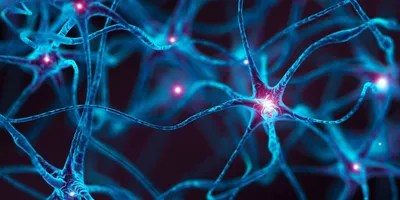
Our desire for authentic answers shows that we are rational thinkers, curious to understand our world and ourselves (and others). We are endowed with a mind which in some undecipherable way works in and through our brain. Our brain is the most complicated thing known to mankind; we all have one, and its performance capacity is amazing. Where did it come from? How is the mind involved in the atomic movements within the brain? These questions are beyond human understanding; they are the very mystery of human life.

Atheistic scientific materialism would have us believe that all our personal thinking is nothing other than the complex movements of the brain – that ultimately, we do not have personal freedom to think and understand truth because we are simply part of the cosmic machine. But we find that explanation unacceptable; it reduces us to robots with no freedom of choice, no real love, and ultimately no meaning either. The philosophy of scientific materialism does not provide any serious authentic answers to our very real hunger for finding truth about ourselves. Such “answers” undermine any hope for truth about our human reality. That is why societies dominated by that philosophy are struggling with mental health issues, because without some acceptable answers our human existence is bound to suffer both individually and in our social sphere. Bereft of wise moral absolutes, without meaning or purpose to their human existence, people don’t know where they are going and have no uplifting hope for their future. 

This is why people are more seriously reconsidering the Christian framework in which our many existential questions do find answers that are both reasonable and fulfilling. There is authentic hope for answers in studying the Bible: if it is the inspired communication of our Creator God, it should provide the answers our hearts long for. Does it? Well, yes, it does! This is what Christians realise, and though Christian believers do not necessarily understand all the answers, their source-book, the Bible, furnishes light enough to lead them out of the darkness of uncertainty and insecurity, into a life – when one believes in Jesus as Lord and Savour – that is the most fulfilling life possible. Jesus said, “I have come that they might have life, and have it abundantly”. He declared “I am the way, the truth, and the life”; and again, “whoever believes in me has eternal life” (John 10.10, 14.6, 3.36). He was so perfect in life that when he was killed, he came back to life. He, of all people who have ever lived, is totally worth following, and untold millions throughout the world have found that he does indeed bring into our lives a spiritual dynamic that makes sense and provides deep joy.

As the scientific materialist worldview has no absolute source of wisdom for moral questions, the typical outcome is to adopt a hedonistic outlook, living for personal pleasure. This is just selfishness by another name, and though it seems promising at first, its promises turn out to be illusions of a happiness that is never fulfilled, always wanting more, and never at peace. It takes the wisdom of the Bible to teach us that true happiness, blessedness, and fulfilment come not by giving free rein to our lusts, but by denying our evil tendencies and committing to follow that which is good. And who defines the true good? Well, only God: he alone is perfectly good, and wants to lead us into the true, deep, and meaningful happiness that comes from the real good life, a life that the Bible calls blessed.

Clive Every-Clayton

God – an unavoidable inconvenience?

When an atheist like André Comte-Sponville admits he’d like to be able to believe in a God who loves him and is kind and gives good things to him, he commits two mistakes. Firstly, his definition of God sums up only the positives of the best kind of God he could envisage, voluntarily overlooking God’s more distasteful attributes.  Secondly, he seems to think that people can just imagine God anyhow they like – little realising that God is objectively how he is (existing, really there, with all his divine attributes intact), whatever people may think about him.

More logical atheists have other ways of ousting God, one of which is to deny that he is the Creator of mankind, pretexting that evolution, including macroevolution, suffices to explain our human existence. Erudite philosopher and theologian R.C. Sproul, writing concerning modern secularists who adopt this evolutionary viewpoint, asks: “Why would they be happy to find out that they are a cosmic accident and that their final destiny is annihilation?” This, for many who have no clear Christian faith, is the logical outcome of their atheistic presupposition; they accept unthinkingly that they must have issued forth from a mass of confused and chaotic matter which gives them neither purpose, nor meaning, nor hope. Why do people believe in such a worldview? Dr. Sproul esteems there is “only one answer: evolution offers people an escape from accountability. When we die it is over. We don’t have to worry about facing a holy and righteous Creator.”  

The deep-down human fear of such accountability is an unpleasant apprehension underlying the rejecting of God: the simple way to deal with the dread of an ultimate divine judgment on our lives is to deny that there is a Creator and Judge. “But if macroevolution is in fact true,” the theologian-philosopher continues, “we should be in utter despair: we would have to recognise that we are utterly insignificant and that our lives and labour are meaningless”.

Jordan B. Peterson in his latest book intelligently proposes that the reality of personality is fundamental to existence, and particularly to our human reality: he reminds his readers that this chimes well with the Bible’s basic statement that we were created in the image of God, so ultimate reality (God himself) would be personal. “The idea that we are reflections of the divine nature is valid,” he concludes.  

He strikingly goes on to propose that “perhaps our reductive materialism is a reflection of something worse than mere ignorance: maybe we insist on the deadness and intrinsic meaninglessness of the world to rationalise our unwillingness to accept the immense burden of opportunity and obligation that a true understanding of our place in a truly meaningful world would necessitate”. He dares to conclude: “Perhaps it is not religion that is the opiate of the masses. Perhaps it is instead that a rationalist, materialist atheism is the camouflage of the irresponsible”!!  

As modern intellectual leaders like Peterson discern and expose the atheism that causes our present hopelessness and meaninglessness, some are turning again to the inspired basis of Genesis 1.26-27: “God said, ‘Let us make man in our image, after our likeness’ … So God created man in his own image, in the image of God he created him; male and female he created them”. This foundational fact – and this alone – furnishes the rational basis for our human value and meaning. Our species has the high calling of having been created in God’s likeness at the beginning – though we have fallen away from that likeness by turning from God. Without this key we cannot understand ourselves.

Clive Every-Clayton

A better story

I have been busy these last weeks preparing and giving lectures here in the Highlands of Scotland on a better way to conceive of our human reality.

Whether we like it or not, we in the West live in an atmosphere fashioned by a secular mind-set, and through this grid we seek to understand the way people think and behave. Some months ago, certain leading intellectual thinkers, politicians and academics meeting in London insisted that we have not been well served by the modern secular “story” – the worldview beclouding our western society with its morose and unhelpful ideas about our human meaning and value.

These thinkers are proposing a different approach, and although not all would adhere to a religion, there is a basic realisation that without a Transcendent framework, society tends to descend into a kind of hopeless moral relativism that brings on the anguish we see increasingly in the West.

As a Christian, I wholly concur that we need a “better story”, and my lectures have been addressing that need in various areas of our self-understanding. My basic thesis has been that the atheistic materialism underlying the secular story is unhelpful and psychologically damaging. It is a factor contributing to people’s confusion about their human reality, the rise of mental ill health, and the prevailing sense of hopelessness and despair. It is the hidden cause of a lot of the deterioration of our modern society that we have been sadly witnessing these last fifty years or more. 

Why is the materialist-atheist scenario so harmful? Because it proclaims that we all have come ultimately from an impersonal beginning – an immense explosion of energy and matter which, over billions of years, instead of obeying the second law of thermodynamics and deteriorating progressively into total disorder, has somehow managed – by some unaided process – to actually bring about the world we see around us with all its life, variety, beauty, and splendour. The essential blind spot of this “story” is its absence of any original personal Creator as the valorising ground of our human personality.

Dr Francis Schaeffer discerned this years ago, when, commenting on the thesis that “man is the product of the impersonal, plus time plus chance”, he wrote: “no-one has succeeded in finding personality on that basis, though many have tried. It cannot be done”.

This means that if you begin by adopting the atheistic materialist explanation of the origin of all things in an impersonal explosion of matter and energy, there is no way you are going to be able to establish the reality of human personality. That first assumption leads inexorably to an understanding of the human condition which cannot account for – and indeed undermines – all the marvellous enjoyable realities of our personal existence: our intelligence and rationality, our emotional nature, the reality of love, freedom to choose and to exercise our own will, our ability to communicate, and our moral sensitivity. All these much appreciated aspects of our personal lives have no real basis following the story told by secular materialism; it contradicts our well-known reality and would undermine our true personhood. This makes evident the falseness of that story: we know that our personal faculties are real and precious, so any explanation that cannot account for them must be wrong. 

Instead of assumptions that do not explain in positive terms who and what we are – but rather confuse us – what a relief to turn to the “better story” that an infinite and personal Creator made humankind in his image; that both valorises us and truly explains who we really are.

Clive Every-Clayton

Created for a purpose

When an engineer or an artisan contemplates what he wants to make, he or she works towards a purpose. They have in mind not only what they want to produce, but why they want to make it, or for what purpose it is designed. So it is with the divine Creator: he had a purpose in mind when he made the universe, the world, and humankind in his likeness. This means that there is meaning to our existence! This is the answer to our big question – what are we here for? The only one who can give a reliable answer to the question of our meaning and purpose is the brilliant designer, the creator God who made us.

The reason science cannot find the purpose of life is that science does not deal in purposes, but rather in causes. Science studies the material realities of the world, which are incapable of having purposes, because purpose demands the will of a person. Science can envisage no personality at the start of the universe, so for science there can be no intelligent design nor any purpose. Purpose is attributed by persons to what they are doing or going to do. God our Creator is both infinite and personal and when God set to making humans, he had a purpose in mind.

The next big question, then, is what was God’s purpose in creating humans? The clue is in the other expression in the context of that creation: “in his likeness”. It is a profound and complex affirmation: God made humans not infinite like he is, but personal like he is. 

He is infinite in power – to be able to create the whole universe when there was nothing before he made it. Scientists describe the amazing explosion with mighty power and extreme heat that was the beginning of all things: and they tell us the constants of physics were there from the very start. But in that very act of creation, God’s infinite wisdom and personal creativity was at work as well. So God is not mere power – he has thoughts, he speaks, he loves, he makes decisions, he is personal. And because he is personal (at an infinite level) he works according to his purposes and he is capable of telling us what his intention is for us humans. We too, made in his likeness, have similar personal ability, so that we can understand him when he communicates and enter into his purposes for us.

So it is, then, that when God speaks to humankind, he reveals his purpose for our existence – the meaning of our lives.  What a service that is that he renders to us! How thankful we should be that we can at last know why we are here and what we are supposed to be doing – and that from the infinite source of all wisdom, from our Creator himself, who sent his Son to tell us!

So what is his purpose for us? There are different facets to it, but the initial description of the creation of man and woman in Genesis 1 that Jesus refers to, it gives us the practical purpose: “And God said to them, Be fruitful and multiply and fill the earth and subdue it and have dominion” – over all that is on the earth. Quite an ordinary kind of charter: have children (multiply) and have responsibility as the lord of the world (under God, of course, for it is God who sets humankind in that high status.) This ennobles all the down to earth reality of human work and family life, for these are ordained by God. This is therefore the good way to live. This is the real-world aspect of our purpose as human beings. We have a world to explore and to make to flourish; that is our task. But why we do that, is another chapter.

Clive Every-Clayton

Does evolution refute creation?

Some, reading what I wrote about the Creator, may be of the opinion that the theory of evolution has negated the idea of creation, so I need to clarify a few things. 

First, evolution envisages the development of species: creation concerns the absolute beginning of everything that exists (apart from the eternal God himself). No-one can seriously claim that evolution created the universe. Only the almighty Creator could do that.

Secondly, evolution does not require atheism: there are theistic evolutionists who hold that God intervened in the evolutionary process to constitute human beings as we know them today –that is, conscious personal beings made in God’s image, capable of relationship with God.

Thirdly, evolution has not actually been proved – indeed, it is incapable of proof since vast ages of time would be required for demonstration by experimentation. Nancy Pearcey, who knows far more about this than I do, summing up a science article in Newsweek, wrote: “The fossil record does not, nor ever will, support the Darwinian scenario of a smooth continuous progress of life-forms, nicely graded from simple to complex”. 

Fourthly, Phillip E. Johnson’s research on the bases of evolutionary theory has shone light on the naturalistic or atheistic assumptions underlying the evolutionary theses. “The doctrine that some known process of evolution turned a protozoan into a human is a philosophical assumption,” he affirms, “not something that can be confirmed by experiment or historical studies of the fossil record”. So evolution has not been demonstrated following the exacting demands for proof and truth that we expect from science. Evolution does not refute creation. 

Some atheists may hold tenaciously to evolution because they do not want to envisage a Creator God; only God knows their deep reasons, but it is a shame to refuse our loving Creator as if his existence would be harmful. The Christian option has multiple indications of its validity and explanatory power to valorise our personal reality, whereas mindless evolution would logically reduce us to mindless animals or soulless machines. Such a philosophy is unliveable. 

Jesus’ teaching that “from the beginning God made them male and female” (Mark 10.6), does infinitely more than evolutionary theory to enable us properly to understand ourselves. It not only valorises our personal faculties, but it provides a framework for real meaning and purpose. Indeed, the understanding that we were created by God frees us from the existential despair that is communicated by the hopeless and ultimately groundless vision that we came about by blind, mindless chance.

Authentic hope for answers can only come from the Creator informing us himself; and his wisdom and love have found the way to do that – by divine revelation, centred on Jesus.

Clive Every-Clayton

Begin at the beginning

Who are we? Where did we come from? Why are we here? These are the basic questions we all ask at some time – and so many people are frustrated because they don’t get the answers they need. So did Jesus tell us the true answers to these and our other key questions about life, death, God and the universe? Let’s see.

Jesus laid the foundation to it all when, questioned about the ethics of divorce, he referred to his Father, God, as the Creator “who made them from the beginning…” (Matthew 19.4). We need read no further for the moment: right there we have a vital clue to understanding who we are. The key truth we are to grab hold of here is that God made man and woman. God is our Creator, and Jesus adds, “he made them male and female”.

This means, first of all, we are not here by chance. The human species has not been “thrown up” by some fluke accident that made life possible, and we are not the result of an extremely long process of upward improvement in species. We need to put out of our minds that root of despair that sees humankind as either an animal or a machine; it is these philosophical visions that have brought upon our secular age the desperate confusion about our human reality. 

No! When human beings appeared on the earth they were there because God had fashioned them in his creative genius. It is not an exaggeration to say that we humans are God’s chef d’œuvre. Professor Brian Cox informs us that the human brain is the most complex thing in the entire universe. I, for one, find it impossible to believe that such a brilliant entity could have come about by chance processes. Rather, when God created the first man and woman, he endowed them with his greatest and most complex gift: our human brain. You have one, and you’re using it right now. It has never seen the light of day, since it is carefully encapsulated within the safe confines of your skull. But is it an absolute wonder. It gives us rationality so we can discuss these very personal issues we are preoccupied with, and it enables us to reason and to grasp truth. No animal has that capacity.

This is the reason why we have such value; we are not mere machines – we are persons. Jesus’ words in Matthew 19 make reference to the first book of the Bible, and he actually quotes with the full approval of his own authority some words from Genesis chapters one and two. In those chapters we have a wonderful key to our human value: “God said, Let us make man in our own image, according to our likeness” (Genesis 1.26). This is part of Jesus’ biblical worldview; in the New Testament his younger brother James wrote, “people… have been made in the likeness of God” (James 3.9). 

We will have to fill this out with its deeper meaning, but at least what is clear is that humankind, man and woman, have glorious value because they partake of the likeness of God. This does not mean that God has a body; Jesus said “God is spirit” – but he is personal as well as infinite. We are not infinite, but we are constituted with the personal faculties – like God’s – of emotion, intellect, will, conscience and the faculty of speech. All these and what issues from them are valorised in this Christian understanding of man created by God in his image. You are not a fluke accident; you are highly valued!

Clive Every-Clayton

Blog at WordPress.com.

Up ↑