
Who says evil is good?

We all know there is a difference between good and evil; the problem is that while there is a general consensus as to what is good and evil, there are some things that are considered good by some people, whereas others see those things as evil. Hence the question: who can tell what good really is? Who can define those things that are evil?

Let’s imagine a person who holds that burglary is actually a good thing to do; logically, therefore, everyone should do it – since if it is good, it should apply to all. If that person’s moral philosophy was held universally, burglaries would not only be commonplace they would incur no arrest or imprisonment. But everyone would be up in arms when someone stole something from them! Such a moral philosophy that flies in the face of human normality has to be wrong.

What about the person who believes it is good for people to sleep around with various sexual partners? If this is universalised as a wise moral philosophy, shared by all, you can imagine the kind of social chaos that would result. Is there someone who could impose wisdom in place of such a disaster?

These scenarios concern people who think they have the ability to define good and evil. While many make their own choices in moral questions, few would want their particular preference to be made into a universal law. Humans cannot impose their invented moral absolutes universally. People wouldn’t stand for it – though in some totalitarian states such abominable practices have occurred; and good people shudder.

While we all have a sense of right and wrong, we must acknowledge the limits of our wisdom when it comes to specifying what is good and what is evil for everyone. The prophet Isaiah calls out a certain perversity: “Woe unto them that call evil good, and good evil” (Isaiah 5.20). Woe upon such, indeed, for if that moral philosophy were to obtain, all hell would be let loose!

Friederich Nietzsche falls under that “woe”. He discarded God and any divine moral code and wiped out the moral order that obtained under Christianity; but he fully realised the desperate damage that would result – and which indeed has brought about the moral confusion of our secular society.

The fact is that while we have moral sensitivity and conscience, we do not have totally right views of good and evil. We need the light that comes from an absolutely good source. This is a service that our Creator has done for us: he alone is “holy, holy, holy”; his wisdom alone is able to provide true goodness to enlighten the conscience with which he has endowed us. All other potential helpers are poisoned with evil in our hearts, so unaided, we can never get it right. The Ten Commandments are God’s basic ground-rules, but there is a lot more we need to know. So God sent his holy Son to teach us the subtleties of true good living, and to call us to it. He it is whose call comes to us to “repent” – to rethink our ways and to alter our behaviour in the light of His will that defines good for us. Ultimately only God can provide the moral absolutes we need.

The wondrous thing about the Christian revelation is not only that in it God provides those truly good moral absolutes, but also, by God’s loving grace, it introduces us to a heavenly Father who forgives our many misdeeds and makes us anew as we are “born again”.

Clive Every-Clayton
Understanding the human condition

One element of our human reality is our moral awareness. We are able, albeit imperfectly, to distinguish right from wrong. There is another more perturbing element of our reality, however: we are obliged to acknowledge at times a degree of “wrong” both in our conduct and in our inner feelings and desires. To face up to this reality is not a pleasant exercise – but it can be salutary.

The experience of well-known writer and Oxford don C.S. Lewis, when he was a young teacher at the university, shows exemplary honesty. He had a deep antagonism towards the Christian faith, but little by little he saw himself obliged to yield to the unremitting evidence of “Spirit” (as he called God at that time) and he discerned that God was coming closer and closer to him. He admits he was no more in search of God than a mouse was in search of a cat. But he was blessed with a conscientious spirit; where others would have shrugged their shoulders and carried on, he realised he must face reality and he needed a deep remedy. An important step came when, as he wrote in his biographical account, “For the first time I examined myself with a seriously practical purpose. And there I found what appalled me; a zoo of lusts, a bedlam of ambitions, a nursery of fears, a harem of fondled hatreds.” Rare are those who have such insight to the depth of their human reality.

The fact is that all humans suffer from a strange dual reality: we are capable of great compassion and devotion to duty, pouring out our energies into assisting the sick, the needy, the dying. Yet we also feel at times such fury when our wills are crossed that we could seriously harm those who antagonise us. Our inner being is deeply self-centred, imperiously requiring the fulfilling of our selfish desires, claiming the freedom to do as we wish and ready to overcome anyone who stands in our way.

I have previously quoted Blaise Pascal’s brilliant analysis of this dual reality; he says it is dangerous to explain to man his beastliness without pointing out his greatness also. But he adds, “it is also dangerous to make too much of his greatness without his vileness. It is still more dangerous”, he concludes, “to leave him in ignorance of both, but it is most valuable to represent both to him” (Pensée §121/418). 

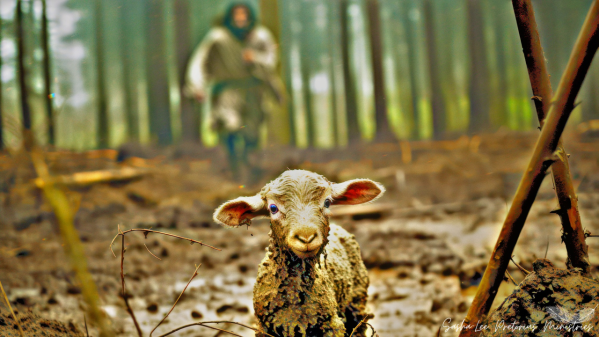
Maybe now is the time to consider this more personally. We are not, of course, obliged to deny the positive aspects of our reality. But we all need the honesty of a C.S. Lewis to admit how deep evil runs within our hearts. When we acknowledge this, we should know that we are not alone in this destabilising discovery; “All we like sheep have gone astray; we have turned – every one – to his own way”. This is the universal human condition, and we must understand it, humbling though it is. 

What makes us willing to face it, is knowing that there is a remedy – and there is! If we are “lost sheep”, we may know also that there is a “Good Shepherd” who gave his life to deliver his sheep from the horrors of their unfortunate condition.

Clive Every-Clayton

Distinguishing good from evil

Some actions are obviously very evil; others are praise-worthy and clearly very good. But anyone who is serious about their behaviour wonders at times how good their conduct really is. Normally everyone thinks what they do is good. We go easy on our moral self-assessment because we don’t like feeling guilty. On some occasions, however, we have difficulty escaping the feeling that what we did was really wrong. But how can we know for sure? If there is no ultimate moral authority, can we just make up our own rules?

When writing about our conscience, I mentioned that it is fallible; we need further guidance. This is especially the case for those who decide to follow Jesus and who heed his call to repent. What exactly must we repent of? Who can tell us? Only God can see the deep motivation in one’s heart.

This is where the biblical revelation of God’s holiness becomes important. “Holy, holy, holy, is the Lord”, the Bible tells us. Logically, it was God who implanted the notion of good in us, his creatures made in his image. But since we are neither perfectly instructed nor models of perfect behaviour, we have trouble assessing even our own motives, let alone other people’s.

We are driven, ultimately, to see our need of outside guidance, since human ideas are inevitably imperfect. We need a holy God to stipulate what is good and to declare what is reprehensible. A holy God alone could render such a service to humanity, and that is what God has done.

Those who hear and heed Jesus’ call to repent of sin may look to his teaching to get some clarification about good and evil. Firstly, he quoted with approval the Ten Commandments given by God in the Old Testament, which stand forever as wise guidelines for a good society. They condemn murder, theft, bearing false witness, blasphemy, adultery, idolatry, dishonouring parents, lust and coveting, but they also insist on giving God his rightful place as Lord to be obeyed. Jesus also listed sins to be rejected: “evil thoughts, sexual immorality, theft, murder, adultery, greed, malice, deceit, lewdness, envy, slander, arrogance and folly” (Mark 7.21-22). You get the idea…

The apostle Paul wrote several lists in the New Testament as well. Here’s one decrying “the acts of sinful human nature”: “sexual immorality, impurity, debauchery, idolatry and witchcraft, hatred, discord, jealousy, fits of rage, selfish ambition, dissention, factions and envy, drunkenness, orgies, and the like.” He adds a warning that “those who live like that will not inherit the kingdom of God” (Galatians 5.19-21). 

What is best for us human beings is to live a good life, which Paul characterised in the same passage as “love, joy, peace, patience, kindness, goodness, faithfulness, gentleness and self-control” (Galatians 5.22-23). We know that the bad things we do disturb our peace of mind, lead to breakdown in relationships, and stir within our hearts unpleasant emotions that do us more harm than good. On the other hand, when we habitually do what God describes as good, we experience positive self-esteem and inner peace. This is the right way to human flourishing.

The Bible emphasises virtues like love for people, being caring and forgiving; Jesus’ disciples are to become like him, good, upright, helpful, holy, pure, decent, reliable, true and faithful. When someone is considering following Jesus, that is the kind of life he is to aim for. And Jesus’ Holy Spirit miraculously can come into believers’ hearts to enable them to progressively become more like him.

Clive Every-Clayton

The deep human malady

Are people essentially good, basically corrupt, or somewhere in between? How to assess our human reality? By our own opinion? Our evaluation would tend either to hubris or low self-esteem, because, bizarrely, there is in our nature both good and evil. Our pride would emphasise the good; our realism may recognise the bad also. 

The difficulty is, you cannot truly understand yourself by yourself. This is the eternal conundrum already long before Blaise Pascal, he who excelled in “showing how vile and how great man is” (§119/423). He also had deep insight into the real cause of both our nobility and our baseness. The dual nature of man, he saw, has its explanation par excellence in the Bible, and he expresses it as if God was telling us: “It is I who have made you, and I alone can teach you what you are. But you are no longer in the state in which I made you. I created man holy, innocent, perfect… He was not then in the darkness that now blinds his sight, nor subject to death and the miseries that afflict him. But… he wanted to make himself his own centre and do without my help. He withdrew from my rule, setting himself up as my equal in his desire to find happiness in himself, and I abandoned him to himself” (§149/430).

In other words, our positive glory comes from being part of the unique species that was created in the image of God; our deep depravity comes from the fact that humankind has fallen away from that original holiness. This is the light from God that we need to make sense of our dual reality. God’s glorious creation is in ruins; and the fault is not God’s! Man has become a rebel: “men are the devils of the earth” (Schopenhauer). “Humans have a great capacity for wrong-doing,” wrote Jordan Peterson, a “proclivity for malevolent actions. Every person is deeply flawed. Everyone falls short of the glory of God” (12 Rules for Life, p.55 and p.62). And Malcolm Muggeridge stated, “The depravity of man is at once the most empirically verifiable reality, but at the same time the most intellectually resisted fact”. Yes, we resist it, don’t we? Yet in our sober moments, we must acknowledge it is true. “All have sinned”, says the Bible: “None is righteous” – in the sense of being perfectly good in God’s eyes (Romans 3.10, 23). And if we think we are the exception, the Bible brings us back to reality: “If we say we have no sin, we deceive ourselves and the truth is not in us” (1 John 1.8).

We have said that God is our Creator, but he did not make us inherently evil; he made humankind in his image, in the likeness of a holy, good and loving God. That is the source of our inherent greatness. The source of our inherent sinfulness is due to a primeval rebellion, the disobedience of the first human couple, Adam and Eve.

That deserves separate treatment.

Clive Every-Clayton

Blog at WordPress.com.

Up ↑