Which God?

If, as I have been maintaining, the real purpose of our existence, and the way to true human fulfilment is to be in harmonious relationship with God, some may wonder which God I am referring to. I have emphasised that God is our Creator who designed our human faculties, making our species originally in his likeness. This first principle comes from the first page of the Hebrew Bible, to which Christians refer as the Word of God. 

It follows therefore, as is recorded in the same Bible, that the Creator continued to communicate with mankind, particularly to Abraham to whom the Lord promised offspring through which the whole world would be blessed. Further on in the Scriptures we read of God’s prediction of a coming Messiah, a descendant of King David, and when Jesus began his ministry it was known that he was of the offspring of Abraham and of the tribe of David.

“God so loved the world that he sent his only Son”, said Jesus, referring to himself. He many times referred to God as his Father, specifically as “my Father” and “the Father who sent me” (John 10.29, 5.37). “The Father knows me and I know the Father”, he declared (John 10.15), and he even asserted, “I and the Father are one” (John 10.30).

Jesus’ miraculous life, his unblemished holiness, his profound wisdom, his authoritative declarations about God, his unsurpassed excellence in moral teaching, his love in giving himself as a sacrifice for others, and his powerful resurrection from the dead – all unite to corroborate that here, for one time in history, there appeared on earth a man who had truly come from God.

What are we to make, then, of the gods that religious thinkers have set forth in the innumerable religions of the world? They all testify to the foundational reality about our human species – that we feel deep down that we were made by God and that he must be there. All religions are peoples’ various attempts to get in touch with God, to guess what his nature must be, to propound ways of pleasing him – because it is in our very human nature to discern that there must be a God “behind” this glorious creation.

But how to discover him? God has given signs of his existence in two complementary ways: first in his works of creation, and secondly in his words of revelation. “The heavens declare the glory of God”, wrote the biblical poet (Psalm 19.1). The beauty of nature, the mathematical precision of the universe, and the human conscience disclose something of the greatness, power, and holiness of God. But human minds are darkened in such a way that we cannot correctly perceive – from nature alone – who God is and how we can truly know, love, and worship him.

God therefore revealed himself in clearer ways – by communication in words to those like Abraham and the biblical prophets, notably Moses who received the Ten Commandments from God and saw his glory (Exodus chapters 20, 33 and 34). All this prepared the most astounding and unique revelation of God in world history, when “God sent forth his Son, born of a woman, born under the law, to redeem those under the law” (Galatians 4.4-5). Having “spoken” in previous ages “through the prophets, God has ultimately “spoken to us by his Son” (Hebrews 1.1-2). Jesus renders us the ultimate service of being the supreme revealer of his Father, “the one true God” who sent him (John 17.3), and also the unique redeemer of mankind.

Clive Every-Clayton

But why does God…?

We want answers to numerous questions which begin with these words, because we question God’s apparent way of doing things. Why he allows suffering, for example, why he permits evil, and wars, and genocides, and torture… Why does God let little children suffer from the breakdown of their family security? And on and on.

Vast questions! In reply, notice first of all, two things. First, the accusing tone in the question. It’s as if we want to find fault with God, rather than really wanting to listen to the answer. We have already pre-judged him. To our way of thinking, he is a bad God; he’s not doing a good job – as if we would do better!

Secondly, the question seeks a rational explanation. Now let’s just think a moment why that is so. It’s because we are reasonable, thinking persons who require answers that satisfy the demands of our rational minds. And we expect there should be some reason why God does what he does. That expectation comes from the fact that we are endowed with intelligence that thinks logically. That, in turn, is actually the case because we are created in the likeness of a wise, super-intelligent, rational God. 

The brilliance of God’s understanding can be seen in the amazing fine-tuning of the physical constants in the universe which are indispensable for life on our planet. Who but God could have put those extremely accurate unchangeable factors and measurements in place from the very moment when his big explosive power set off the start of all creation – so that one day his human creatures could live, think, develop agriculture, and study science?  

You wouldn’t be asking the “But why does God…” question if you were merely complicated matter thrown up by abstract fate in a chance universe!

So the very fact that we ask such questions and want authentic answers is tacit testimony to God’s necessary existence! And so it is also perfectly legitimate to ask these questions, and to wonder about God’s way of doing things.

The problem is that you may well find that God’s answers are not to your taste. Why might that be? Because you think you know better than God! So as you ask your questions, please maintain an openness to hear answers which have a wisdom above your own.

Questions about human suffering are perplexing, and are not easily answered in a short blog. To get onto God’s wavelength as it were, is no simple matter. His ways, the Bible indicates, “are inscrutable… For who has known the mind of the Lord, or who has been his counsellor?” (Romans 11.33-34). God tells us through his prophet Isaiah, “My thoughts are not your thoughts, neither are your ways my ways… For as the heavens are higher than the earth, so are my ways higher than your ways, and my thoughts than your thoughts” (Isaiah 55.8-9).

If befits us to have some humility. If God had written back in Isaiah’s day what he knew about the creating and upholding of the universe and human life, no-one would have understood it for millennia! He knew all about cells and DNA and fossil fuels and the ozone layer and so on; he wanted us to use our intelligence to discover such things progressively. He saw that our need was for moral and spiritual realities to be understood, so that’s what he decided to reveal, for without such revelation, our human reason would never know such truths. 

We are so ignorant! Yet we dare question God’s ways!

Clive Every-Clayton

Truth and lies

I have noticed that some public figures dare to use the word “lies” to warn the public of sayings and worldviews that do not serve their best interests. A friend of mine was recently deceived by a scam. Quickly realising his mistake he blocked his bank account and so lost no money. We render a great service to people when we warn them of deceit, mistaken thinking, “fake news”, erroneous opinions and false, futile philosophies.

So, for example, the catholic professor Peter Kreeft in a commencement address to students in America, gave a list of ten lies not to believe. Among these lies were, for example, “To think that the most important person in the world is you”; or again, “You need not search for positive truth but for your own truth”, or to see “The exaltation of freedom as an end, not a means to an end”. The young listeners seemed to appreciate such frank talk.

Another erudite thinker is Sharon James whose powerful book is entitled, “The Lies we are told and the Truth we must hold”. Among the lies she warns against are, “That there is no God and no Absolute Morality”, and that “There is no universal truth”. She quotes an astute word of Roger Scruton: “A writer who says that there are no truths, or that all truth is ‘merely relative’, is asking you not to believe him. So don’t”.

Another important book has come from the pen of Rosaria Butterfield. If you don’t know of her already, you ought to. Radically converted from a life-style she would characterise as immoral, this Professor of English has become a very able spokesperson bringing God’s wisdom to bear on the issues of today. Her book is entitled, “Five Lies of our Anti-Christian Age”, and she boldly – and with real experience from where she is coming from – challenges the idea that homosexuality is normal and such sexual orientation represents a person’s core truth. She wisely and winningly contests the idea that feminism is good for the church and for the world, and grasps the nettle of transgender issues. 

So there are big lies out there these days! In John’s Gospel 8.44, Jesus taught that lying is a trait of the Evil One: the devil twists and hides the truth because he realises that God’s truth is that which sets people free – free not only from error and misunderstanding, but free from the devil’s clutches, free from the grip of bad habits, from wicked tendencies, and foul addictions.

The Bible says that “God does not lie” (Titus 1.2) – indeed, “it is impossible for God to lie” (Hebrews 6.18). If we are to get authentic answers to the big questions of our existence, we need TRUTH! And only God knows and can communicate absolute truth. Only he can give us the much needed moral truth too. 

Jesus said, “I am the way, the truth and the life” (John 14.6). He said he brought us “the truth that I heard from God” his Father (John 8.40). Here and here alone is the source of reliable truth and authentic answers. If you haven’t read the Gospels, get a hold of them and read them for yourself. If you come with an open mind, you will be enlightened!

And as you read, pray the prayer of the psalmist: “Guide me in your truth and teach me, for you are God my Saviour and my hope is in you” (Psalm 25.5).

Clive Every-Clayton

The folly of determinism

The other day I heard a Professor of Stanford University, interviewed on BBC’s Radio 4 Today programme, putting forward the notion that everything in the universe is determined, and there is no freedom really. This is the logical outcome when the presupposition of atheistic scientific materialism is accepted: everything comes down to the haphazard movement of atoms of matter since the original Big Bang.

Being interviewed, the Professor frankly acknowledged how “dismal” this seems, when you come to assessing your own life and realise “there’s no ‘Me’ in there”. The interviewer, normally very astute in dealing with current affairs, oddly failed to ask the obvious question that would have unsettled the American author: “What do you yourself think and feel about this philosophy of yours?”

Such a question would reveal the inherent contradiction between the Professor’s thesis and his daily reality. It is impossible to really live in accordance with such a vision of things, which demonstrates the utter stupidity of determinism as a philosophy about real life. No one can, nor does, live according to such a theory. Why did the Professor write his books? Was he determined to do it?? Or what does he make of counter-arguments that propose that a man is free, for example, to execute his writing projects or organise his career moves according to his own best interests?

Determinism is a self-defeating philosophy with no leg to stand on. However profound and sophisticated may be the wording of the author’s thesis, it remains unbelievable because it is unliveable. Even the Professor admits it is “dismal”, but in fact he lives out a lifestyle in his professional sphere in a way that negates his own materialistic atheism.

No wonder atheism is losing steam these days: materialistic scientific atheism reduces man to irrational stuff, logically undermining the value of his reason; so in atheism itself there is a systemic contradiction in its epistemology. It is an unbelievable faith-system!

The biblical account of man’s creation in the likeness of an intelligent, wise and rational God, on the other hand, is a solid foundation – indeed, the only possible foundation – for man’s personality and his rationality – to say nothing of his freedom. The evidence for God as Creator and Saviour is set forth for all to check out in the Bible, notably in the life, teachings, death and resurrection of the Lord Jesus Christ. He was living and walking around Palestine as a young man exactly 2,000 years ago, and the positive influence of his ministry has improved the world more than any other historic person.

Those who hold to determinism would do well to ponder Jesus’ famous statement: “If you hold to my teaching, you are really my disciples. Then you will know the truth, and the truth will set you free”. In the context Jesus teaches we are all “slaves” – not to our genes or to fate or to our circumstances: “I tell you the truth,” he says, “everyone who sins is a slave to sin… but … if the Son sets you free, you will be free indeed” (John 8.31-36). 

Though we are thus “slaves”, we are not caught inexorably in a hopeless determinism. Millions throughout the world can testify how Jesus delivered them from the grip of addictions, whether to drugs, alcohol, pornography, lying, bitterness, hatred… Still today, the risen Christ sets people free.

Clive Every-Clayton

Understanding the human condition

One element of our human reality is our moral awareness. We are able, albeit imperfectly, to distinguish right from wrong. There is another more perturbing element of our reality, however: we are obliged to acknowledge at times a degree of “wrong” both in our conduct and in our inner feelings and desires. To face up to this reality is not a pleasant exercise – but it can be salutary.

The experience of well-known writer and Oxford don C.S. Lewis, when he was a young teacher at the university, shows exemplary honesty. He had a deep antagonism towards the Christian faith, but little by little he saw himself obliged to yield to the unremitting evidence of “Spirit” (as he called God at that time) and he discerned that God was coming closer and closer to him. He admits he was no more in search of God than a mouse was in search of a cat. But he was blessed with a conscientious spirit; where others would have shrugged their shoulders and carried on, he realised he must face reality and he needed a deep remedy. An important step came when, as he wrote in his biographical account, “For the first time I examined myself with a seriously practical purpose. And there I found what appalled me; a zoo of lusts, a bedlam of ambitions, a nursery of fears, a harem of fondled hatreds.” Rare are those who have such insight to the depth of their human reality.

The fact is that all humans suffer from a strange dual reality: we are capable of great compassion and devotion to duty, pouring out our energies into assisting the sick, the needy, the dying. Yet we also feel at times such fury when our wills are crossed that we could seriously harm those who antagonise us. Our inner being is deeply self-centred, imperiously requiring the fulfilling of our selfish desires, claiming the freedom to do as we wish and ready to overcome anyone who stands in our way.

I have previously quoted Blaise Pascal’s brilliant analysis of this dual reality; he says it is dangerous to explain to man his beastliness without pointing out his greatness also. But he adds, “it is also dangerous to make too much of his greatness without his vileness. It is still more dangerous”, he concludes, “to leave him in ignorance of both, but it is most valuable to represent both to him” (Pensée §121/418). 

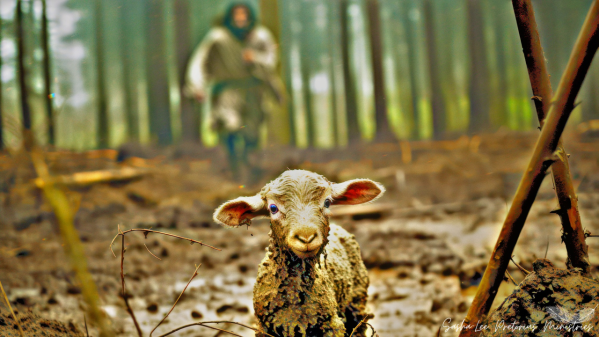
Maybe now is the time to consider this more personally. We are not, of course, obliged to deny the positive aspects of our reality. But we all need the honesty of a C.S. Lewis to admit how deep evil runs within our hearts. When we acknowledge this, we should know that we are not alone in this destabilising discovery; “All we like sheep have gone astray; we have turned – every one – to his own way”. This is the universal human condition, and we must understand it, humbling though it is. 

What makes us willing to face it, is knowing that there is a remedy – and there is! If we are “lost sheep”, we may know also that there is a “Good Shepherd” who gave his life to deliver his sheep from the horrors of their unfortunate condition.

Clive Every-Clayton

Distinguishing good from evil

Some actions are obviously very evil; others are praise-worthy and clearly very good. But anyone who is serious about their behaviour wonders at times how good their conduct really is. Normally everyone thinks what they do is good. We go easy on our moral self-assessment because we don’t like feeling guilty. On some occasions, however, we have difficulty escaping the feeling that what we did was really wrong. But how can we know for sure? If there is no ultimate moral authority, can we just make up our own rules?

When writing about our conscience, I mentioned that it is fallible; we need further guidance. This is especially the case for those who decide to follow Jesus and who heed his call to repent. What exactly must we repent of? Who can tell us? Only God can see the deep motivation in one’s heart.

This is where the biblical revelation of God’s holiness becomes important. “Holy, holy, holy, is the Lord”, the Bible tells us. Logically, it was God who implanted the notion of good in us, his creatures made in his image. But since we are neither perfectly instructed nor models of perfect behaviour, we have trouble assessing even our own motives, let alone other people’s.

We are driven, ultimately, to see our need of outside guidance, since human ideas are inevitably imperfect. We need a holy God to stipulate what is good and to declare what is reprehensible. A holy God alone could render such a service to humanity, and that is what God has done.

Those who hear and heed Jesus’ call to repent of sin may look to his teaching to get some clarification about good and evil. Firstly, he quoted with approval the Ten Commandments given by God in the Old Testament, which stand forever as wise guidelines for a good society. They condemn murder, theft, bearing false witness, blasphemy, adultery, idolatry, dishonouring parents, lust and coveting, but they also insist on giving God his rightful place as Lord to be obeyed. Jesus also listed sins to be rejected: “evil thoughts, sexual immorality, theft, murder, adultery, greed, malice, deceit, lewdness, envy, slander, arrogance and folly” (Mark 7.21-22). You get the idea…

The apostle Paul wrote several lists in the New Testament as well. Here’s one decrying “the acts of sinful human nature”: “sexual immorality, impurity, debauchery, idolatry and witchcraft, hatred, discord, jealousy, fits of rage, selfish ambition, dissention, factions and envy, drunkenness, orgies, and the like.” He adds a warning that “those who live like that will not inherit the kingdom of God” (Galatians 5.19-21). 

What is best for us human beings is to live a good life, which Paul characterised in the same passage as “love, joy, peace, patience, kindness, goodness, faithfulness, gentleness and self-control” (Galatians 5.22-23). We know that the bad things we do disturb our peace of mind, lead to breakdown in relationships, and stir within our hearts unpleasant emotions that do us more harm than good. On the other hand, when we habitually do what God describes as good, we experience positive self-esteem and inner peace. This is the right way to human flourishing.

The Bible emphasises virtues like love for people, being caring and forgiving; Jesus’ disciples are to become like him, good, upright, helpful, holy, pure, decent, reliable, true and faithful. When someone is considering following Jesus, that is the kind of life he is to aim for. And Jesus’ Holy Spirit miraculously can come into believers’ hearts to enable them to progressively become more like him.

Clive Every-Clayton

A new direction

Another way of speaking about repenting, is to see it as an about turn. Instead of carrying on in the wrong direction, you turn around and go the right way. 

In the Bible, God himself uses that very word, “turn”: “Thus says the Lord God: Repent and turn away from your idols, and turn away your faces from all your abominations” (Ezekiel 14.6). “Turn away from evil,” is the counsel of Proverbs 3.7. “I have no pleasure in the death of anyone, declares the Lord God; so turn, and live! Why will you die?” (Ezekiel 18.31, 32). There is a turning away – from all that God disapproves, from our evil ways. 

Then, positively, there is a turning towards the Lord himself. He calls out: “Turn to Me, and be saved, all the ends of the earth! For I am God and there is none other” (Isaiah 45.22). It was said of the early Christians, when they heard the good news about Jesus, that they “turned to God from idols to serve the living and true God” (1 Thessalonians 1.9).

The essence of human wrong-doing is summed up as exchanging the truth about God for a lie (Romans 1.25); so the way to put right our human condition is to relinquish the lies we have been tricked into, and embrace the truth that God in his wisdom and kindness has revealed by his Son and in his word, the Bible.

As we listen to Jesus and realise who he is, we can verify if we have been ill-informed about God, about our Creator, about the true purpose of life that the Creator had in mind for us. As we read the Bible, we see why Jesus came – not only to teach us truth – vital though that is – but to bring us to see and know God as he really is: kind, loving, holy yet forgiving, merciful and wise, desiring to lead us in the good way.

We are wise when we recognise that God is truly good, and he has the right to our obedience; it is a “good riddance” to turn away from all evil. It is an edifying challenge to decide to live a new life following Jesus as Lord and Master, learning from him, seeking to resemble him in his love, purity and holiness. To be called to be a follower of Jesus is a high calling – an immense privilege. And Jesus accompanies his disciples, calling them his friends. His ears are open to our prayers; his presence as the risen Christ gives us confidence and courage. He promises he will never leave us or forsake us: in whatever situation we may be, we can count on his help. If we fail and repent again, he will forgive and comfort us. If we face tough challenges, he promises us renewed strength.

The Christian is thus called to a life-long positive relationship with God through Jesus Christ. As we repent and believe, he takes us on as his followers and he stays with us through both the good days and the tough times, ever present to encourage us, lift us up, strengthen us in doing what is right and making us a blessing to others. A whole new life opens up to the one who commits to following him in trust and obedience.

Clive Every-Clayton

The big rethink

When we look for authentic answers to our deep existential questions, we normally rely on our wits: we read books, we follow lectures, we discuss with those more informed than ourselves, and we think it all through. We seldom pause to realise that all this happens on a purely human level; we probably weren’t looking for divine in-put anyway.

When we open the New Testament, however, and start seeking there for potential answers, we may well be struck by an unusual word, a challenging call. Whether it is Jesus (Matthew 4.17), or John the Baptiser (Matthew 3.2), or the apostle Peter (Acts 2.38) or the apostle Paul (Acts 20.21) – the same challenge rings out: it is the call to “repent”. Jesus is radical: “Unless you repent,” he affirms, “you will perish” (Luke 13.3, 5). 

This call has a double meaning, requiring a double dose of humility. Firstly, Jesus calls his followers to have a big re-think. It’s as if he knows that whatever anyone thinks (about the big questions), they’ve got it wrong! Another way of saying it is that Jesus brings the true answers that everyone needs to listen to. By nature we do not have the correct grasp of things – we are ever seeking, often very conscious of how far we are from getting good answers. If you’re in that frame of mind, be happy! You’re on the right track. You need light from the One who said, “I am the Light of the world” (John 8.12). As you rethink and put faith in the true answers that Jesus brought, you will be wisely led: as Jesus said, “he who seeks, finds” (Luke 11.9).

Secondly – and this is even more humbling – we have to re-think the way we are living. To repent means to turn away from all that is wrong, to reject sin in all its many forms, and to commit to learning how to live what Jesus would call a good life. This can be quite radical – depending on how deep one may have gone into various ungodly life-styles. But it is absolutely beneficial! Jesus’ answers to our existential questions are not merely theoretical: they demand to be heeded and to be translated into how we live. He teaches us what true fulfilment really is – how human beings find the deep happiness we long for (not the frothy gaiety that always leaves a hang-over, a deeper emptiness, an aching void). Jesus came, he said, “that people might have life – abundant life” (John 10.10). He speaks of joy and peace that he gives. “Come to me all you who are weary and burdened, and I will give you rest” (Matthew 11.28). “If anyone is thirsty,” he cries out using another metaphor, “let him come to me and drink”; “the one who drinks the water that I give him will never thirst – it will become in him a well of water springing up to eternal life” (John 7.37, 4.14). Great promises! And Jesus honours them!

So his call is both to believe in him and to repent. This double commitment may take but a moment, but it leads to the most fulfilling life possible for a human being. Obviously it needs to be nourished, informed by the reading of Jesus’ teachings, but here is the key to the kind of life that we all, deep down, long for but cannot find. 

Clive Every-Clayton

God calls people

When God comes to call us, he doesn’t softly say, “Do you mind if…? Rather, he comes as the sovereign Lord that he is, rightful supreme master of the universe with all the weight of his glory… yet, for all his rightful power, he does come asking a question. This is specially his approach when he comes to a person who has sinned: “Adam, where are you? … Have you eaten of the forbidden fruit?” (Genesis 3.9-11). God doesn’t ask such questions to get information, of course. Rather it is his way of gently inviting a response of humble admission of sin.

When a woman taken in the very act of adultery was dragged by the Jews before Jesus, he first deals with the accusers, and when they leave, duly humbled, his first words to her are, “Woman, where are they? Has no-one condemned you?” Then he sets her free: “neither do I condemn you” (John 8.3-11).

When God “arrested” the fiery aggressive persecutor Saul of Tarsus on the Damascus road, yet again he asks a question: “Saul, Saul, why are you persecuting me?” (Acts 9.4).

Isn’t that astonishing? How would you expect God would come and speak to you? You may be afraid of his almighty judgment; you may expect him to come down on you like a ton of bricks and condemn your moral failings. But no: he would ask you a question. Like: “How are you doing?” If God asked you that, it would make you think, wouldn’t it? Well, how are you behaving? Do you need God’s forgiveness? Would you like God to wipe away those things you have on your conscience from the inglorious days of your past?

Jesus actually asked people, “What would you like me to do for you?” So maybe God would ask, “Would you like the forgiveness, the peace, and the joy that I would like to give you?” Or again, “Are you finding life tough going?” Or, “would you like to know the way to real human fulfilment?”

After giving us pause for thought by posing questions like those that make us conscious of our need of God’s mercy, then he would come with his imperious advice – which is more of a command than a suggestion!

Maybe God is coming to you right now, saying: “The time is ripe: mercy is available. I love you in spite of how you have behaved: turn right around, ‘come to me and I will give you rest’ (Matthew 11.28) – the inner rest and peace you’ve always longed for. You’ve been looking in the wrong place. I will welcome you if you repent and turn to me. I will make you anew”.

Clive Every-Clayton

What is faith?

Faith is essentially very simple, though it is deeply profound. We all have faith in people every day – we have faith in the bus driver, in our teacher, in our doctor, in the lady down the road who passes on the latest gossip, though we may sometimes doubt her.

The young couple about to get married have faith in the love and faithfulness of each other, so they make their commitment “until God shall separate them by death”. 

The scientist has faith that the world runs – and will continue to run – according to consistent order; he has faith in the scientific research papers he reads, without knowing how truthful the academic who wrote them really is.

Even the atheist has faith in his ideas – for his atheism is a “faith system” according to one-time atheist Alister McGrath.

Whatever religion people may have, they have faith in it. The question is: is that faith well placed? How do they know that what is proposed is reliably true? People who always ask that question can end up totally sceptical, because it is not easy to find a basis for our trust that is 100% watertight. In fact, the only basis that qualifies for that degree of truth would be a God of absolute truth.

I have set forth that basis as we looked at Jesus, who affirmed, “I am the truth” (John 14.6) and that he “came down from heaven” to “teach just what God the Father had taught” him to say; so “whatever I say is just what the Father has told me to say,” and his “word is truth” (see John 6.38; 8.28 and 40; 12.50; 17.17).

As we listen carefully to Jesus’ words, and consider the purity of his life and the wisdom of his teaching, we are led to believe that he could indeed be the unique incarnation of God and the Saviour of the world. As we consider what he taught about salvation and forgiveness through his death for us, and examine the evidence for his resurrection from the dead, we are logically led to the conclusion that he must indeed be who he said he was. This is the first step of faith.

On that basis, we must go further, because real faith goes beyond simple belief in facts; it must lead us to trust. Faith as trust is essential in every human relationship, and so it is in our relationship with God. When Jesus calls people to follow him, he makes promises, and invites us to trust him to fulfil them. His promises are recorded in the Gospels and are open to “whoever believes in him” (John 3.16). 

Even if we’re not fully convinced that he came from God, as we pay attention to his words, faith and trust grow in our hearts. Jesus promises rest of soul, spiritual new birth, forgiveness of sins, abundant life and eternal life – the full, true meaningful life we deeply long for. All this and more is included in the restoring of a harmonious loving relationship between the forgiven sinner and God our gracious Saviour. This is – I keep repeating – the human fulfilment in life that we were created for, and we come to experience it as our faith expresses itself in trust.  In a prayer of commitment, we receive Jesus as our Saviour, to forgive our sins; we acknowledge him as our Master whose teaching we will believe and follow, and we commit ourselves to him as our Lord whom we will learn to love obey from now on.

Have you expressed your faith in that kind of prayer? 

Clive Every-Clayton

Blog at WordPress.com.

Up ↑