
What’s so special about Easter?

From the beginning of the church, the first preachers proclaimed as an actual fact that Jesus, having been crucified, dead, and buried, rose to life and was seen by a number of his disciples over a period of about two months. They told how he had eaten and talked with them, showing them the wounds of his crucifixion to demonstrate that it was really himself. The preaching by these disciples in Jerusalem enraged the religious leaders who had brought about his crucifixion, and they did all they could to stamp out this new sect. They had the leading speakers imprisoned, beaten, and ordered them to stop preaching about this risen Jesus. The eyewitnesses of the risen Christ could not, however, be stopped, whatever they might suffer for proclaiming truth – they would neither lie nor be silent.

The religious authorities would have just loved to find the corpse of Jesus and put a stop to this new religion, but there was no corpse; his grave was empty.

As the first Christians proclaimed that their Master had risen from the dead, they quoted texts from the earlier Scriptures that had predicted that the Messiah would return from death. They remembered that Jesus himself had actually foretold several times that he would be crucified and then rise again “after three days” (Mark 8.31, 9.31, 10.33-34 – passages paralleled in Matthew and Luke). Because of that claim, the Jewish leaders set a guard to watch over the tomb where he was buried, lest anyone came and tampered with the corpse. But when an earthquake occurred, the guards were overcome with fear, seeing a shining angelic vision and could do nothing to prevent Jesus’ resurrection. 

The new faith grew rapidly; no-one could counter the fact of Jesus’ resurrection, attested by those witnesses who had seen Jesus alive after his death. The Christian church was thus founded on the proclamation that Christ died for our sins and rose victorious over death. The Jesus who during his lifetime had healed the sick and even three times raised the dead, was himself conqueror of death: and the most astonishing thing of all is that he had predicted he would rise from death after three days. His prediction was fulfilled! This is the most astounding prophecy and the most mind-boggling fulfilment in all human history! 

By this unique resurrection of Jesus the Son of God, his almighty Father demonstrated with power his approval, authenticating his life, teaching, and atoning work by raising him from death, subsequently taking him up to heaven at his ascension. Christianity was born by the events of Easter to which the apostles of Jesus testified in the town where he was killed. They boldly proclaimed that they had seen the risen Christ, and thousands believed and were baptised. 

A further aspect of the message which Jesus’ apostles proclaimed was that the Spirit of the risen Christ could enter people’s lives and transform them from sinners into saints. The many who were converted in those early weeks experienced that saving transformation as they heard the preaching of the Gospel, repented, and believed in Jesus. The biblical definition of the Gospel message is that “Christ died for our sins in accordance with the Scriptures, that he was buried, that he was raised on the third day in accordance with the Scriptures, and that he appeared to…” various people (1 Corinthians 15.1-6). The Christian faith is therefore based on historic events recorded in the early biblical documents which we now possess in the Bible, which give evidence for believing that Jesus was God incarnate. 

Clive Every-Clayton
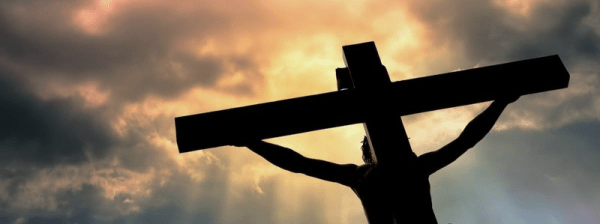
Easter: the bizarre death of Jesus

This April 2025 Christians will celebrate Easter. This feast is a celebration and commemoration of what took place in history, almost exactly 2,000 years ago in Jerusalem. It can be considered as the pivot of world history, bringing in a change that reverberates still around the world today.

In this blog post and the next I want to explore the deep meaning first of Jesus’ death, and then of his resurrection from the dead, for these are the events we commemorate each Easter.

Jesus’ death was, in one sense, a grave miscarriage of justice: the Roman governor, pressured by self-righteous jealous religious leaders who stirred up the crowd against Jesus, condemned the innocent holy prophet to die. But there is much more to it than this. Jesus himself, the night before his crucifixion, said that his blood would be shed “for the forgiveness of sins”.

It is a little-known fact that on three occasions the Gospels relate how Jesus predicted not only his death but also his resurrection! Referring to his death he said he would “give his life as a ransom for many”, and as the “Good Shepherd” he would “lay down his life for his sheep”. In other words, in Jesus’ understanding, his death was for the benefit of others, indeed for their salvation, for he came, he said, “to seek and to save the lost”.

The reason why Christians celebrate the death of Christ and make an instrument of torture – the Cross – a symbol of their faith, is that they see it as having accomplished a work of atonement for their sins. Most religions see that sins have to be punished or “paid for”, and our conscience admits that as guilty offenders we deserve God’s righteous punishment. But while other religions propose that we can obtain salvation by the good works that we are able to do to “pay for” our sins, Christianity gives us a vitally different message. We need to realise that we cannot ever “pay for” our sins however much good we seek to do, because we ought to do those good things anyway. Instead it is Jesus who came to “pay for our sins”, to make atonement, and he did that by dying “for us”.

This is why the Christian message is called “Good News”. This is why the death of Jesus is celebrated in churches throughout the world. It was the accomplishing of our salvation, as Jesus’ work of atonement makes possible the forgiveness of our sins. It is the only objective grounds upon which a holy and just God can offer free forgiveness while fully respecting the demands of justice: the just penalty we deserve was taken by Jesus. Why? Because he loves us! His death for our salvation is the supreme demonstration of God’s love and mercy towards us. 

On the cross Jesus cried out, “It is finished!” He was telling us that he has finally accomplished his atoning work. In anticipation he had said in prayer to God his Father the night before he died: “I have finished the work you gave me to do”.

This does not mean that everyone is thereby automatically forgiven; every one of us needs to ask our Saviour to forgive us personally, on the basis of his death for us. We need to turn from our sins and turn to Jesus in prayer; we need to thank him for his sacrifice which makes forgiveness possible. Then we must receive him as our Saviour and commit ourselves personally to follow him as the new Lord of our lives.

Clive Every-Clayton

You are loved

One of our most fundamental needs is to be loved. Oh the joy of knowing you are loved! You can put up with anything if you know you are truly loved. How our heart hungers and longs for love! “Love is (almost) all you need”. But a plaintive song in “Half a Sixpence” laments, “Where is love?” How many hearts are burdened by lovelessness! We appreciate any kindness shown to us, but oh! the deep personal longing to love and to be loved! And what anguish when relationships break up and love is lost!

One of the huge blessings of the Christian faith is to know that God loves us, and it is uniquely satisfying because his love is eternal, faithful, strong, forgiving, never-ending. God’s love starts in eternity past – before the creation of the world: “I have loved you with an everlasting love” he says. What comfort that gives the believer! “Underneath are the everlasting arms”: his love enfolds us in a warm eternal embrace.

How do we know? Jesus came from “the bosom of the Father” to tell us, and even to show us how great is his love. The Bible tells us, “God is love” (1 John 4.8) and love radiates unceasingly from God as the warmth radiates from the sun. As the children’s song says, “You can’t stop God from loving you”!

Most people think that God would love them if they were really, really good people, but they know they aren’t so they’re afraid God is against them. But Jesus teaches us that God even loves people who he calls sinners. Jesus’ self-giving on the Cross, for us unworthy sinners, is the great demonstration of how much he loves us. “God proves his love toward us, in that while we were still sinners, Christ died for us” (Romans 5.8). “Greater love has no-one than this, that he lay down his life for his friends” (John 15.13). “I am the Good Shepherd; the good shepherd lays down his life for the sheep” (John 10.11). God has shown how much he loves you by sending his Son to die on the Cross, so that through his sacrifice your sins may be forgiven, and you may be welcomed into a loving relationship with him forever.

The amazing thing about God’s love is that you do not have to earn it. You just have to believe it and turn to him, opening your heart to receive him as your Lord, your Saviour, and your Friend.

This is how Jesus stated it: “God so loved the world that he gave his only Son, so that whoever believes in him should not perish but have eternal life” (John 3.16). God’s love is a giving love: he gave his Son up for us; the Son gave up his life for us; on that basis, God is eager to give you eternal life as a “free gift” (Romans 6.23) if you will come to the risen Christ and receive him. “He who has the Son, has eternal life” (1 John 5.12).

How do you receive Christ? You do that by praying to God, right where you are; he hears you as you tell him you are sorry for your sins, you are turning away from them, and you want him to come into your heart to make you a true child of God. He will answer, because he loves you and desires to save and forgive you. If you are sincere, you will see how he answers that prayer, changing your life profoundly as you become a follower of Jesus.

Clive Every-Clayton

What we need

What do humans need to find fulfilment?

The basics are food and drink, shelter and warmth and caring companionship. 

Beyond that, however, there are existential needs that must be met. There are at least three: our minds need understanding; our hearts need love; and our wills need purpose. That summarises the needs of our personal nature, whose three components are our intellect, emotion, and will. To that we may add our conscience which has complex needs of its own as we shall see.

Let’s begin with our minds: we need understanding of the basics of our human existence, and if we are misled, if we think something is true when it is wrong, we are in trouble. So we need education, and that education needs to be correct. This is already a serious difficulty, since fake news and unsound philosophies seem to be everywhere; even our own personal ideas are not necessarily wise and true. It would be great if we had an all-wise teacher to guide us.

Then our hearts need to feel loved. Some are blessed with loving parents or partners; but many are those who suffer from neglect, rejection, even hatred from those who ought to give them loving care. A lot of psychological pain is due to lack of love, and it is not at all easy to find the love that we all need. It would be great if there was someone who always really loved us. 

Thirdly, we need to have something to do which will give us stimulation and satisfaction – some purpose to which we can give ourselves and spend our energies. Boredom is a killer; it brings its own lot of psychological hang-ups. We need to know that what we do is not only something we like, but something of value. Our talents vary, but something worth living for is what our soul really needs. All the better if it fits into some overarching great purpose. It would be great if we knew what that purpose was.

Faced with imperfect solutions to our deep personal needs, we suffer – some more than others. If we fall short in any of these areas, or if we fail in some way, our conscience multiplies feelings of shame or guilt which compound our psychological disarray. Is there a way forward? 

Do we have to yield to the despair of a meaningless and frustrating existence? Is this what God has made us for? Isn’t there anything better? Could God provide what our soul needs and longs for?

What did Jesus say? “I am the way, the truth and the life” (John 14.6); “I have come that people may have life abundant”. “The one who believes in me”, he says, will as it were experience “streams of living water” flowing through him (John 7.37-38). Let’s consider this.

Our understanding needs essential truth: truth about who we are, where we come from, why we are here and where we are going. Our Creator God alone can give us that essential truth, and it comes through the One who said, “I am the truth”! God renders us this extraordinary and vital service! We do well to study Jesus’ teaching and commit to following him.

He is not only “the truth”, but he is “the way” to God: he leads us to know God, coming into relationship with him, discovering his purpose for us. Our Creator’s purpose essentially comes down to knowing that he loves us and forgives all our sins and failures; he will help us to live what is true “abundant life” (John 10.10).

The next blog post will develop that.

Clive Every-Clayton

The wisdom of Jesus

Nine centuries after Solomon, and 400 years after Plato, Jesus came on the scene in Palestine. He was teaching crowds of people there and healing all kinds of sicknesses almost exactly 2,000 years ago. In his teaching he alluded more than once to king Solomon, one of his ancestors (Matthew 1.7).

He spoke of Solomon’s grandeur in the Sermon on the Mount (Matthew 6.29). In Matthew 12.42, he reminds his listeners of the time when “the Queen of the South… came from the ends of the earth to listen to Solomon’s wisdom”, but then Jesus adds this astounding claim: “now one greater than Solomon is here”! Jesus is saying that the wisdom that he brings is wiser than that of the greatest wise man of old!

The New Testament says that “in Jesus are hidden all the treasures of wisdom and knowledge” (Colossians 2.3). It even calls Jesus “the wisdom of God”: in the divine incarnate Son of God, we have access to the infinite wisdom of God himself. By his revelation, we can learn what wisdom is: how to live a life that is both totally fulfilling and at the same time pleasing to God. This is the key to what human life is all about! God has revealed his wisdom, which is a worldview that no human being could have discovered unaided. Jesus’teaching is essential for us to grasp. 

Jesus re-emphasised the “fear of God”, but he also spoke of the love of God. He faithfully warned us of some bad news. “Do not fear those who kill the body but cannot kill the soul,” he said; “Rather fear him [God] who can destroy both soul and body in hell” (Matthew 10.28). By this allusion to the “fear of God”, Jesus means that we must realise that one day we will have to stand before the ultimate Judge of all the earth and give account of our lives. And he forewarns us that there will be a potential terrible penalty if our sins are not forgiven – hell. This is the ultimate eternal loss. 

But Jesus in his wisdom tells us we can avoid that by understanding that God is also loving: “God so loved the world that he gave his only Son, so that whoever believes in him should not perish [in hell] but have eternal life” (John 3.16). Jesus calls us all to a fulfilling lifestyle when he gives what he called the two most important commandments: “To love the Lord your God with all your heart, soul, mind and strength, and secondly, to love your neighbour as yourself” (Matthew 22.37-39). To commit to obeying these two divine commandments means a radical change of life for us who love ourselves more than anyone else! But how to love God? It can only come when we realise how much God has loved us. “God demonstrates his own love for us,” writes the apostle Paul, “in that while we were still sinners, Christ died for us” (Romans 5.8). God loved us despite our unworthiness as sinners; he sent his Son to die for us, bearing our punishment in our place, guiltless though he was, so that through faith in him we may receive forgiveness and a new life, eternal life. This is the Good News of the Gospel.

He forgives us as we respond in grateful faith, so we no longer fear his judgment.  We begin to love God as the Holy Spirit of God “sheds abroad in our hearts the love of God” (Romans 5.5). This is the true way to happiness.

Clive Every-Clayton

The key to wisdom

King Solomon came through a rough time struggling through his own existential wisdom journey, but finally he came to the profound answer, summed up in a curious expression: “Fear God”. This, he concluded, is what our human life should be all about.

So are we supposed to live our lives in fear of God? But God is loving, so we shouldn’t be afraid of him. What does the “fear of God” mean?

In another of his books, entitled “Proverbs”, which contains much practical advice, Solomon returns to this question, summing up his thought with a simple but profound maxim in which he lays down the foundation of real wisdom; we do well to take heed. 

This key truth is enunciated in a succinct proverb which recalls his conclusion in Ecclesiastes: “The fear of the Lord is the beginning of wisdom” (Proverbs 9.10). Before considering what the fear of the Lord means, notice that this is just the “beginning” of wisdom – meaning you don’t even start out on the way of wise living without this first basis. Millions of thinkers have failed to find satisfying answers to the Big Questions because they didn’t heed Solomon’s wisdom at this point. Herein lies the essence of profound God-given wisdom. 

If we want to find it, we must begin by coming to “fear the Lord”. Let me explain what that means, beginning with the negative: it is not intended to teach that we should lead a life of fear, being constantly fearful of God. The idea is rather that we are to take on board who the Lord exactly is. He is no small god; neither is he a divinity invented by some religious philosopher. No, He exists from all eternity, already present before the creation of the universe. He is the mighty Creator, whose power and wisdom are infinite: “he made the earth by his power, established the world by his wisdom and by his understanding stretched out the heavens” (Jeremiah 10.12). The immense number of stars is no problem for him – he calls them all by their names. And he knows every thought that passes through our minds too.

The Lord is absolutely good, both holy in the commandments he gives us, and loving as he calls us to belong to him. In his love, he desires to share his wisdom with his creatures so that we may find the way of true happiness. To “fear” the Lord is to take account of all that God is, in a right-minded openness to his truth. He is absolute Lord, gracious Saviour, and man’s very best friend. Without acknowledging God’s existence, man can never find the true worldview. This is the one essential fact to grasp – taking account of God’s reality is “the beginning” of proper understanding, without which we go obligatorily astray. We need to begin by reckoning on the existence of our Creator.

The Greek philosophers paid scant attention to the basis Solomon laid down in his inspired writings. Their philosophies lacked that necessary wise foundation; godless thinkers have suffered ever since from the confusion of having no absolute grounds for their worldviews.

Does God himself have any real place in your life and in your thinking? Do you realise that he has revealed truth and wisdom to humankind? Are you paying any attention to what he has communicated in the Bible? If you don’t have this key to knowledge, you can’t even begin to know true wisdom. God being the fundamental reality behind all his creation, we can never make sense of it if we ignore him. 

Clive Every-Clayton

Humanity’s wisest man

Four centuries before Plato, Socrates and Aristotle began their philosophical search for wisdom, a wise man wrote three short books that even today are distributed throughout the entire world and studied by millions. When this author was young, he was about to be entrusted with national responsibilities; he had the reflex of turning to God in prayer. What did he ask for? “Give your servant an understanding mind,” he prayed, “that I may discern between good and evil”. That young man was about to be crowned Solomon, King of Israel in 962 BC. His prayer was so powerfully answered that “Solomon’s wisdom surpassed the wisdom of the people of the east and all the wisdom of Egypt”. He wrote 3,000 proverbs, “spoke of trees… of beasts, birds, reptiles and fish”, and he wrote over 1,000 songs. People came from afar to listen to his wisdom.

One of his books has a very contemporary feel about it: it reveals how his heart had been hungry for human fulfilment, but he had found it hard to find. Yet in his book “Ecclesiastes” he shares his personal experience as he struggled to avoid the emptiness of life in his search for true human satisfaction. The testimony of this wise philosophical thinker is well worth studying, and it is available in every Bible. 

His book starts out with dramatic effect: “Meaningless! Meaningless! Everything is meaningless!” How contemporary does that feel! This is not his conclusion, but his starting point. He recounts how he had sought fulfilment and discovered that every avenue proved inadequate to satisfy the deep needs of his heart.  

He first tried studying to gain understanding and knowledge; he became very erudite, but found that, as he describes it, it was just like chasing the wind, concluding “accumulating knowledge is vexatious and increases sorrow”. From that he turned to hedonism: “enjoy yourself”, he said to himself, but despite trying to cheer himself up with wine, women and song, he remained frustrated – “Pleasure? What use is it?” It was all vanity. 

Then he turned his hand to work, conceiving and accomplishing grandiose constructions – houses, gardens, pools and forests. He obtained slaves to work for him and had great possessions of flocks and herds. He grew very rich in silver and gold: “I kept my heart from no pleasure”, he testified. “Then I considered all that my hands had done and the toil I had expended in doing it, and lo and behold – it was all pure vanity and chasing the wind”. Then the enigma of death confronted him: since the wise and the foolish end up in the same cemetery… “I gave my heart up to despair” he concluded. “I thought the dead more fortunate than the living”.

All this sums up our human predicament and it is extremely depressing; but fortunately, that is not the end of the story. He makes the occasional allusion to God in his book as he continues to “search out the scheme of things” – the whole picture, a true worldview. “God made man upright”, he writes in a flash of inspiration, “but they have sought out many schemes” – devious philosophies.

He turns finally to be positive: “Rejoice, young man in your youth… Walk in the ways of your heart… But know that for all these things God will bring you into judgment”. In other words, realise you are responsible for your life and will have to answer one day to God. “Remember your Creator in the days of your youth,” he concludes; “Fear God and keep his commandments, for this is the whole raison d’être of man” (Ecclesiastes 12.13-14).

Clive Every-Clayton

Healthy eyes

Two days ago I had an eye test and a prescription for new spectacles. Then I read some words of Jesus from the Sermon on the Mount: “The eye is the lamp of the body. So if your eye is healthy, your whole body will be full of light. But if your eye is bad, your whole body will be full of darkness” (Matthew 6.22-23). 

For a long time I didn’t really understand those rather enigmatic words. But then I saw that the eye is how you see the world. Do you see it correctly? If you do, your whole life will be well led; if you don’t, you will stay in the dark about important things.

Another way of saying this is: what is your worldview? How do you understand the big picture? Do you see meaning in our human existence? Can you put it all together? If you’re confused about the big issues of life, your personal experience will be dark, rather than light. You will experience dark emotions like meaninglessness, hopelessness, anxiety and despair, and emotional or psychological problems will not be far away.

So it’s important that your eye be healthy – that you see the world and your place in it with good sense and a true perspective. Then you will have a meaningful life and be able to conduct yourself in a worthy and fulfilling manner.

So how should we see the world? There are basically two major options: either we are here by pure chance, with no design, no wisdom, no overarching intelligence to guide us, but merely our fate to fulfil; or there is a Greater, wiser Mind behind the universe and more specifically able to lead us into a fulfilling life according to his intelligent design as our divine Creator. 

After generations of scientific experts have contributed to the first of those options, using the theory of evolution to support their philosophy of naturalism and materialism, we are able to come to a serious conclusion. This worldview must be categorised under the rubric, “the eye is not healthy”: it not only fails to offer a positive vision of human fulfilment, it actually destroys various elements that we require in order to live a psychologically healthy and fulfilling life. There can be no purpose if all came about by chance; there is no reason even to believe that our brain and its rationality is valid if we are but the result of an impersonal movement of atoms; there is no serious basis either for any wise guidance in moral questions nor for the wondrous value of love which would be merely the emotions of our physical system. It is for following this worldview in the West over these last decades that society suffers from its various ills. This is not the best explanation. As Jesus also said, “if the light that is in you is darkness, how great is that darkness!”

A healthy eye, however, allows you to see how “the heavens declare the glory of God” and when the universe began, there must have been an almighty Creator. As you open your eyes to the amazing fine-tuning of the constants of physics, so indispensable for the universe and life to exist, you can conclude that there was a Divine Mathematician who calculated all those precise numbers. And as powerful magnification has brought to light the “language” of DNA, which language requires personality, we see that the Creator must be personal in whose image our personalities are a reflection.

Is your eye healthy? Do you see there is necessarily a Creator? 

He reveals himself in the Bible.

Clive Every-Clayton

Jesus’ surprising words

Many people know some of Jesus’ parables or his one-liners that are often quoted. But there is an unstudied wealth of extraordinary statements that Jesus made which deserve our serious reflection. Think about these, for example, taken from the Gospel of John with references in brackets:

“When you pray, say, ‘Our Father who is in heaven…’” (yes, you probably knew that one!) But how about: “I and the Father are one” (10.30)?

“My Father [is he] of whom you say, ‘He is our God’” (8.54)

“The Father is in me, and I in the Father” (10.38)

“Whoever has seen me has seen the Father” (14.9)

Slow down a bit; these verses are weighty and should be pondered. What kind of man says the things Jesus says here?

“I know him, for I come from him, and he sent me” (7.29)

“My teaching is not mine, but his who sent me” (7.16)

“All that I have heard from my Father, I have made known to you” (15.15)

“The word you hear is not mine, but his who sent me” (14.24)

“What I say, I say as the Father has told me” (14.50)

Is not Jesus affirming that he brings God’s words, God’s truth, into our world? God is Jesus’ Father; Jesus is God’s Son. His words are God’s words! Isn’t this the missing key to enlighten our darkness – the means of finding absolute truth that we can build our lives upon?

Then think of where Jesus came from, to be able to say such things:

“I came down from heaven” (6.38) 

“I came from the Father and have come into the world” (16.28)

“I have come into the world as a light, so that whoever believes in me may not remain in darkness” (12.46).

“I am the light of the world. Whoever follows me will not walk in darkness, but will have the light of life” (8.12)

As philosophy and science have given no certain answers to the big questions of our existence, might it not be wise for us to check out if, after all, Jesus may have been sent from God to give us those necessary answers?

If Jesus was with God his Father prior to his incarnation, he must be the divine Son of God! He claimed to be the Messiah predicted by the prophets of God in the Jewish Bible (what we call the Old Testament): “A woman said to Jesus, I know that Messiah is coming, he that is called the Christ. Jesus said to her, ‘I who speak to you am he’” (4.25-26)

Jesus lives in close relationship with the Father:

“I am in the Father and the Father is in me” (14.11)

“I do as the Father has commanded me, so that the world may know that I love the Father” (14.31)

“The Father who dwells in me does his works” (14.10)

“I have kept my Father’s commandments and abide in his love” (15.10)

Jesus offers new, abundant life:

“I came that they may have life and have it abundantly” (10.10)

“This is the will of my Father, that everyone who looks to the Son and believes in him should have eternal life” (6.40)

“Whoever hears my word and believes him who sent me has eternal life. He does not come into judgment, but has passed from death to life” (5.24)

How can we know all this is true? Pay close attention to these words of Jesus:

“If you abide in my word, you are truly my disciples, and you will know the truth, and the truth will set you free” (8.31-32)

Clive Every-Clayton

God – an unavoidable inconvenience?

When an atheist like André Comte-Sponville admits he’d like to be able to believe in a God who loves him and is kind and gives good things to him, he commits two mistakes. Firstly, his definition of God sums up only the positives of the best kind of God he could envisage, voluntarily overlooking God’s more distasteful attributes.  Secondly, he seems to think that people can just imagine God anyhow they like – little realising that God is objectively how he is (existing, really there, with all his divine attributes intact), whatever people may think about him.

More logical atheists have other ways of ousting God, one of which is to deny that he is the Creator of mankind, pretexting that evolution, including macroevolution, suffices to explain our human existence. Erudite philosopher and theologian R.C. Sproul, writing concerning modern secularists who adopt this evolutionary viewpoint, asks: “Why would they be happy to find out that they are a cosmic accident and that their final destiny is annihilation?” This, for many who have no clear Christian faith, is the logical outcome of their atheistic presupposition; they accept unthinkingly that they must have issued forth from a mass of confused and chaotic matter which gives them neither purpose, nor meaning, nor hope. Why do people believe in such a worldview? Dr. Sproul esteems there is “only one answer: evolution offers people an escape from accountability. When we die it is over. We don’t have to worry about facing a holy and righteous Creator.”  

The deep-down human fear of such accountability is an unpleasant apprehension underlying the rejecting of God: the simple way to deal with the dread of an ultimate divine judgment on our lives is to deny that there is a Creator and Judge. “But if macroevolution is in fact true,” the theologian-philosopher continues, “we should be in utter despair: we would have to recognise that we are utterly insignificant and that our lives and labour are meaningless”.

Jordan B. Peterson in his latest book intelligently proposes that the reality of personality is fundamental to existence, and particularly to our human reality: he reminds his readers that this chimes well with the Bible’s basic statement that we were created in the image of God, so ultimate reality (God himself) would be personal. “The idea that we are reflections of the divine nature is valid,” he concludes.  

He strikingly goes on to propose that “perhaps our reductive materialism is a reflection of something worse than mere ignorance: maybe we insist on the deadness and intrinsic meaninglessness of the world to rationalise our unwillingness to accept the immense burden of opportunity and obligation that a true understanding of our place in a truly meaningful world would necessitate”. He dares to conclude: “Perhaps it is not religion that is the opiate of the masses. Perhaps it is instead that a rationalist, materialist atheism is the camouflage of the irresponsible”!!  

As modern intellectual leaders like Peterson discern and expose the atheism that causes our present hopelessness and meaninglessness, some are turning again to the inspired basis of Genesis 1.26-27: “God said, ‘Let us make man in our image, after our likeness’ … So God created man in his own image, in the image of God he created him; male and female he created them”. This foundational fact – and this alone – furnishes the rational basis for our human value and meaning. Our species has the high calling of having been created in God’s likeness at the beginning – though we have fallen away from that likeness by turning from God. Without this key we cannot understand ourselves.

Clive Every-Clayton

Blog at WordPress.com.

Up ↑