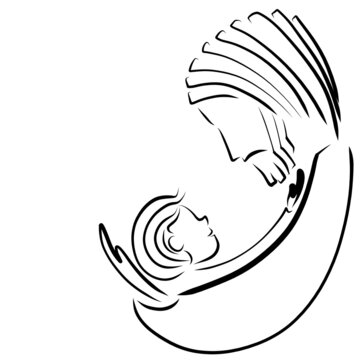
Sin can be forgiven

This perceptive word was written in the Gospels: “Who can forgive sins but God alone?” (Luke 5.21). It’s great news to know that God is in the business of forgiving sin.

This is especially the case when considering sexual sin. Most people are aware of the Ten Commandments, one of which prohibits adultery. Adultery is remarkably common, as is fornication (sex outside of marriage) and various other forms of sexual activity condemned by Jesus under the general term “sexual immorality” which he listed among various other sins (Matthew 15.19). These sins arouse a particularly deep feeling of guilt which is hard to shake off. 

The “Good News” that the Gospel of Christ brings, is that “All the prophets bear witness to Jesus, that everyone who believes in him receives forgiveness of sins through his name” (Acts 10.39). Forgiveness of sins can be received! It can be yours because of the Lord Jesus Christ: he “bore our sins in his body” on the cross, so that we sinners might be forgiven. The early Christian preachers declared: “Through this man, Jesus, forgiveness of sins is proclaimed to you, and by him everyone who believes is justified [i.e. declared legally righteous] from everything from which you could not be justified by the law of Moses” (Acts 13.38-39). God’s forgiveness clears our slate, makes us acceptable at the great Day of Judgment, and opens the way to heaven. 

This is the promise of the Word of God himself. The very first Christian proclamation, given by the apostle Peter seven weeks after Jesus had died and risen again, ends with these words: “Repent and be baptised every one of you in the name of Jesus Christ for the forgiveness of your sins, and you will receive the gift of the Holy Spirit”. To be forgiven there are three essential conditions: to repent, which means to turn away from all sin, and the Holy Spirit is given to make that possible. The second condition was mentioned in the previous verses, to “believe in the Lord Jesus”, which means to receive him as your Lord, Master, Saviour and Friend, and to become one of his followers. The third condition was to be baptised in the name of Jesus, which means to make a public stand as a Christian, committed to obey Jesus as Lord.

In other words, you can’t expect to get God’s forgiveness with your right hand while continuing to sin with your left! You have to be honest with God. Forgiveness is free – you don’t have to earn it by any special pilgrimage or fasting or deeds of mercy. You do, however, have to decide with God’s help, to change your life around, to repent and give up your sins – which is not easy, but God’s Holy Spirit will help you if you pray sincerely in Jesus’ name for God to forgive you. He will be glad to answer that prayer!

Then, however heinous may have been the sins you have on your conscience, they are all wiped away by God’s grace. God promises: “Though your sins are as scarlet, they shall be whiter than snow” (Isaiah 1.18), and “Your sins and your iniquities I will remember no more” (Hebrews 8.12). God’s forgiveness is mediated through his word of promise written in the Bible. He is a God who “forgives iniquity and transgression and sin” (Exodus 34.7). If we fulfil the conditions, he will fulfil his promise.

Maybe you will want to turn to him in prayer right now? He is right there close to you: open your heart to him.

Clive Every-Clayton
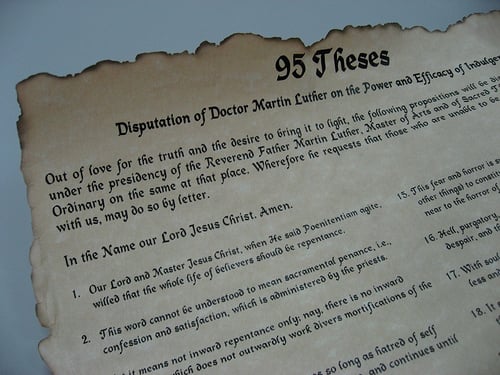
Reforming the church

Some parts of the modern-day church are called “Reformed.” One may wonder why. Should the church need reforming? May she have gone off course? Is she infallibly held in the truth or may she become corrupted? If so, what authority is competent to reform her? Is it even thinkable that anyone may be able to reform the church? The church is a global phenomenon of believers in Jesus, divided into innumerable groups, some large, some small. It is so huge that no-one can grasp the whole with a view to reforming it, not even the Pope.

So while some want a progressive or reforming Pope and others insist on a traditional Pope, there are already two dividing tendencies within the Roman Church, quite apart from the many other kinds of churches. And if one wants to “reform” the church, by what criteria might it be reformed?

The 16th century saw what came to be called “the Reformation”. The moral quality of the church and its leadership had suffered a sad decline over the previous century. Even Roman Catholic historians admit the immoral behaviour of some Popes left a lot to be desired. Their conduct was unworthy of the Lord Jesus Christ whom they professed to serve.

Apart from that moral decline, the reformers discerned theological errors that had been adopted in the church’s teaching and practice. How did they know there were errors? By a return to studying the Bible.

Martin Luther was a monk whose task was to teach theology. He therefore studied the Scriptures that he had to teach. As he did so, he struggled to understand some key concepts that were fundamental to the Gospel message, notably those of righteousness and justification. He had his own personal struggle to become righteous, being very conscious of his inner faults, spending a lot of time in confession. He was at the same time puzzling over St Paul’s teaching on the theme of justification, notably in the epistle to the Romans chapters 1-5.

After a lot of soul-searching and Bible study, he finally found the key that he had never grasped before: how God “justified” (i.e. declared legally just and acceptable in the judgment) those who believe in Jesus, the Saviour who died and rose again for their salvation. None of his confessors or colleagues at university had been able to share this good news with him, for they neither taught it nor understood it themselves. But there it was in the New Testament!

It was this rediscovery of the Bible’s message of “justification by faith in Christ” that led to the reformation and birthed the “reformed church”. While official church leaders condemned Luther, many were glad to receive the message of salvation by faith in Christ. They studied the Bible to find the truth of God, and by that truth they sought to reform the church’s moral laxity and its inadequate teaching on justification.

When challenged as to why they held their doctrines, their answer was simply, “Because the Bible says so.” The Bible was henceforth to be the sole authority to which Christians should absolutely adhere. In any dispute, the way to resolve it was always by a return to studying what the Bible actually says. This remains the principle of the reformed church.

Unfortunately, the temptation to allow passing philosophical trends to influence theologians has led parts of the church to drift from biblical faithfulness. Wisely did the Reformers insist that the church should be “semper reformanda” – continuously reforming itself by Holy Scripture, maintaining the purity of both its holiness and its biblical doctrine.

Clive Every-Clayton

Gentle Jesus

If it was up to you to envisage how the Almighty Creator were to visit his creation, this planet, how would you set it up? How do you think people would expect such a divine intervention to take place?

Would he arrive as twice the size of a human, descending in a kind of parachute into Rome to slay the Emperor and take his place? Or zooming in on the Areopagus in Athens to confront and confound the leading philosophers like Plato and Socrates? Or again, shining in blinding glory while zooming over a war zone calling for conflict immediately to cease? Or would he be wandering in the mountains and coming to the grotto of a “holy man” to quietly introduce himself without overwhelming him?

Well, you could think of several scenarios which could have a degree of plausibility about them. But not many outside the reach of Christianity would come up with the idea that the Almighty would show up in a new-born baby, fragile and vulnerable, utterly dependent on the care of his parents. The God revealed in Scripture could have come in his power and glory (as the Lord Jesus is predicted to return at the end of the age); but instead, he chose the humble way: the baby grew up to say “I am gentle and humble of heart”. A strange divine visitation indeed!

What message does this Gospel record seek to communicate? Surely not that God is weak and feeble. No, rather that he comes not to pour down his wrath on a wicked world – even though that would be perfectly justified – but to “seek and to save the lost” (as Jesus put it in Luke 19.10). What does that imply? Well, first of all, humankind is “lost”. What does that mean? It means we have erred and strayed from the right path, we have forsaken the way of righteousness, and have embarked on a dangerous “broad road that leads,” according to Jesus’ warning, “to destruction” (Matthew 7.13). Here came a divine guide to stand in our way, to turn us back from our errors and sins, and to offer us forgiveness and moral renewal that will clean us up and set us on the right road. 

When Jesus was travelling and preaching, he would at times express his compassion for lost humanity in tears and lamentation – longing for people to get wise and turn from their evil ways. “How often I have longed to gather your children together as a hen gathers her chicks under her wings”, he mourned (Matthew 23.37), grieving over the hardness of people’s hearts who obstinately refused to hear his loving warnings. His coming into the world was an act of mercy, offering pardon and grace – at the cost of his life.

This extraordinarily gentle approach opened the era of grace – when rebels against the Almighty who lay down their arms and surrender to his will are guaranteed pardon and eternal life. That era still endures; anyone may turn to Christ and receive him and his saving work which will grant them a new abundant life that he promises to give. But the offer ends either when Jesus returns in power and glory to judge the nations of the world, or at “death, after which comes the judgment” (Hebrews 9.27). In that day, the gentle Jesus, meek and mild will be revealed as the all-powerful Creator he is, and he will fulfil his role as righteous Judge and upholder of justice in the universe. It is in our highest interests to get ready for that judgment day.

Clive Every-Clayton

How should I read the Bible?

Normally you begin a book at page one and read it through to the end. Of course there is sense in reading the Bible like that, but it would take quite a long time to get to the central message. It is, however, very useful to read the early chapters of Genesis, (the first of the 66 books contained within the Bible) for they lay the foundation of all that will be developed through the many pages to come. Genesis also introduces Abraham, called by God to become the father of a numerous posterity, the Jewish people.

The Bible is a book of history, and recounts the development of God’s people throughout numerous generations. The second book, Exodus, tells of the escape of the Israelites from bondage in Egypt, and how God gave them the Ten Commandments. Succeeding books reveal God’s dealings with his people through the centuries.

The central message of the Bible becomes clearer in the New Testament, where the four Gospels relate the life, teaching, miracles, death, and resurrection of Jesus, and this is the heart of the Bible’s message, so it is quite acceptable to move quickly into that. One way of reading the Bible is to read each day a chapter both of the Old Testament and of the New Testament. 

Different parts of the Bible have differing emphases and usefulness. For example, the Psalms are prayers of God’s people in a large number of diverse situations; they express their need of God in various ways, and uplift the spirit by their expressions of praise to God. The Book of Proverbs contains short adages of practical advice; the Book of Ecclesiastes illuminates the human dilemma, life seemingly meaningless without God. In the later prophetic books, we see God speaking to the Israelites words of reproach and warnings of judgment as well as promises of mercy and predictions of blessing when they repent. 

In the New Testament one of the Gospel writers, Luke, wrote a second book, the “Acts of the Apostles” which continues the history of the disciples of Jesus from AD 30 to AD 62. It shows how the early church began, what the apostles preached, and how they dealt with various issues as the Gospel went further out into the Roman Empire. This is a fascinating historical read.

What is very helpful for the believer are the letters written by the apostles, Paul, Peter, James, John, and Jude to the first believers. They contain eternal truths that all believers hold, especially developing the way God saves sinners through Christ. They also give numerous exhortations about living as Christian disciples in the world. These letters speak directly to the believer of today and are extremely helpful for our spiritual growth. Some are more complicated than others, for God’s truth is very deep and requires our serious study.

But how should one read? It is good to start by praying that God will speak to you through his Word and enable you to understand it. Then read with an open spirit, attentive to what God might say to you through the passage you read. The Bible is a living book: God still speaks through its pages to the hearts of believers today. 

Don’t rush your reading; take the time to think through what it means. It has been well said, “It is better to read little and think much than to read much and think little”. And as you think – or meditate – on the Bible’s message, you can also have a notebook and pen handy, to jot down any particular thought that inspires you or is applicable to your life. It does no harm to underline in the Bible those verses that speak to you. 

There are some helpful “Study Bibles” for sale that have notes assisting the reader to understand those passages that may seem unclear. Most of them are excellent and you may want to invest in purchasing one. Conversely, you may find it helpful to have a pocket New Testament that you can carry around with you, or download a Bible on your smartphone. That way, if you have time spare before your next activity, you can nourish your faith by a quick Bible reading.

Bible reading is meant not only to inform you, but to change you more into the likeness of Jesus. So don’t let your reading be merely to gain head knowledge – useful though that is. Keep asking yourself, what does this mean in my life? How should I apply this statement or this promise or this commandment in my life today? Reading the Bible with an open heart, submissive to God’s teaching, will enable you to grow in faith, love, and commitment to your Saviour.

Clive Every-Clayton

Why the Bible?

There are all kinds of religious works penned by sages and prophets in various countries: what’s so particular about the Bible that makes it stand out above all the rest as the world’s best-seller? What makes it so unique?

First of all, its note of divine authority. By its often used expression, “Thus says the Lord”, it communicates that the almighty Creator himself is speaking to mankind. About 2,000 times in the Old Testament expressions occur such as, “Hear the word of the Lord”, “The Lord spoke to … saying…”, “God said”, “The Word of the Lord came to …”, “the Lord commanded” etc. This means that 2,000 times the Bible claims to bring the actual words of God himself. This is either true or constitutes 2,000 lies about the Almighty.

Secondly, the high call to holiness that is expressed throughout the Bible. Nowhere else can one find such a high and holy mandate for human behaviour. All sin is fully condemned and all kinds of virtues are required. The moral teaching of Jesus, and in particular his Sermon on the Mount, are acknowledged to be of such purity and so demanding as would convince an honest seeker that this must come from the high and holy Creator of humankind.

A third element in the Bible, attested in the Pensées of Blaise Pascal, is the phenomenon of prophecy whose fulfilment has been confirmed. God alone can know the future, and the Bible contains a number of clear predictions that were subsequently fulfilled. The most striking is the 53rd chapter of the book of the prophet Isaiah which depicts the sufferings and death of the Christ. Jesus himself predicted his own resurrection from the dead. He foretold the coming of the Holy Spirit upon the apostles which occurred seven weeks after he had left this earth and gave birth to the Christian church. 

Another element of this is the promises that God gave – for example to Abraham that he would have a son and innumerable descendants, when he was old and his wife was barren. The existence of the Jewish people attests to the fact that God makes and keeps promises, for they are the fruit of God’s “impossible” prediction.

The profundity of biblical thought is another indication of the Bible’s divine origin. The eternal plan of the Creator is progressively revealed in its pages – a plan that no human mind could have invented, for it included the divine incarnation, death and resurrection in history of Jesus, the Son of God.

Together with that, the Bible unfolds a true and realistic account of who we are, both in our intrinsic value as persons made in God’s image, and in our grievous lack of real goodness; it informs us of why we exist, how we should live, and where we go after death.

The most convincing of all is that the Bible promises not only to forgive the sinner, but to radically change his or her whole life; and this promise can be put to the test by anyone who reads the Bible and takes it as true. By believing in the Jesus who is revealed in the Bible, by following his instructions to repent and obey, anyone – you included – can discover for themselves that this book comes from a God who stands by his word and fulfills his promises: the profound change in the life of those who put their trust in the Saviour is testable personal proof. Millions have found this to be true in their experience, and this proof is open to anyone who, like the immoral philosopher become great theologian, St Augustine, heeds the call to “take up read” this extraordinary book, the Bible.

Clive Every-Clayton

Walking with God

Our relationship with God is likened in the Bible to walking with God. Right at the earliest time in humanity there was at least one, Enoch, who “walked with God” (Genesis 5.24). In fact the New Testament uses the idea of walking to depict one’s way of life. For example, there are the unbelievers who “walk in darkness” (John 8.12); indeed, Paul describes them as walking “in the futility of their minds” before they came to know the Lord. Subsequently, they who “are light in the Lord. Walk as children of light” (Ephesians 4.17, 5.8).

This theme, recurring through the bible, teaches us something important: the Christian life is not just believing some facts or doctrines, nor just in practicing some religious acts. It involves maintaining a relationship with the Lord: walking with him means sharing our lives with him, talking to him about everything that worries us, asking his help in all kinds of situations. 

This is both a blessing and a challenge. To share our lives with Jesus is the way we show our love and attachment to him as our loving Saviour. It’s a way of speaking of our intimate prayer life. If you ever go for a solitary walk, that’s an opportunity to literally walk with God, opening up your heart to him, sharing your joys, your sorrows, your temptations, and your plans with him. It can be a time to offload your burdens, to entrust your difficulties into God’s hands, and to renew your confidence in his promises to help you.

But there is a challenge here too. 1 John 1.6, 7 points this up: “If we say we have fellowship with him while we walk in darkness, we lie and do not practice the truth”. But in verse 7 he adds “if we walk in the light, we have fellowship with one another” and with God himself. He goes on to encourage his readers to confess their sins to God, for as we keep close to God in our walk, we need to be cleansed of any deviations from the right path. So walking with God, keeping up a living relationship with him, will keep us from erring into sinful behaviours.

Here is a verse that is worth memorising : Paul, writing to converts in Colossians 2.6,7, exhorts them: “As you received Christ Jesus the Lord, so walk in him, rooted and built up in him and established in the faith, just as you were taught, abounding in thanksgiving”. This reminds us of how we started out on the Christian walk – we “received Christ” as our saviour and Lord. So we keep on, becoming more established in the faith, and growing in our obedience to our Lord.

To other believers he wrote similarly, “as you received from us how you ought to walk and to please God, just as you are doing, … do so more and more” (1 Thessalonians 4.1). Let’s learn to maintain an open and clear relationship with the one who loved us and gave himself for us, and is now living within us by his Spirit. So we will become more and more like him, so as to “walk in the same way in which he walked” (1 John 2.6).

Clive Every-Clayton

A love relationship with God?

God’s purpose and desire in creating people in his likeness is that we experience a harmonious relationship with him; this is the real purpose of life, ignored or disregarded by so many.

And this harmonious relationship should be one of love! God is love, and he made persons in his likeness that he could love and that could love him in return. But loving God seems bizarre: so many people deny his existence, avoid him, or even hate him. But since loving God is our raison d’être, those who miss out on that harmonious relationship end up truly frustrated. Indeed, those who spurn God’s loving presence wander aimless, lost, and confused – and their bad relationship with God is the source of their inner distress.

The Bible says that God loved us first: he is the one who desires a good relationship with us. Human sinners don’t want God to get close and personal, for God is holy, and we feel his disapproval. Yet he is kind to the unworthy creatures that we are and comes looking for us. “God so loved the world [therefore, you] that he gave his only Son, so that whoever believes in him should not perish [in an aimless existence here and hell hereafter] but have eternal life”. He loves us so much he sent his Son to save us – at the cost of his horrendous suffering on the Cross; and he warmly invites sinners to be reconciled to him. When we are converted and start to follow Jesus, doing what he taught us, then God loves us in a further way; for Jesus said, “He who loves me will be loved of my Father, and I will love him and manifest myself to him” (John 14.23). God is glad to find hearts that open to his love and respond in loving obedience to him. He is pleased to find people in tune with his heart and purposes.

Jesus radically laid down the first of all God’s commandments: to “love the Lord your God with all you heart and… soul and… mind and… strength” (Mark 12.30). This is his main command, because he loves us and wants us to love him in return. In fact, “we love him, because he first loved us” (1 John 4.19). He wins our love by granting us salvation by grace – undeserved love; our gratitude for being saved is the beginning of our love for God.

We are therefore called, by our conversion, to develop a love relationship with God, responding to his great love for us. To love God is to seek to please him. We find ways to show him we love him: we can cultivate closeness and intimacy with him in prayer, we can submit to his perfect will for our lives, we can depend on him for help, unite our hearts with his and seek to fulfil his purposes for our lives. It’s a whole new relationship to cultivate, with a loving Saviour who is ever close to us.

Then as we learn to love Jesus, we become more like him. Indeed, we learn to love our neighbour as well, showing others something of the love that has touched our hearts. Furthermore, Jesus even calls us to love those of our neighbours who we consider our enemies; loving them, says Jesus, will show them how God loves; for he loved us when we were either indifferent to him or rebellious against his will, living in sin. “As I have loved you,” said Jesus, “you are to love one another” (John 13.34).

Clive Every-Clayton

How to believe in Christ?

Whatever may have been your previous acquaintanceship with the person of Jesus, you have come, as it were, to hear his call, “Come, follow me”. Like those in the Gospels, you arose and followed him. It was a personal decision; you may not have understood too much about what it all involved, but you decided to open your heart and you asked Jesus to be your Saviour.

When out for climbing in some great mountains, it is indispensable to procure the services of a guide: the situation may prove perilous ahead. As you journey through life you may now have the services of Jesus, the only reliable Guide to human living at its best. You may trust him to lead you in the right path. There is no better Spiritual Master.

Jesus made numerous promises to those who would believe in him. That’s not simply to believe he existed, nor even to believe he was the Son of God, though these facts about him are foundational. Rather he was referring to a personal commitment between the believer and himself.

When I came to believe in Christ, the evangelist compared what I was about to do to the way a young couple get together. He said that the guy likes the girl and wants to get to know her over time, learning to love her, and desiring to enter a long-lasting relationship. “But,” he said to me, “the two are not married until they stand before the minister who asks them “Do you want to have this woman (or man) to be your lawfully wedded spouse?” In the same way, he said, Jesus says to you, “Do you want me to be your personal Lord and Saviour?” Then he asked me, “What do you want to say to him?” I acquiesced: I wanted to believe. Then he added, “Whenever anyone asks Jesus, ‘Do you want to accept this sinner as your disciple?’ He never says no!”

Maybe like me, you prayed that the Lord would “come into your heart” and save you. After I left the evangelist, I went for a walk, thinking that I had made an important decision that day. It was Easter Sunday afternoon, and I felt that as one “dead in trespasses and sins” I had now become alive in and with the risen Christ (Ephesians 2.5). 

So to “believe” in Jesus has that kind of meaning. He promised “eternal life” to those who believe in him (see John 3.16, 5.24, 6.47, 11.26). Eternal life is the gift of God; he gives it as we believe and receive Christ as Saviour and Lord, committing ourselves to him, to follow and obey as our new friend and Master. 

If I asked you, “Have you believed in Jesus like that? Have you received him as your Lord and Saviour?” – how would you reply? It helps our faith when we tell someone else that we have decided to follow Jesus. This is sometimes called “confessing Christ” and it allows you to exteriorise before a friend the decision that you have taken in your heart.

If you’re not sure if you’ve actually taken that step, there’s no harm in turning in prayer, just by yourself, and saying, “Lord Jesus, thank you for coming into the world to seek and save the lost like me; I open the door of my heart and receive you as my Lord and Saviour. Help me from now on to grow in my faith and to live as a Christian. Amen”

Jesus will gladly welcome you as his follower. 

Clive Every-Clayton

My spiritual birthday

This week I celebrate my spiritual birthday. “What,” you may ask, “is a ‘spiritual birthday’”? The idea comes from one of Jesus’ vital but rather obscure teachings. The Son of God declared categorically: “Truly, truly, I say to you, unless one is born again, he cannot see the kingdom of God” (John 3.3).

One has to admit, it’s not obvious what Jesus was meaning, and his interlocutor responded with incredulity: “How can a man be born when he is old?” Jesus went on to explain he was speaking of a spiritual birth, the beginning of a new spiritual life in a person’s heart. Elsewhere in the Gospel it is called being “born of God” – born anew as God’s child when God grants new life to a human soul. 

In John’s Gospel (1.10-13) it says that when Jesus came into the world, there were many who did not recognise him nor welcome him; but “to all who did receive Jesus, to those who believed in his name, he gave the right to become children of God”. That is an amazing blessing, but the passage adds that those who believe in Jesus and receive him by faith as their Lord and Saviour are “born of God”.
What does that mean? Let me back up a little first. When a baby is born, all the family rejoices: it receives a human life which will go on to develop as he or she grows. Yet when it matures, albeit marvellously endowed, it becomes evident that there is selfishness and unkindness when bad attitudes and actions become visible in its life. In biblical terms, it is born with a sinful disposition that produces behaviour that is sometimes aberrant.

Human experience testifies that however hard we try, we cannot efface this sinful tendency from within us. That’s why the Bible says we are all “sinners”: we all know what it is to have a guilty conscience; no-one is perfect.

What can change us? Well, Jesus proposes giving us a renewed Christian life by a new spiritual birth. He means that his own Holy Spirit will make us born again. As the text above states, this is for those who believe in Jesus and who receive him as Lord and Saviour. This new birth occurs as people turn away from sin, trust in Jesus, and commit to following and obey him.

The day I was born again, it was Easter Sunday; I had heard a preacher explain that when Jesus died on Good Friday, he took on himself, out of compassion for the likes of lost sinners like me, all my faults and all their punishment. He suffered in my place; he died the death that was the “wages of sin” for my disobedience. He did it because he loved me; and now, alive and risen from the dead, he called me to receive him as my personal Saviour, to forgive me, to change me, to come and give me new life, to come and live in me by his Holy Spirit. So I prayed and committed my life to Christ.

Thus was I “born again”: in the weeks that followed I developed a relationship with Jesus as my best and closest friend, my helper to enable me to overcome the temptations that were on my path, and to put away various sinful attitudes and habits.

I cannot more strongly encourage all my readers to do the same. Become a “born again Christian” – that’s the kind of Christian Jesus wants and he will give you that new life if you ask him.

Clive Every-Clayton

Relationship with God?

Where can we find the perfect partner who will love us constantly with perfect love? Only in the God of love who made us. His creative design for humans is that we find fulfilment – whatever may be our principal activities – only when we are in harmony with him. 

The great tragedy of world history was when sin made its entry into the human race – as is depicted in Genesis chapters 2 and 3. The first couple rejected God’s order – thinking they could better judge what is right and wrong. (That same mentality reigns in many today who set aside God’s infinitely wise guidelines – his commandments – and try out some new man-made ethics). 

With the arrival of sin twisting the hearts and perverting the actions of the first couple, their marital harmony was damaged, and this continued down the generations to our day. Hence any life-partner that a man or a woman might find, turns out to be vitiated by an indwelling tendency to selfishness rather than love, to rebellion rather than union, to pride and anger rather than sweetness of temper. Such unloving traits render marital bliss a great challenge to accomplish – though mercifully, by learning to overcome one’s selfishness and to forgive one’s partner’s failures, it is possible for reasonably happy families to exist!

Human hearts nevertheless often suffer from the lack of that steadfast love which ministers to our inner hunger of soul. People still long for a deep and enduring harmonious relationship and can spend their lives unsuccessfully trying to find the perfect partner. Of course the children from such broken relationships begin their lives with a kind of handicap in the area of love and trust. To prevent such harm is one of the reasons why God is against adultery. God is also against adultery because unfaithful lovers do not reflect as they should the loving harmony of God’s own Trinitarian relationship. We were made in his image so as to show forth his divine kind of love, and our inability to do so grieves God, brings distress to ourselves, and trouble to our nearest and dearest. 

In the midst of our depressing failure, however, there is a gleam of hope, for true fulfilment of our passion for love can come when we know in our experience that God loves us very, very much.

Ultimately, the only truly satisfying relationship of love is for us to be in a harmonious relationship with God (as Adam and Eve were in Paradise before sin interrupted their blessedness). We can turn to God and find in him the forgiveness of our failures and an assurance of his eternal love as we enter into spiritual union with Christ. This is the essence of what Christians call salvation from sin: to be loved despite our wretchedness and to be assured of God’s full forgiveness. That is the relationship we were made for. It alone provides true human fulfilment. 

So how can a person get that? What we have to do is, first of all, realise how much our sin is serious before God; we really have no idea – that’s why we need the Bible to enlighten us. Then we need to realise how great the love of Jesus, God’s Son, was, in coming into our sinful world to seek and save us from all the pains that sin has brought on us. Then we need to open our hearts to Him, inviting him to wash us clean, be our dearest friend and helper, and confirm his love to us. He promises to do just that!

Clive Every-Clayton

Blog at WordPress.com.

Up ↑