Reforming the church

Some parts of the modern-day church are called “Reformed.” One may wonder why. Should the church need reforming? May she have gone off course? Is she infallibly held in the truth or may she become corrupted? If so, what authority is competent to reform her? Is it even thinkable that anyone may be able to reform the church? The church is a global phenomenon of believers in Jesus, divided into innumerable groups, some large, some small. It is so huge that no-one can grasp the whole with a view to reforming it, not even the Pope.

So while some want a progressive or reforming Pope and others insist on a traditional Pope, there are already two dividing tendencies within the Roman Church, quite apart from the many other kinds of churches. And if one wants to “reform” the church, by what criteria might it be reformed?

The 16th century saw what came to be called “the Reformation”. The moral quality of the church and its leadership had suffered a sad decline over the previous century. Even Roman Catholic historians admit the immoral behaviour of some Popes left a lot to be desired. Their conduct was unworthy of the Lord Jesus Christ whom they professed to serve.

Apart from that moral decline, the reformers discerned theological errors that had been adopted in the church’s teaching and practice. How did they know there were errors? By a return to studying the Bible.

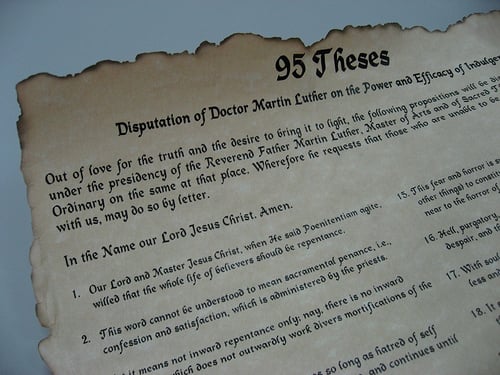
Martin Luther was a monk whose task was to teach theology. He therefore studied the Scriptures that he had to teach. As he did so, he struggled to understand some key concepts that were fundamental to the Gospel message, notably those of righteousness and justification. He had his own personal struggle to become righteous, being very conscious of his inner faults, spending a lot of time in confession. He was at the same time puzzling over St Paul’s teaching on the theme of justification, notably in the epistle to the Romans chapters 1-5.

After a lot of soul-searching and Bible study, he finally found the key that he had never grasped before: how God “justified” (i.e. declared legally just and acceptable in the judgment) those who believe in Jesus, the Saviour who died and rose again for their salvation. None of his confessors or colleagues at university had been able to share this good news with him, for they neither taught it nor understood it themselves. But there it was in the New Testament!

It was this rediscovery of the Bible’s message of “justification by faith in Christ” that led to the reformation and birthed the “reformed church”. While official church leaders condemned Luther, many were glad to receive the message of salvation by faith in Christ. They studied the Bible to find the truth of God, and by that truth they sought to reform the church’s moral laxity and its inadequate teaching on justification.

When challenged as to why they held their doctrines, their answer was simply, “Because the Bible says so.” The Bible was henceforth to be the sole authority to which Christians should absolutely adhere. In any dispute, the way to resolve it was always by a return to studying what the Bible actually says. This remains the principle of the reformed church.

Unfortunately, the temptation to allow passing philosophical trends to influence theologians has led parts of the church to drift from biblical faithfulness. Wisely did the Reformers insist that the church should be “semper reformanda” – continuously reforming itself by Holy Scripture, maintaining the purity of both its holiness and its biblical doctrine.

Clive Every-Clayton

What about our failures?

There is one further aspect to the Christian’s struggle with ongoing sin in his or her life that I need to deal with. It is the universal experience of believers, albeit born again justified and children of God, that at times they still sin. Indeed, the new Christian may well feel more conscious of his moral imperfection after his conversion, whereas his sins didn’t bother him before. The new believer may be distraught when he sees that despite his conversion, he still falls into sin sometimes. (I refer principally to what we may consider lesser sins such as selfishness, ill temper, untruth, pride, jealousy, and covetousness – though this problem would also arise with worse sins). What does a good Christian do when he is conscious of having sinned? Might our sins annul our justification?

Here again, the Bible has the answer and it is good to read the first letter of John chapter 1 verse 8 to chapter 2 verse 2. This passage shows that no Christian is perfectly without sin. So we all have to deal with our failures as Christians. The passage tells us what to do, and gives a wonderful promise: “If we confess our sins, he is faithful and just to forgive us our sins and to cleanse us from all unrighteousness” (1 John 1.9).

To confess our sin means to acknowledge the wrong we have done and to tell God we are sorry. We need not confess our sins to any person, unless we have sinned against someone and we feel we should apologise for what we did. But as we confess our sin to God, we recommit to living as best we can without sinning.

God’s promise is that as we confess our sin, “he is faithful and just and will forgive our sin”. He is faithful to his fatherly promises to be gracious to his children; we can count on him to wipe them all away and never to come back at us to reproach us about them. When he forgives, he forgets. More: the promise says he will “cleanse us from all unrighteousness”. Christ’s blood was spilt so that we might be cleansed from our sins, and God’s faithfulness renews his fatherly forgiveness whenever we confess.

Technically, there is a difference between God’s fatherly forgiveness of his saved children and the full legal forgiveness granted as supreme judge, when he justifies the sinner when he believes, freeing him of all condemnation. God’s legal forgiveness is forever given. God’s fatherly forgiveness is ongoing: as we repent and confess sins committed in our Christian walk, he forgives them and cleanses them away. By this fatherly forgiveness, he renews his love towards us, his erring children, and as we return from our devious ways, submitting afresh to him in repentance, our fellowship with God is renewed.

In the Lord’s Prayer, Jesus tacitly recognised the imperfection of his disciples, when he taught them to pray, “Forgive us our sins as we also forgive those who sin against us”. In our confession, we ask and receive by faith the forgiveness our Father promised. But we are reminded in this prayer that we must show to others the like kindness that God has shown in forgiving us. This is a kind of spiritual law: the one who is forgiven must forgive. Indeed, refusal of forgiveness, according to Jesus, is a serious sin. We are to forgive others because we have been forgiven. Harmony is restored in our relationship both with God and with others as we confess our sins and forgive others. 

Clive Every-Clayton

Already saved? So why not sin?

The believer may count on the promises of the saviour, that he is saved, forgiven, and has eternal life: “Truly, truly, I say to you, whoever hears my word and believes him who sent me has eternal life. He does not come into judgment, but has passed from death to life” (John 5.24). The believer who is justified by faith in Christ is accepted by God as righteous and needs fear no final condemnation in God’s ultimate judgment. 

So one might wonder: why not therefore sin as much as I want, since I am justified and accepted at God’s final judgment? This question has its full answer in the teaching of the Bible. 

First, as I wrote in the previous post, the justification of the one who repents and believes in Jesus remains intact. God has promised it and we can count on him. Jesus in the verse already quoted promised “he will not come into judgment”: the ultimate salvation of the true convert is assured.

Two factors in our experience confirm this truth for us: first, at conversion, we repented and made a commitment not to sin any more. We obviously cannot stretch out our right hand to receive God’s forgiveness while our left hand continues committing all kinds of sin. We are saved from sin – not only from its punishment, but also from its grip on us. We dedicate ourselves therefore, as sinners forgiven by grace, not to betray God’s kindness. Rather, motivated by gratitude for our salvation, we will honour our commitment to follow Jesus as our master and Lord by doing his will, overcoming temptation and refraining from sin.

The second factor is vital in this: no-one is justified by faith who is not also, at the same time, born again by the Holy Spirit. They are both operations of the same conversion experience. And being “born of the Spirit” is a life-changing dynamic, as the Holy Spirit comes to make his dwelling in our hearts, and there proceeds to the work of purifying us. He gives new aspirations for a holy life, new love for God and a desire to please him. The Holy Spirit communicates the presence of Christ within us: the result is that we no longer desire to sin, but rather to obey and please our saviour. This is, in fact, the deep reason why the true believer does not continue in sin. The believer who experiences this has reassuring proof that the Lord Jesus has indeed saved him.

So God justifies you by granting you full legal forgiveness and a status of being accepted as righteous before God; he can do that because he also gives you the Holy Spirit to energise you in the way of holiness with new desires and new power to conquer sin. You have to commit to continual repentance, of course, taking a stand against all sin in your life. You will understand progressively what that entails, but conversion involves the decision in principle not to displease your Saviour. He has called you to be his disciple, he has called you to holiness, and your growth in Christian living involves further repentance of whatever sinful deed the Holy Spirit reproves you of.

Having said that, we are not totally delivered from sin in this life; there will always be a struggle between the old sinful pre-Christian nature, the “flesh”, and the nature renewed by the Spirit: hence the call and the promise, “Walk according to the Spirit and you will not fulfil the desires of the flesh” (Galatians 5.16).

Clive Every-Clayton

What does salvation mean?

The Bible makes clear that everyone needs salvation, and it is wonderful to know that “By grace you have been saved, through faith” as the apostle Paul writes to believers in Ephesians 2.8. The Bible word “salvation” summarises a number of spiritual blessings that every believer receives from the moment he is touched by God’s saving grace. 

Notice three things of importance in that quote from Ephesians. First, you “have been saved”; salvation has happened to you if you have repented and believed in Christ. It is no longer something you have to seek after or try to obtain. The verb is in the past tense: you have been saved, or as Jesus put it, you have “passed from death to life” (John 5.24). Secondly – the reason for that is that God has blessed you “by grace”. That means without you having to deserve it. God is so kind, he grants salvation freely by pure grace to those who could never deserve or merit it. Paul adds in Ephesians 2.9, “it is not because of works, lest anyone should boast”. So, thirdly, salvation is by faith, the faith that receives Christ as Saviour and Lord. Saving faith is not merely believing some facts; it is entrusting your life and your eternity into the hands of the Lord Jesus, beginning a new life in relationship with him. It is called “saving faith” because by that commitment or conversion a sinner is saved from sin and its consequences.

What does salvation mean, then? It means the believer, counting on Jesus’ promise, may know that he has become a child of God, that he has eternal life; he is saved from being eternally lost at the judgment. He is now reconciled to God, in good relationship with God. Salvation sums up all that and more: specifically the forgiveness of our sins is an important part of salvation.

When we are saved we receive the full forgiveness of all our sins. God wipes them all away. Furthermore, the Lord declares the believer in Christ to be acceptable to him in the day of final judgment. We are saved from the eternal negative consequences of our sins – we are free from condemnation. We have been saved from hell. 

The technical word for this is “justification”: “Since we have been justified by faith,” Paul writes in Romans 5.1, “we have peace with God”. We do not have to fear final rejection at the judgment day; we are accepted in Christ. We live our Christian lives therefore not in order to be saved from that judgment, but because, by God’s grace, we are already assured by his word that we are saved, justified, accepted as righteous, and free from ultimate divine condemnation. This is no small blessing!

Justification abolishes our guilt before God. Forgiveness clears our conscience from all that might accuse us. It’s all gone; our salvation is assured, so Paul uses the past tense when he writes to his colleague, “God saved us and called us to a holy calling” (2 Timothy 1.9). And note, he calls us to a holy life.

You might be thinking, “If my final salvation is assured, I could commit any sins I want, because I’m already justified”. Interestingly, Paul saw that response coming: “Shall we continue in sin, so that grace may abound?” His answer is categorical: “By no means!” (Romans 6.1, 2). For as God saves, forgives, and justifies us, he also calls us to holiness, giving us the Holy Spirit to transform us into saints! My next post will explain that more fully.

Clive Every-Clayton

Justified by faith

My recent posts have emphasised God’s amazing grace both in sending his Son to bear the just penalty of our sin, in our place, on the cross, and – on that basis – offering full, total, and free forgiveness of all our misdeeds, however awful they may have been. I explained that the divine forgiveness God grants takes the fuller form of “justifying” us. That means, he declares us officially not guilty and free from all condemnation.

This is a weighty theme, and one that is not as well-known and understood as it deserves, so I will clarify it here once more. It is the answer to a really profound question, formulated by theologian R.C. Sproul as “what may be the deepest existential problem a human being can ever face: how can a sinner, an unjust person, ever withstand the judgment of a holy and just God?” If we are all moral failures, it would seem we cannot survive in such a judgment. BUT… this is where justification comes in.

It helps to consider how God manages to justify the guilty sinners that we are – under three aspects that are expressed in the Bible. First, sinners such as me and you can be “justified by grace” (Titus 3.7); that means God grants this status, this salvation, purely out of his heart of love to the undeserving. We don’t have to earn it – indeed, we cannot. It is a gift freely given; that is the meaning of grace. This fact gives hope to the most awful of sinners. 

Secondly, we are justified on account of Jesus’ death, through the “redemption” accomplished through the shedding of his blood, (Romans 3.24-25, and 5.9), whereby he made a full atonement for our sins. This is unique in all the world’s religions – a full, perfect, and sufficient sacrifice for the sins of the world has been accomplished by the only one who ever could accomplish it – Jesus, the incarnate Son of God. Without that, the Just Judge of all the earth could not pardon a sinner without violating the requirements of Justice. That’s why God can justify us through Jesus’ work, for he alone fully paid for our sins in our place.

I have dealt with those two bases in past posts, but I have not yet mentioned how this full total pardon can be yours. If God is so eager to forgive – and he is – what do you have to do to be justified? The Bible’s answer is that we are “justified by faith in Jesus Christ” (Galatians 2.16, Romans 5.1). That means we are totally forgiven and justified by God when we place our trust in the Lord Jesus and in the atoning work he did for us. This is the authentic and radically marvellous message of Christianity: the apostles made it clear in their early proclamation of the Gospel – for example, “All the prophets bear witness to Jesus, that everyone who believes in him receives forgiveness of sins through his name” (Acts 10.43). And again, “Through Jesus the forgiveness of sins is proclaimed to you, and by him all who believe are justified from all things from which you could not be justified by the law” (Acts 13.38-39).
So we who are guilty before God can be exonerated, acquitted, justified –

1. By God’s gracious kindness

2. Because Jesus died for sinners, and 

3. When we repent and put our trust in the Lord Jesus, calling on his name to save us.

It is this last faith commitment that clears away the barrier between us and God so that we experience his reality, his love and his transforming power. 

Clive Every-Clayton

Blog at WordPress.com.

Up ↑