The thoughts of Blaise Pascal

The published thoughts of this French scientist, mathematician, wise Christian thinker, make for fascinating reading. Born 402 years ago he had a habit of noting down his thoughts with a view to writing a book in defence of the Christian faith, but his death came too early. However, his notes were considered so special that they have been published as his “Pensées” (thoughts). Even atheists like Friederich Nietzsche and André Comte-Sponville have expressed their appreciation of the profound wisdom of these Pensées and they have been translated into many languages and are still in print today.

Here is an example: “Man’s true nature, his true good and true virtue, and true religion are things which cannot be known separately”. Today we are perplexed about man’s “true nature”, or identity. We long to understand what is man’s “true good”, or human flourishing. Our secular society has no grounding for man’s true virtue, unable to provide absolute guidance about right and wrong. And the reason for our post-modern confusion on these issues may well be due to not having taken wise consideration of “true religion”, which for Pascal meant biblical Christianity. 

Once we come to terms with the fact that our Creator God has revealed the “true religion”, we have the key to understanding all the rest. What is “man’s true nature”? He is a reflection of the pure righteousness and goodness of God, having been at the beginning “created in the image of God”. But he no longer fulfils that high and holy calling. Rather the Bible tells us that bad human choice has corrupted our nature, so our lives no longer appropriately display the holiness of God. That is why our purpose eludes us: we have lost our true good: tainted by sin, we no longer live in unspoilt virtue. Hence we misunderstand our true nature.

What will enable us to find true human fulfilment? A return to the true religion of the Bible where our Creator reveals his plan for human life and conduct. As we revisit that divine guidance, we need also to readjust our life-style in consequence. The Bible calls us all to this conversion – turning away from all sin and committing to live according to God’s revealed wisdom. This, as Pascal saw, is the key to experiencing true human fulfilment.

When Pascal died, what was called his “memorial” was found, handwritten on paper sewn into his clothes. It was the brusque report of a powerful experience of God that he had at the age of 31. It begins, “FIRE! God of Abraham, God of Isaac, God of Jacob, not of the philosophers and scholars”. In other words, Pascal had met with the God revealed in the Bible, not with some mere philosophical supposition. He continues: “Certainty, certainty, heartfelt joy, peace. God of Jesus Christ”. This encounter overpowered him and convinced him that he was actually meeting with God. He adds, “He can only be found by the ways taught in the Gospels”, and quotes the words of Jesus’ prayer: “This is eternal life, that they may know you, the only true God, and Jesus Christ whom you have sent” (John 17.3). The “memorial” ends with a note of “Sweet and total renunciation. Total submission to Jesus Christ… Everlasting joy”.

This was such a transforming experience that he longed to teach the way of the “true religion” that he had not only studied, but experienced in this extraordinary meeting with the living God, through Christ. The “Pensées” that he wrote were the outworking of this powerful meeting with the living God.

Clive Every-Clayton

The real truth about human nature

The all-knowing Creator who made humankind “in his image” is the one – the only one – capable of telling us who we really are as human beings. Of course, there are billions of different versions of humans throughout the globe; yet there is a commonality to our humanity that our Creator knows well. His kind wisdom gives us the vital indications we need in order to understand ourselves truly.

These indications, revealed in the Bible, were well grasped by the great French thinker Blaise Pascal, and his “thoughts” are very illuminating on this theme.  He calls people to “know… what a paradox you are to yourself. Be humble, impotent reason! Be silent, feeble nature! Learn that man infinitely transcends man, hear from your master your true condition, which is unknown to you. Listen to God. Is it not clear that man’s condition is dual?” 

Pascal encourages humility, which means to consider ourselves according to truth. Pride is considering ourselves as better than we are. Discouragement comes from considering ourselves as worse than we are. Humility strikes the balance, seeking both to assess and to accept the true reality of who we are. And Pascal’s profound insight is to recognise that this our human reality is “dual”. There are two essential sides to our human nature.

 “There are two equally constant truths”, writes Pascal: “one is that man in the state of his creation, or in the state of grace, is exalted above the whole of nature, made like unto God and sharing in his divinity. The other is that in the state of corruption and sin he has fallen from that first state and has become like the beasts. These two propositions,” he concludes, “are equally firm and certain” (Pensée §131/434). It is wisdom for us to recognise both these aspects of our human nature.

Realising how our self-image impacts our mental health, Pascal comments further, “It is dangerous to explain to man how like he is to the animals without pointing out his greatness. It is also dangerous to make too much of his greatness without his vileness. It is still more dangerous to leave him in ignorance of both, but it is most valuable to represent both to him” (Pensée §121/418). So we really need to take on board both features of our reality – our nobleness and our vileness. We are great – the greatest of God’s creation, made in the likeness of God; yet we are perverted, twisted, fallen from our pristine glory. And that is true of you as it is true of me.

A final more amusing thought from Blaise Pascal: “Man is neither angel nor beast, and it is unfortunately the case that anyone trying to act the angel acts the beast”! (Pensée 678/358) He would thus pinprick the bubble of our pride. We are both wonderful, yet wicked; both marvellous and malevolent; both glorious in humanity’s origin and yet tragically fallen from such grace.

So what can we do with this vital double assessment? Realise, first of all, that God does not love you because he finds you perfect, but he loves you in his grace despite your sinfulness. Secondly, when we invite our Saviour, Christ, to come and dwell in our hearts by faith, the Holy Spirit progressively develops within us the desire to overcome our sins and to grow in Christ-likeness. The biblical Christian is encouraged to “put off the old self which… is corrupt through deceitful desires, and put on the new self, remade in the likeness of God in righteousness and holiness” (Ephesians 4.22-24).

Clive Every-Clayton

Understanding the human condition

One element of our human reality is our moral awareness. We are able, albeit imperfectly, to distinguish right from wrong. There is another more perturbing element of our reality, however: we are obliged to acknowledge at times a degree of “wrong” both in our conduct and in our inner feelings and desires. To face up to this reality is not a pleasant exercise – but it can be salutary.

The experience of well-known writer and Oxford don C.S. Lewis, when he was a young teacher at the university, shows exemplary honesty. He had a deep antagonism towards the Christian faith, but little by little he saw himself obliged to yield to the unremitting evidence of “Spirit” (as he called God at that time) and he discerned that God was coming closer and closer to him. He admits he was no more in search of God than a mouse was in search of a cat. But he was blessed with a conscientious spirit; where others would have shrugged their shoulders and carried on, he realised he must face reality and he needed a deep remedy. An important step came when, as he wrote in his biographical account, “For the first time I examined myself with a seriously practical purpose. And there I found what appalled me; a zoo of lusts, a bedlam of ambitions, a nursery of fears, a harem of fondled hatreds.” Rare are those who have such insight to the depth of their human reality.

The fact is that all humans suffer from a strange dual reality: we are capable of great compassion and devotion to duty, pouring out our energies into assisting the sick, the needy, the dying. Yet we also feel at times such fury when our wills are crossed that we could seriously harm those who antagonise us. Our inner being is deeply self-centred, imperiously requiring the fulfilling of our selfish desires, claiming the freedom to do as we wish and ready to overcome anyone who stands in our way.

I have previously quoted Blaise Pascal’s brilliant analysis of this dual reality; he says it is dangerous to explain to man his beastliness without pointing out his greatness also. But he adds, “it is also dangerous to make too much of his greatness without his vileness. It is still more dangerous”, he concludes, “to leave him in ignorance of both, but it is most valuable to represent both to him” (Pensée §121/418). 

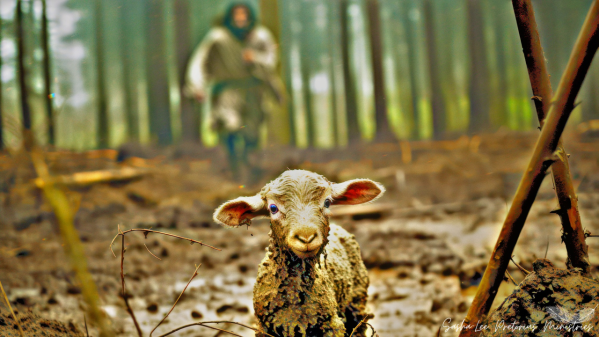
Maybe now is the time to consider this more personally. We are not, of course, obliged to deny the positive aspects of our reality. But we all need the honesty of a C.S. Lewis to admit how deep evil runs within our hearts. When we acknowledge this, we should know that we are not alone in this destabilising discovery; “All we like sheep have gone astray; we have turned – every one – to his own way”. This is the universal human condition, and we must understand it, humbling though it is. 

What makes us willing to face it, is knowing that there is a remedy – and there is! If we are “lost sheep”, we may know also that there is a “Good Shepherd” who gave his life to deliver his sheep from the horrors of their unfortunate condition.

Clive Every-Clayton

Our human predicament

Blaise Pascal (1623-1662) was one of France’s greatest minds: inventor of the first calculating machine, and the first public transport (in Paris), he was a mathematician but most famous for his literary accomplishments; he was regarded by many as the greatest of French prose artists. He was an unconventional Catholic because he struggled against the Jesuits, calling their Society and the Inquisition “twin scourges of the truth” (Pensées §916/920). Also unusual for a Catholic layman in those days, he profoundly studied the Bible which was for him the source of absolute truth; so he was quite like an evangelical not only for his high regard for Scripture, but also because he underwent a profound experience of the risen Christ, which was a radical conversion, the essence of which he wrote immediately in his “Memorial” which has been described as the most sublime writing ever put on paper. 

Pascal thought long about the human condition: he compares mankind to a feeble plant, like a reed, then adds “but he is a thinking reed… All our dignity consists in thought” (§620/347). Well, he had lots of thoughts; he would be a blogger if he lived today, though some of his thoughts (pensées in French) are short like a tweet. They were considered so powerful and brilliant that they were published just as he jotted them down in his moments of inspiration and they are still in print today – 350 years later.

Here is an example of Pascal’s penetrating understanding of our human dilemma – which you will agree, as you read, sounds like it was written in our time.

“When I see the blind and wretched state of man, when I survey the whole universe in its dumbness and man left to himself with no light, as if lost in this corner of the universe, without knowing who put him there, what he has come to do, what will become of him when he dies, incapable of knowing anything, I am moved to terror, like a man transported in his sleep to some terrifying desert island, who wakes up quite lost and with no means of escape. Then I marvel that so wretched a state does not drive people to despair. I see other people around me, made like myself. I ask them if they are any better informed than I, and they say they are not. Then these lost and wretched creatures look around and find some attractive objects to which they become addicted and attached. For my part, I have never been able to form such attachments, and considering how very likely it is that there exists something besides what I can see, I have tried to find out whether God has left any traces of himself.” (§198/693)

If his emphasis on man’s “wretchedness” sounds too negative, know that Pascal also emphasises man’s wonderfulness: “What sort of freak then is man! … glory and refuse of the universe”! (§131/434)

Clive Every-Clayton

Blog at WordPress.com.

Up ↑