A better story

I have been busy these last weeks preparing and giving lectures here in the Highlands of Scotland on a better way to conceive of our human reality.

Whether we like it or not, we in the West live in an atmosphere fashioned by a secular mind-set, and through this grid we seek to understand the way people think and behave. Some months ago, certain leading intellectual thinkers, politicians and academics meeting in London insisted that we have not been well served by the modern secular “story” – the worldview beclouding our western society with its morose and unhelpful ideas about our human meaning and value.

These thinkers are proposing a different approach, and although not all would adhere to a religion, there is a basic realisation that without a Transcendent framework, society tends to descend into a kind of hopeless moral relativism that brings on the anguish we see increasingly in the West.

As a Christian, I wholly concur that we need a “better story”, and my lectures have been addressing that need in various areas of our self-understanding. My basic thesis has been that the atheistic materialism underlying the secular story is unhelpful and psychologically damaging. It is a factor contributing to people’s confusion about their human reality, the rise of mental ill health, and the prevailing sense of hopelessness and despair. It is the hidden cause of a lot of the deterioration of our modern society that we have been sadly witnessing these last fifty years or more. 

Why is the materialist-atheist scenario so harmful? Because it proclaims that we all have come ultimately from an impersonal beginning – an immense explosion of energy and matter which, over billions of years, instead of obeying the second law of thermodynamics and deteriorating progressively into total disorder, has somehow managed – by some unaided process – to actually bring about the world we see around us with all its life, variety, beauty, and splendour. The essential blind spot of this “story” is its absence of any original personal Creator as the valorising ground of our human personality.

Dr Francis Schaeffer discerned this years ago, when, commenting on the thesis that “man is the product of the impersonal, plus time plus chance”, he wrote: “no-one has succeeded in finding personality on that basis, though many have tried. It cannot be done”.

This means that if you begin by adopting the atheistic materialist explanation of the origin of all things in an impersonal explosion of matter and energy, there is no way you are going to be able to establish the reality of human personality. That first assumption leads inexorably to an understanding of the human condition which cannot account for – and indeed undermines – all the marvellous enjoyable realities of our personal existence: our intelligence and rationality, our emotional nature, the reality of love, freedom to choose and to exercise our own will, our ability to communicate, and our moral sensitivity. All these much appreciated aspects of our personal lives have no real basis following the story told by secular materialism; it contradicts our well-known reality and would undermine our true personhood. This makes evident the falseness of that story: we know that our personal faculties are real and precious, so any explanation that cannot account for them must be wrong. 

Instead of assumptions that do not explain in positive terms who and what we are – but rather confuse us – what a relief to turn to the “better story” that an infinite and personal Creator made humankind in his image; that both valorises us and truly explains who we really are.

Clive Every-Clayton
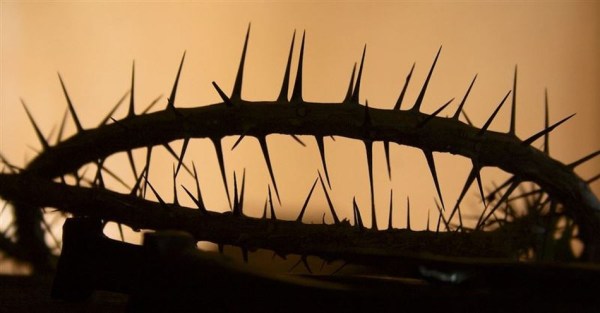
What’s good about Good Friday?

Jesus told us to repent and to believe the “Good News” (which is what the word “Gospel” means). But we may well ask, what’s so good about this Good News? And why at Easter do we celebrate the day Jesus suffered the awful agony of his crucifixion, as “Good Friday”?

Jesus’ coming into the world should be seen as the greatest act of kindness possible for our holy Creator who is also our loving Saviour. Why? Because instead of intervening in human history to bring cataclysmic judgment for human sins, he came, Jesus affirmed, “to seek and save the lost” (Luke 19.10). 

Now anyone with a sensitive conscience can see two things: they are not perfectly righteous, but rather guilty of many sins; and that before a holy and righteous divine Judge, they cannot say they have been so good as to deserve heaven. So facing the coming of the divine Son of God is a fearful prospect. Yet when Jesus did come into the world, he said, “I came not to judge the world but to save the world” (John 12.47).

In the Bible we read these astounding words with a universal scope: “This is a faithful saying, and worthy of all acceptation, that Christ Jesus came into the world to save sinners” (1 Timothy 1.15). I had to acknowledge that I was a sinner in God’s sight; but as I did so, I realised that therefore Jesus came into the world to save me. (And you can have the same assurance).

Jesus’ way of saving sinners can be considered in two stages: first of all, our sin has to be paid for, for we are guilty in God’s eyes. But the only way we can pay is in hell for ever – that’s what our sins deserve. But Jesus came in order to pay for our sins. He did this by suffering our hell, condensed in his infinite person as he suffered on the cross. The God-forsakenness of hell is what Jesus suffered as well as the physical horror of crucifixion, for as he bore our sin, he cried out, “My God! My God! Why have you forsaken me?”

We cannot fathom the depth of what Jesus suffered, but the Bible sums it up: “He bore our sins in his body on the cross… Christ suffered once for sins, the righteous for the unrighteous, so that he might bring us to God” (1 Peter 2.24, 3.18). Without our just punishment being borne out of love by our saviour, we could never be justly forgiven. That’s why Good Friday was Good News!

But then, to be forgiven and saved, every individual must appropriate it for themselves. It is not automatically given to everyone. The way to receive it is to repent (see previous blog) and to “receive Christ” as your personal Lord and Saviour. That’s what “believing in Christ” really means: not just believing that he existed, or that he came from God, though that is essential. But also believing that Jesus’ death on the cross paid for your salvation and that he rose from the tomb, showing God’s full approval of his saving work; and then coming in prayer to Jesus to ask him, “Come into my life and be my Lord and Saviour; I thank you for loving me so much as to die for my salvation; in return I will follow you and live for you and grow in faith to love and trust you more and more as I read your word”. You may count on Jesus to answer that prayer as you commit yourself sincerely to him.

How does God feel…

What do you think passes through the mind of God as he looks down on his world and us, the human creatures he gives life to? Is it sorrow, seeing how we neglect him so much? Is it eager desire to intervene and put things right? Is it holy anger at the horrible deeds so many of us do? Or may it be complacency, suffering long over our moral madness but still managing to smile? Or compassion, looking forward to the time when he would come to our aid?

How would he desire to improve things? By cataclysmic judgments to bring us in repentance to his footstool? By tears of love, showing his desire for us to be better and to reform our ways? Or would it be by flattering us with “well-done” and smiling benignly at our efforts? Rather, wouldn’t he seek to gather us together and calm us down long enough for us to pay attention to what he wants to say to us?

At least one thing should be clear in the light of his dealings with human failings in Bible times: His feelings would show his divine love, his pure holiness, and his profound wisdom. He has feelings he would want to convey, he has a judgment he would righteously render, and he has advice that would bring the necessary improvement.

In fact, when he sent his Son Jesus into the world, these were the services he rendered to humanity in those days; and as human nature hasn’t essentially changed over the centuries, we may well listen and learn from the divine wisdom that Jesus brought: it is still there for us to read in the New Testament.

“The time is fulfilled,” was his first big public statement; “the kingdom of God is at hand” – meaning he himself was the King of glory come to open up the Kingdom of God to all believers. Then he gave two vital pieces of advice in succinct bullet-form: “Repent and believe the Gospel, the Good News” (Mark 1.15).

This means that when God looked down on humankind in those days, he saw their need to repent and to hear some good news. I’m sure that as he looks down on our society today, he has the same attitude and would repeat the same message, so let’s think about it.

To “repent” means essentially two things, but both are an appeal to change. To repent is first of all to re-think. Jesus didn’t need to do an in-depth study of the thought forms of his day, quizzing the lecturers on what they were teaching the people. Whatever they were saying, Jesus with his divine insight knew that it was wrong: they hadn’t got it all together. Indeed, they were in darkness and he proclaimed himself to be “the light of the world” (John 8.12). He would bring us truth that we could never grasp without his revelation – and how much we still need that truth!

Secondly, to repent means to change our ways, to quit doing evil things, to turn from sin and start out on a new path, learning to live in righteousness and holiness. How we need that challenge today! 

The false ideas we hold to and the sins we keep committing are the source of our problems; so God wants us to change and calls us to repent.

But there’s “Good News” that God wants us to receive and believe: he’s keen to forgive us and to remake us as we commit ourselves to Christ and to that he calls us too.

Pride!

Pride is one of the seven deadly sins, but there are two kinds of pride. There is justifiable pride in, say, the successes of a child in studies or sports, or a job well done. But there is the pride that considers oneself above others, that looks down with disdain on what are considered the weaknesses or faults of others, believing in one’s own superiority. That is not a good attitude.

As human beings seek answers to our profound questions, our pride can get in the way of finding the authentic answers we need. We so easily dismiss proposals that call in question our preferred ideas; why? Because we suffer from intellectual pride and we are unwilling to admit we may have got things wrong. 

Why does Jesus call us to be humble and to repent? Because he knows that human pride causes us our own worst problems: it cuts us off from the attitude we should have to enjoy the answers that will give us true fulfilment.

Let me share this gently with you: you will never find the authentic answers you seek unless you humble yourself like a little child and adopt an attitude of openness to receive truth from God himself, brought by Jesus. Otherwise, pride will go before a fall – and a terrible final fall it will be unless there is a change of mind!

Who could ever find a better story, a more desirable vision, a more appropriate worldview? There is nothing to compare with the profound simplicity of the Christian revelation. You will never find anything more life-affirming, love-inspiring, heart-uplifting, soul-stirring, and conscience-cleansing as the message of God’s grace, revealed in his Son, our saviour. We who know the story so well know that nothing can compare with God’s purpose for our lives when we are brought into harmonious relationship with him.

Who could invent anything approaching the sublime profundity and the enriching simplicity of the greatest love-story in the world – the love of Christ for us wayward men and women? The Lord of glory incarnate condescended to be treated on earth by wicked men as the most criminal blasphemer. Why? Because his judges were so blind and proud they couldn’t admit that their judgment on Jesus might be wrong! Jesus humbly came, he said, to serve mankind – and mankind did away with him. Knowing what was going to happen to him, he came “not to be served but to serve and to give his life” to pay the ransom to free us from evil and save us from an eternity in hell. By his horrendous suffering, freely endured on our behalf, he demonstrated unfathomable divine love and compassion for the wicked rebels we were, who deserved his just condemnation. He came to save us from the suffering we deserve, by taking that suffering on himself; only thus could a righteous and just God deliver us from the righteous condemnation that otherwise must fall on us, sinners that we are in his sight.

Where else do you find love like that? Love so amazing, so divine is absolutely unique – and it has been demonstrated once for all in the historic person of Jesus, our Lord and Saviour. And his resurrection proves it must have been of God.

Did you ever realise you were loved like that? Certainly it humbles us to acknowledge our unworthiness and shame; we are so far from deserving love of that kind. Better to humble ourselves and enter into that glorious eternal love relationship that Jesus proposes than to remain proud, stiff-necked, and end up in eternal torment.

Clive Every-Clayton

A child’s faith

Jesus once declared that unless you become like a child you will not enter the kingdom of heaven. He probably meant we need the humble simplicity of a child who accepts what you tell them without distrust. Their kind of simple childlike faith is what we need to receive God’s message.

In my last blog post I mentioned that the Bible’s message is simple enough for a child to understand, so let me show how this is true by summarising it at a child’s level.

God is an invisible but all-powerful person, and in the beginning he made everything that exists. He made the stars, the mountains, the oceans, the trees, and the animals, and he even made angels. 

When he made human beings, he created them to be like himself, able to talk to him, and he loved them and placed them in a wonderful garden. But one of the angels rebelled against God and he became the devil. He came into the garden of God and tempted the first woman, Eve, and her husband Adam. God had told them they could eat from any fruit tree in the garden except one, but the wicked devil encouraged them to eat it, and they disobeyed God’s order. They followed the devil’s ideas instead of God’s wise instructions for them. They had been perfectly good, made like God in goodness and love, but now they became bad and they were punished by being expelled from the garden where they had been in harmony with God.

From then on, all their children and grandchildren were born with an unfortunate twist in their nature; instead of being perfectly good as they were at the beginning, they now had evil thoughts and desires. This explains why we are all a mixture of good and bad, and the bad is called sin: we were created good at the beginning, but became capable of committing sins too. 

Our problem is that God says he will judge us all according to what we have done, and his punishment will come after we die. It is therefore very important to be forgiven of the wrong things we have done, and God wants to forgive us. He wants so much to have us back in harmony with him that he sent from heaven his own dear Son, Jesus, who was born as a baby like us, but he was without any sin. He told us about God his Father in heaven and he told us how we should live a good happy life. But he knew that we all do wrong things, and that we deserve to be punished. As God is the judge of everyone, he must punish sins, but in order to take away our sin and forgive us, Jesus made a difficult decision: he would bear our punishment in our place. That way God would be able lovingly to forgive us freely, without us needing to try to deserve his love by our good deeds.

That was why Jesus let himself be crucified; he died on the cross, but three days later, his Father God raised him from the dead – as much as to say, he was pleased with what Jesus had done.

Jesus taught us the way to a truly good and happy life: it begins by being forgiven, and God forgives those who turn away from sin and who ask Jesus to come into their hearts to live in them and make them good Christians. This is the most important thing you could ever do and it brings new life, eternal life.

Clive Every-Clayton

What is authentic Christianity?

It appears there are a number of versions of Christianity throughout the world, and it is legitimate to ask which, if any, is the authentic version. Let me begin by saying there is no such thing as a Christian country: while there are countries with a sizeable proportion of Christians, in every society non-believers outnumber the Christians so the moral ethos of a country is never as an ideal Christian society would look like. One should not judge Christianity as evil simply because so-called Christian countries exhibit a very evil and un-Christian lifestyle. The Christians in such countries are the first to lament such ungodliness.

While there are various forms of ecclesiastic organisation (Catholic, Protestant, Orthodox…) each with its own traditions and customs, they all are based on the incarnation of God in the person of Jesus Christ. His historic life, amazing miracles, profound teaching, his ultimate death, resurrection and ascension to heaven are the essential elements of the faith of all Christian churches. These basic facts are recounted in the Bible.

Now the Bible is an extraordinary book, written over a thousand years by about 40 writers, all inspired by the same Holy Spirit of God. While the basic message of the Bible can be understood by a child, it is a long book and contains some passages hard to understand. So the question of how to interpret the Bible has given rise in church history to three different approaches to Christian truth, each following one of three “authorities”.

Some have a great respect for the longstanding customs of their church and are trained to revere those traditions as authoritative. This is notably the position of the Roman Catholic Church, one of whose traditions is to believe in the infallibility of its world-wide leader, the Pope, and another is to honour all the traditional positions raised to the level of official teachings of the Church. In practice, this unfortunately submits the authority of the Bible to the official tradition of the Catholic Church leaders who alone can interpret it. 

All churches have theologians whose task is to study and teach the Bible. In certain church groups, however, some erudite theologians fall into a subtle temptation, holding themselves to be wiser than the Bible. When they believe that by their human thinking they can correct the Bible, adjusting its teaching according to their personal opinions, their work becomes illegitimate. The problem is that human reason ousts the Bible itself as the ultimate authority for Christian faith and life. 

During the Protestant Reformation in the 16th century, the reformers, Martin Luther and John Calvin, saw these two approaches as calculated to undermine the absolute authority of the Bible itself; they understood the Bible as God’s divine word, as did Jesus himself who treated the Bible of his day (our Old Testament) as authoritative for all questions of faith, life, and doctrine. The reformers insisted therefore that the source of authority for Christian truth must be neither the Pope nor tradition, nor human reason, but the Bible itself. They encouraged all Christians to read the Bible for themselves, so that by comparing hard passages with those clearer they would understand God’s Word. The Reformers saw that maintaining the Bible as the supreme authority was the way to faithfully follow Jesus’ example. 

Authentic Christianity is therefore that which shows most love, reverence, and whole-hearted trust in the Bible’s truth, which makes every effort to study it, to understand and teach it faithfully, and which applies it in personal faith and life, submitting to the authority of its commandments.

Clive Every-Clayton

The implications of atheism

Atheism is a futile and failing faith, and the sooner society realises that, the better it will be for us all. Yes, atheism is a faith-system, a negative faith perhaps, but a belief which carries serious implications with it. It is failing, because it cannot bear the weight of expectation placed upon it to provide a meaningful and hopeful worldview. So it is futile to trust in such a baseless ideology.

In another blog post I brought out the implications of God being our Creator; now I want to think through some of the implications of atheism.

Atheism denies the Creator; what is left in his place? Chance and necessity. All that exists is the outcome of chance – from the Big Explosion onwards. Guided by no divine mind or wisdom, everything that exists is the result of the hazardous movement of matter and energy.

What then are we? Humans are merely the accumulation of accidental collocations of atoms, thrown up by pure chance. No intelligence guided the process of our evolution; no value can be put on our personal reality – rather we are either sophisticated beasts or impersonal machinery. Our human value is zero, despite our seemingly great capacities.

What is our purpose? Chance can create no purposes. Purposes are the fruit of an intelligent creative mind, such as God’s; but without such a Creator of humankind, there can be no purpose in our existence, no meaning to our lives. This is the deep cause of the rising existential crisis in societies where atheism’s bleak philosophy exerts a predominant influence. Here is the reason for the increasing mental health difficulties experienced by those without any wiser guidelines to show the way. They are psychologically lost.

What use is our intelligence? Can we think or reason our way forward? Impersonal matter – which must be what we are if there is no personal and infinite Creator – has no intellectual capacity at all. The brain merely reacts to impulses; it doesn’t think any more than computers do. But since we do think, the atheistic basis proves unsatisfactory. We can think our way out of atheism, to seek how the Creator has made himself known.

What about moral values? If there is no absolute divine holy and good Creator, there is no objective source for discerning right from wrong. We are simply left with the relativism where each decides for himself; and to prevent the moral chaos that would ensue, authoritarian governments impose what they think is good – the politically correct. And this is often far from the wisest guidance, leading to profound discontent and bitter argument.  

What about truth? The good old definition of truth was, “reality as seen by God”. Now if there’s no God, it becomes just what you or your opponent may “see” as true. So we enter the “post truth” era – the minefield of “your truth” and “my truth”; because there is no absolute truth if God cannot be the grounds for it. And “your truth” or “my truth” may well be merely falsehood or error in disguise.

What about freedom? In the atheist’s materialistic universe there can be no freedom, which is why some thinkers turn to determinism, saying that while we may think we are free, our actions are merely the result of hazardous impacts made on our impersonal brain cells. 

What about suicide? An atheist’s life, thus considered, seems not worth living. This means not that life really is meaningless, but that atheism is hopeless and unliveable. 

Our Creator God, conversely, gives meaning, value, truth, freedom, and purpose to our existence.

Clive Every-Clayton

A blessing out of hopelessness?

Post-modernity enshrouds us in a depressing cloud of despair: despair of finding any ultimate meaning, despair of knowing any absolute truth, despair of ever truly understanding who we are and what is the meaning and value of our human existence.

All this is profoundly disturbing, but in the midst of our confusion, hopelessness and despair, there is at least one glimmer of light, one saving grace that can enlighten our darkness.

The unexpected blessing is this: we may learn, first, that the quest for valid answers to our existential questions has totally and abysmally failed because our proud expectation was incorrect that we could find them by our own reasoning powers.  This is a humbling but salutary lesson – that man’s reason is unable to ground truth on anything ultimately valid. The efforts made down the centuries by thinkers starting out merely from their own unaided intellectual powers have now been shown to offer only relative answers, human opinions, futile and partial, not really absolute truths. The wise among us can see that Descartes set us off on the wrong track with his “I think, therefore I am”. This started us off thinking only out from ourselves – and it has led to the present end of hope for getting final truth. 

This solemn discovery can prove to be a blessing for the seeking soul.

How? Well, in the light of this discovery, we may learn, secondly, that we need light from a Source that is wiser than mere mortal man. If the human brain is the most complex thing in the universe, wouldn’t the Maker of such a brain be endowed with mind-boggling wisdom? He knows very well the limits of our human thinking to come up with absolute truth, so he has provided a better way by which we may get the answers we crave.

So as we despair of our own intellectual efforts, consider the potential blessing: trust in our reason has led us to realise the limits of our reason, so the next logical step that will renew our hope for authentic answers is to trust the infinitely wise Creator who shares his knowledge with us. He knew all along that we needed his input; right from the creation of the first couple he told them in words some vital things they needed to know.

We should be thankful to God for teaching us this humbling lesson: recognising that we are unable to find many key truths unaided, we are led to acknowledge our need of God’s revelation of truth. And the first element of his truth is that he exists: it is another human folly to imagine we can do without listening to him or by dismissing him completely. It is “the fool” who “says in his heart, ‘There is no God’” (Psalm 14.1). The “beginning of wisdom”, according to God’s word, is to “fear the Lord” (Psalm 111.10) – which means taking on board the fact that he is there, that he is wise, and good and loving, well capable of teaching us the way of true human fulfilment as we yield to him his rightful place as the Lord of our lives.

Turn then from vain human thinking and study the words of God! That is the ultimate blessing from which we humans can benefit, once we abandon our proud attitude of expecting to find the answers by ourselves without his revelation.

Intellectual pride will actually blind you to God’s truth: be humble, be teachable as you turn to study the Bible!

Clive Every-Clayton

The paradox of science

People expect that somehow science can provide the answers to those perplexing questions we all ask about our identity, our value, our meaning, and purpose. Don’t believe it for a minute! Science is hopeless in the area of our existential questions.

Here’s what a bright French philosopher, Rémi Brague, explains: “Simplified literature does its best to make us believe that chemistry, computer science, or any other kind of science can ‘explain’ why we act as we do. However, science has never claimed to ‘explain’ anything at all, if by that we mean ‘to render something comprehensible’”.  Another French philosopher, André Comte-Sponville, concurs: “The sciences do not answer any of the most important questions that we ask ourselves”.

“The dominant view of neuroscience,” Professor John Wyatt tells us, “regards the self as an illusion created by the brain”. That’s a pretty bleak way of understanding yourself!

Yuval Noah Harari has written two books that have been widely diffused, but in them he recounts the same hopelessness: “Life has no script, no playwright, no director, no producer – and no meaning. To the best of our scientific understanding, the universe is a blind and purposeless process, full of sound and fury but signifying nothing”.  That, he avers, is the “scientific understanding”; again, science brings no encouraging hopeful answers to our existential angst. Indeed, it adds to it!

Harari continues: “The scientific formula of knowledge led to astounding breakthroughs in astronomy, physics, medicine, and multiple other disciplines. But it has had one huge drawback: it could not deal with questions of value and meaning”. Well-known scientific writer Paul Davies agrees: “I don’t believe that physics can tackle questions about, for example, purpose or morality”.

Since science deals essentially with matter, energy, motion and the chemical elements and their compounds, the tendency is to see human beings only as complicated (and somehow animated) matter. This not only leaves out the very essence of our humanity, it actually destroys our humanity.

This is why Rémi Brague writes:  “We end up with this paradox: modern science is at the same time the highest realisation of man, the glory of the human spirit, and yet also the most radical factor that contributes to his dehumanisation”.

Obviously, somewhere science has got it wrong. Where? In supposing it can answer all our questions and really tell us who we are. 

Compare that frustrating confusion with the appeasing and ennobling clarity of the Bible’s first page, where we are told who and what we really are: valuable personal creatures made by a wise and loving, infinite and personal Creator God – “in his likeness”.

This profound and realistic starting point is unique to the Judeo-Christian worldview, and it is accompanied by the necessary corollary that our original holiness as God’s image-bearers has been corrupted, though we still share likeness to God in our personal reality.

C.S. Lewis wrote: “It is quite astonishing how rarely outside of Christianity we find – I am not sure that we ever find – a real doctrine of creation. In polytheism the gods are usually the product of a universe already in existence… In pantheism the universe is never something that God made. It is an emanation, something that oozes out from him”.

This is why I persist in affirming first, that man’s research, science, and philosophy can never give us the answers we crave to our existential questions, and second, that the key to the answers is a return to the God of the Bible, the Creator who has revealed himself and tells us the essential truth we need to know.

Clive Every-Clayton

God can forgive your sin

The Bible is a very realistic book. It does not hesitate to recount the sexual failures of some of its main characters – to make us realise two essential truths. One, that in even the best of men there is sin (the sole exception is Jesus). And two, the worst sinners may be redeemed.

Take King David for an example. He was called “a man after God’s own heart”, he penned a number of Psalms that are in the Bible, many of which express his devotion to God and trust in the Lord. But when he was tempted, seeing Bathsheba bathing, he was overcome with lust and committed adultery with her. Then, in a vain effort to cover us his sin, he brought about the death of Bathsheba’s husband, and then married her.

When the Bible records such events, it never encourages such behaviour, of course. The reader is to learn from the bad examples in the Bible as well as from the good: to imitate the good, not the bad!

Indeed, the Bible recounts how a prophet came to rebuke David for his sin, and two of David’s psalms (numbers 51 and 32) give deep emotional expression to his most earnest contrition, his search for forgiveness, his prayer of repentance, and the ultimate joy of knowing God had forgiven him. 

The Bible constantly maintains that double message: first, we are all sinners in need of forgiveness, whether our sin is desperately wicked or relatively respectable; and second, our sin can be forgiven however awful it may be.

We need both those messages. To ignore how sinful we are leads us into pride and self-deception and we fail to realise our need of God’s forgiveness. To ignore the grace of God that saved even a wretch like the slave-trader John Newton (who wrote the hymn “Amazing grace”) is to cut yourself off from the hope of a conscience finally cleansed of all guilt and at peace with oneself and (more importantly) with God.

So the Bible abounds with God’s offer of forgiveness and salvation, and as we all fall short of the good life we should lead, we all need God’s forgiveness. Furthermore, no-one else can grant us that forgiveness; but God can and he wants to forgive you. In fact he wants so much to forgive you that he sent his Son to bear your sins and “pay” for them when he died on the cross, so that if you accept his offer of forgiveness you won’t have to pay for them in all eternity – yes, in hell. 

So listen to God’s words: “Seek the Lord while he may be found… Let the wicked forsake his way and the unrighteous man his thoughts; let him return to the Lord, that he may have compassion on him, and to our God, for he will abundantly pardon” (Isaiah 55.6-7). What an invitation!

“Who is a God like You, pardoning iniquity? …He delights in showing mercy. He will have compassion on us… You will cast all our sins into the depths of the sea” (Micah 7.18-19).

“In Christ we have redemption through his blood (shed on the cross), that is, the forgiveness of sins, according to the riches of his grace” (Ephesians 1.7).

“Though your sins are like scarlet, they shall be as white as snow” (Isaiah 1.18).

“Repent therefore, and be converted, that your sins may be blotted out” (Acts 3.19).

If you turn from sin in your life – whatever you may be conscious of, and call on the name of Jesus, he will forgive you.

Clive Every-Clayton

Blog at WordPress.com.

Up ↑