Hope of heaven

The deep reason why we all apprehend death is that we fear some kind of judgment in the next life. People of various religious or philosophical persuasions do all sorts of difficult things to try and free themselves from that fear. Both the anxiety and the religious or mental effort we expend on this issue testify to two essential truths.

First, we understand in our conscience that evil ought to be punished. This intuition comes – whether we realise it or not – from the fact that we humans were originally made in the likeness of a good and holy God. He endowed us with an understanding of good and its opposite, making us conscious that we are responsible to him for our behaviour.

The second essential fact that this fear communicates is the realisation that we have done reprehensible things. Our conscience is not clean; this should instruct us that we need forgiveness, and only God can forgive.

God did not create us with the total freedom to potentially commit all kinds of misdeeds without ever facing any kind of divine assessment with some corresponding sanction. This is built in to who we are: we are God’s creation, answerable to him for our lives. We are not chance by-products of a haphazard impersonal explosion of material substances; that kind of philosophy leads logically to moral chaos and is unliveable. Fortunately, God himself has told us, by sending his Son, Jesus, that “the Creator, at the beginning, made man and woman” (Matthew 19.4). The same Jesus informed us also that there would be a day of reckoning.

Now it is of the utmost importance to be ready for that Day of Judgment, because it determines our destiny for ever and ever. It will either be bliss or horror. There is no half-way house. The invention of “purgatory” was an erroneous idea of some early Christian thinkers, but it has no basis in the sacred Scriptures. On the contrary, Jesus taught that at the last Day, when all will be gathered for the final judgment, there will be only two camps – the saved who are “blessed” to enter into God’s glorious kingdom, and the lost who Jesus said “go away into eternal punishment”, describing it as “the eternal fire prepared for the devil and his angels” (Matthew 25.46, 41). 

Those who receive the Lord Jesus Christ as their Saviour, in a decision of repentance and faith-commitment to follow him, may legitimately nourish the hope of “eternal life” because Jesus made that formal promise in the Gospels. Listen to his words and pause to take them in: “Truly, truly, I say to you, whoever hears my word and believes him who sent me has eternal life. He does not come into judgment, but has passed from death to life” (John 5.24). Did you get that? No judgment – that is, no punishment, no hell. Passed from death to eternal life. Wow! That’s worth having! How? By faith in Jesus and in the Father who sent him to be our Saviour.

Jesus says again, “God so loved the world that he gave his only Son, that whoever believes in him should not perish but have eternal life.” (John 3.16). That’s how to be sure of not perishing in eternal punishment – by entrusting yourself to Christ as Lord and Saviour, to believe in him, to follow him, and obey his teaching. Jesus added, that “whoever believes in him is not condemned” – there is that assurance again – no hell. Instead, “the gift of God is eternal life through Jesus Christ our Lord” (Romans 6.23).

Clive Every-Clayton

Is there any hope?

Hope is the confidence that a positive outcome will occur. The reason many are hopeless today is that they see no reason to expect a good outcome in the world in which we live. I’m not going to list all the horrors that we may fear – I think we know them all too well. The question is rather, how can we have any hope that things in the future will be better than the present?

The difficulty is that human nature does not essentially change. We will always be that mixture of good and evil. If good people prevail in government, peace and prosperity might come; if evil people rule, we may suffer the opposite. And when you study history, you may well conclude that there is little hope that life will be peaceful and things will go better.

Some trust in the advances of science, and we must be thankful for every progress in the field of medicine, in particular, that will improve our well-being. But still we will all face death. Others look to Artificial intelligence (AI) with great expectations, while many fear what such “intelligence” may do. It all depends on who wields and guides that AI – for good or for evil. And as the very notions of good and evil are disputed and twisted, the future still looks bleak.  

These blog posts deal with “authentic hope”: how can hope be authentic? When we wonder who can tell what the future holds, the answer is – only one person: God. He is not bound by time, as we are: he is eternal. He sees the end already. He knows where everything is headed, and indeed, he has the almighty power necessary to ensure that his ultimate good purposes will be fulfilled. As he is Lord over all creation, he alone can give us authentic hope for the future (as well as true hope for answers to our existential questions). He, and he alone, knows the future. In fact he holds the future in his hands. 

The Bible speaks a lot about hope. There’s a text in the Bible that speaks of people “without hope and without God in the world” (Ephesians 2.12). If God alone can hold out hope for our future, then those without God are without any solidly grounded hope.

Not many people realise that God has unveiled the future of our human existence. The greatest element in the biblical hope is that the world will end with the return of the Lord Jesus Christ in power and glory. “He will come to judge the living and the dead”: that phrase of the Christian creed sums up what lies ultimately ahead of us all. No evil-doer can escape the final judgment of God. If there was no ultimate reckoning, then all justice is meaningless. But God has inscribed the presentiment of just judgment in the conscience of every human being. This serves to prevent many horrible crimes and atrocities, but those who bypass the restraints of conscience should realise that they will nevertheless face ultimate judgment.

Now this, of course, for all of us, is not exactly joyous hope! We would not like a God of absolute holiness to examine the details of our lives and administer justice according to our misdeeds. While that is not “good news”, there is wonderful good news in the message of the Gospel of Christ. Through faith in our Lord and Saviour, we may be absolutely delivered from the condemnation due to us on that judgment day. This good news gives real hope, as I will share further. 

Clive Every-Clayton

Be reconciled to God

For us to enter into the fullness of life that God desires for us – in harmonious relationship with him – we need to hear his call. This call comes to us through the biblical appeal: “be reconciled to God” (2 Corinthians 5.20).

Friends who are already in agreement with each other do not need to be reconciled; it is enemies who need to be brought together! This call therefore takes as given that there is enmity between God and us, the human beings he calls. This is indeed the situation – whether our attitude towards God is one of quiet indifference to what he wants of us, or one of open rebellion against all he stands for. Either way, we are sinners in his eyes – and yet he calls us! He desires us to be reconciled to him.

It is true that on his side, there is displeasure as he views our life-style of careless disobedience. This means we cannot experience the warmth of his approval, but rather may rightly fear his ultimate judgment.

That’s why it is so wonderful that God, full of love, takes the initiative in reconciliation: He took a giant step towards us in sending his dear Son: “God was in Christ reconciling the world to himself” (2 Corinthians 5.19). He thus showed his love – “not that we loved God, but that he loved us and sent his Son as an atoning sacrifice for our sins” (1 John 4.10). It was not that we were so good that God is pleased to welcome us; rather “it was while we were yet sinners” that “Christ died for us”. Only on that basis can we be forgiven and accepted into a warm relationship with God. So the first step towards reconciliation with God happened twenty centuries ago!

Now we are called to respond: “be reconciled to God”. This involves two things. First, we turn to God with gratitude that through the death of Christ all our sins and evil deeds may be totally wiped away, cleansed and forgiven, and God’s loving arms may embrace us. We thank Him for such mercy and pardon, purchased for us at the cost of the cross, where Christ’s love was shown as he gave himself in our place.

Secondly, to be reconciled to God, we have to give up our rebellion – be it tacit or open – and embrace our Saviour as the Lord who we will henceforth seek to please. It is this repentant submission to Christ as our Lord, and trust in him as our Saviour, that effectively reconciles us to God. And that is what introduces us into a good relationship with God.

This new relationship with a loving heavenly Father will develop as we grow in faith and obedience. To commit our lives to Christ is only the beginning; but there must be that first commitment – hence the call: “Be reconciled to God”.

Once you have made that commitment – to the risen Lord Jesus Christ himself, in prayer – you can share the believer’s faith expressed in Romans 5.10: “When we were enemies, we were reconciled to God through the death of his Son” – and “now having been reconciled, we shall be saved” – saved from the punishment that our sins deserved, through Christ having washed them all away. 

Then you can also take part in the believer’s mission: God “reconciled us to himself through Christ and gave us the ministry of reconciliation” … so “like ambassadors for Christ”, we call out to others: “Be reconciled to God” (2 Corinthians 5.18-20).

Clive Every-Clayton

A relationship with God?

There is, within the mystery of God’s divine nature, a relationship between the Father and the Son whom he sent into the world. This is a relationship of love: “the Father loves the Son” said Jesus (John 5.20). He also tells his disciples that “the world must learn that I love the Father” (John 14.31). There is therefore a deep love relationship existing in God, and this was so in eternity before the world began: Jesus tells his Father, “You loved me before the creation of the world” (John 17.24). 

  All this mind-boggling and totally unique revelation ensures that “God is love” (1 John 4.8), from all eternity. And his love overflows to the personal creatures he brought into being, so that we ourselves may enter into a loving and harmonious relationship with the God of love. Amazing – but true! This is our “raison d’être”; this is what our human existence is really all about. So failing to be in meaningful relationship with God is what it means to be “lost”. And to enter into this relationship with the God whose love is strong, compassionate, faithful, and eternal is to find the most wonderful fulfilment of which human beings are capable.

If this sounds unrealistic, you should realise that millions of believers in Jesus know this in their experience. The key question, then, is how do we enter into this relationship?

In fact, some kind of relationship exists already between you and God; it may be distant, indeed, it may be quite negative if you don’t want God in your life. But God is not far away from you. He calls people throughout the world to come to him, to trust in him, to commit to following him. 

When Jesus was asked what was the first and the most important commandment, his reply was both clear and radical: “Love the Lord your God with all your heart and with all your soul and with all your mind and with all your strength” (Mark 12.29-30). God wants you to love him – because he first loves you.

To love God is to be in a harmonious relationship with him. He is not only the divine Lover, he is a heavenly Father – and he is also our Creator, our Lord, and our Master. Loving God involves seeking to please him – as Jesus said, “If you love me, you will obey what I command” (John 14.15). Now pay attention particularly to this that Jesus added: “Whoever has my commandments and obeys them, he is the one who loves me. He who loves me will be loved by my Father, and I too will love him and show myself to him… My Father will love him, and we will come to him and make our home with him” (John 14.21-23). He is saying that God, Father, and Son, will come to dwell in the hearts of those who respond to his love by loving him in return.

This is how a harmonious relationship with God starts. We have first of all to be persuaded that God loves us very much. “This is how God showed his love among us: he sent his only begotten Son into the world that we might live through him” (1 John 4.9). “God demonstrates his love towards us in this: while we were still sinners, Christ died for us” (Romans 5.8). “The Son of God loved me and gave himself for me” (Galatians 2.20). Meditate on that until it warms your heart!

Clive Every-Clayton

Which God?

If, as I have been maintaining, the real purpose of our existence, and the way to true human fulfilment is to be in harmonious relationship with God, some may wonder which God I am referring to. I have emphasised that God is our Creator who designed our human faculties, making our species originally in his likeness. This first principle comes from the first page of the Hebrew Bible, to which Christians refer as the Word of God. 

It follows therefore, as is recorded in the same Bible, that the Creator continued to communicate with mankind, particularly to Abraham to whom the Lord promised offspring through which the whole world would be blessed. Further on in the Scriptures we read of God’s prediction of a coming Messiah, a descendant of King David, and when Jesus began his ministry it was known that he was of the offspring of Abraham and of the tribe of David.

“God so loved the world that he sent his only Son”, said Jesus, referring to himself. He many times referred to God as his Father, specifically as “my Father” and “the Father who sent me” (John 10.29, 5.37). “The Father knows me and I know the Father”, he declared (John 10.15), and he even asserted, “I and the Father are one” (John 10.30).

Jesus’ miraculous life, his unblemished holiness, his profound wisdom, his authoritative declarations about God, his unsurpassed excellence in moral teaching, his love in giving himself as a sacrifice for others, and his powerful resurrection from the dead – all unite to corroborate that here, for one time in history, there appeared on earth a man who had truly come from God.

What are we to make, then, of the gods that religious thinkers have set forth in the innumerable religions of the world? They all testify to the foundational reality about our human species – that we feel deep down that we were made by God and that he must be there. All religions are peoples’ various attempts to get in touch with God, to guess what his nature must be, to propound ways of pleasing him – because it is in our very human nature to discern that there must be a God “behind” this glorious creation.

But how to discover him? God has given signs of his existence in two complementary ways: first in his works of creation, and secondly in his words of revelation. “The heavens declare the glory of God”, wrote the biblical poet (Psalm 19.1). The beauty of nature, the mathematical precision of the universe, and the human conscience disclose something of the greatness, power, and holiness of God. But human minds are darkened in such a way that we cannot correctly perceive – from nature alone – who God is and how we can truly know, love, and worship him.

God therefore revealed himself in clearer ways – by communication in words to those like Abraham and the biblical prophets, notably Moses who received the Ten Commandments from God and saw his glory (Exodus chapters 20, 33 and 34). All this prepared the most astounding and unique revelation of God in world history, when “God sent forth his Son, born of a woman, born under the law, to redeem those under the law” (Galatians 4.4-5). Having “spoken” in previous ages “through the prophets, God has ultimately “spoken to us by his Son” (Hebrews 1.1-2). Jesus renders us the ultimate service of being the supreme revealer of his Father, “the one true God” who sent him (John 17.3), and also the unique redeemer of mankind.

Clive Every-Clayton

But why does God…?

We want answers to numerous questions which begin with these words, because we question God’s apparent way of doing things. Why he allows suffering, for example, why he permits evil, and wars, and genocides, and torture… Why does God let little children suffer from the breakdown of their family security? And on and on.

Vast questions! In reply, notice first of all, two things. First, the accusing tone in the question. It’s as if we want to find fault with God, rather than really wanting to listen to the answer. We have already pre-judged him. To our way of thinking, he is a bad God; he’s not doing a good job – as if we would do better!

Secondly, the question seeks a rational explanation. Now let’s just think a moment why that is so. It’s because we are reasonable, thinking persons who require answers that satisfy the demands of our rational minds. And we expect there should be some reason why God does what he does. That expectation comes from the fact that we are endowed with intelligence that thinks logically. That, in turn, is actually the case because we are created in the likeness of a wise, super-intelligent, rational God. 

The brilliance of God’s understanding can be seen in the amazing fine-tuning of the physical constants in the universe which are indispensable for life on our planet. Who but God could have put those extremely accurate unchangeable factors and measurements in place from the very moment when his big explosive power set off the start of all creation – so that one day his human creatures could live, think, develop agriculture, and study science?  

You wouldn’t be asking the “But why does God…” question if you were merely complicated matter thrown up by abstract fate in a chance universe!

So the very fact that we ask such questions and want authentic answers is tacit testimony to God’s necessary existence! And so it is also perfectly legitimate to ask these questions, and to wonder about God’s way of doing things.

The problem is that you may well find that God’s answers are not to your taste. Why might that be? Because you think you know better than God! So as you ask your questions, please maintain an openness to hear answers which have a wisdom above your own.

Questions about human suffering are perplexing, and are not easily answered in a short blog. To get onto God’s wavelength as it were, is no simple matter. His ways, the Bible indicates, “are inscrutable… For who has known the mind of the Lord, or who has been his counsellor?” (Romans 11.33-34). God tells us through his prophet Isaiah, “My thoughts are not your thoughts, neither are your ways my ways… For as the heavens are higher than the earth, so are my ways higher than your ways, and my thoughts than your thoughts” (Isaiah 55.8-9).

If befits us to have some humility. If God had written back in Isaiah’s day what he knew about the creating and upholding of the universe and human life, no-one would have understood it for millennia! He knew all about cells and DNA and fossil fuels and the ozone layer and so on; he wanted us to use our intelligence to discover such things progressively. He saw that our need was for moral and spiritual realities to be understood, so that’s what he decided to reveal, for without such revelation, our human reason would never know such truths. 

We are so ignorant! Yet we dare question God’s ways!

Clive Every-Clayton

Truth and lies

I have noticed that some public figures dare to use the word “lies” to warn the public of sayings and worldviews that do not serve their best interests. A friend of mine was recently deceived by a scam. Quickly realising his mistake he blocked his bank account and so lost no money. We render a great service to people when we warn them of deceit, mistaken thinking, “fake news”, erroneous opinions and false, futile philosophies.

So, for example, the catholic professor Peter Kreeft in a commencement address to students in America, gave a list of ten lies not to believe. Among these lies were, for example, “To think that the most important person in the world is you”; or again, “You need not search for positive truth but for your own truth”, or to see “The exaltation of freedom as an end, not a means to an end”. The young listeners seemed to appreciate such frank talk.

Another erudite thinker is Sharon James whose powerful book is entitled, “The Lies we are told and the Truth we must hold”. Among the lies she warns against are, “That there is no God and no Absolute Morality”, and that “There is no universal truth”. She quotes an astute word of Roger Scruton: “A writer who says that there are no truths, or that all truth is ‘merely relative’, is asking you not to believe him. So don’t”.

Another important book has come from the pen of Rosaria Butterfield. If you don’t know of her already, you ought to. Radically converted from a life-style she would characterise as immoral, this Professor of English has become a very able spokesperson bringing God’s wisdom to bear on the issues of today. Her book is entitled, “Five Lies of our Anti-Christian Age”, and she boldly – and with real experience from where she is coming from – challenges the idea that homosexuality is normal and such sexual orientation represents a person’s core truth. She wisely and winningly contests the idea that feminism is good for the church and for the world, and grasps the nettle of transgender issues. 

So there are big lies out there these days! In John’s Gospel 8.44, Jesus taught that lying is a trait of the Evil One: the devil twists and hides the truth because he realises that God’s truth is that which sets people free – free not only from error and misunderstanding, but free from the devil’s clutches, free from the grip of bad habits, from wicked tendencies, and foul addictions.

The Bible says that “God does not lie” (Titus 1.2) – indeed, “it is impossible for God to lie” (Hebrews 6.18). If we are to get authentic answers to the big questions of our existence, we need TRUTH! And only God knows and can communicate absolute truth. Only he can give us the much needed moral truth too. 

Jesus said, “I am the way, the truth and the life” (John 14.6). He said he brought us “the truth that I heard from God” his Father (John 8.40). Here and here alone is the source of reliable truth and authentic answers. If you haven’t read the Gospels, get a hold of them and read them for yourself. If you come with an open mind, you will be enlightened!

And as you read, pray the prayer of the psalmist: “Guide me in your truth and teach me, for you are God my Saviour and my hope is in you” (Psalm 25.5).

Clive Every-Clayton

Good, evil, and sex

As we think about our major existential preoccupations, sex is not far from our thoughts. If you’re just zeroing in on this blog without the context of what I have written already on a more general note, it would be well if you looked back on those earlier posts. 

Those who read the one about distinguishing good from evil, will have noted that in the biblical lists of sins, “sexual immorality” holds a predominant place. Now, God is not against sex: let us be clear – he invented it, after all. He it is who has endowed us with this most powerful – and pleasurable – of instincts; God is not against sex per se. In fact, our wise and holy Creator made us as sexual beings – indeed, from the moment of the creation of our human species, he ordered humans to have sex: “Be fruitful and multiply” were his words. 

So right from the start, our intelligent Creator had in mind the ordering of this precious gift of human sexuality. Not only did he encourage sexual intimacy, he set in place guidelines that lead those who follow them into the fullest enjoyment of sexual pleasure. So when Jesus and the New Testament include “sexual immorality” in a list of sins, the reference is to the misuse of this wonderful gift that God has given us. 

The original Greek word used by Jesus was porneia which basically covers all sexual activity outside of heterosexual marriage. According to much-loved biblical scholar William Barclay, it is “quite a general word for unlawful sexual intercourse and relationships”. He refers (in “Flesh and Spirit”, a book published in 1962) to the “unnatural vice” of incest, such as that of Caligula and his sister Drusilla. Furthermore, “From the highest to the lowest, society was riddled with homosexuality”, Barclay informs us, “which was a vice which Rome learned from Greece”. Furthermore, “evidence… for the unspeakable sexual immorality of the world contemporary with the New Testament”, Barclay tells us, comes “not from Christian writers, but from pagans who were disgusted with themselves”.

But let’s be positive. The marriage union between one man and one woman is God’s prescription for blessing, deep satisfaction, and joy in bringing into the world little humans made in the image of their parents. Every engineer who creates some technology or machinery has in mind its functioning, and writes instructions for its proper use. So it is with our Creator whose very clear instructions channel the human sexual impulse for the good of the couple and of society. Jesus quotes Genesis chapter 2 to teach that God instituted marriage in which “a man will leave his father and mother and be united to his wife and the two will become one flesh”. They are a couple whom “God has joined together” and therefore, he adds, “let not man separate” (Matthew 19.5-6).

This ideal remains the best way to use and enjoy the wondrous gift of sexual instinct that God has given us. Obviously, there is a lot more that could be said. But let me close with something important: since this is an area where many are tempted to launch out into ways not prescribed by God, and consequently may feel – and try to repress – a deep and serious burden of guilt, we should know that our gracious and wise God has made a way for our sins – yes, even our sexual sins – to be wiped away, totally forgiven, and a new start to be offered to those who turn to the Saviour whose sacrificial death makes forgiveness possible.

Clive Every-Clayton

The folly of determinism

The other day I heard a Professor of Stanford University, interviewed on BBC’s Radio 4 Today programme, putting forward the notion that everything in the universe is determined, and there is no freedom really. This is the logical outcome when the presupposition of atheistic scientific materialism is accepted: everything comes down to the haphazard movement of atoms of matter since the original Big Bang.

Being interviewed, the Professor frankly acknowledged how “dismal” this seems, when you come to assessing your own life and realise “there’s no ‘Me’ in there”. The interviewer, normally very astute in dealing with current affairs, oddly failed to ask the obvious question that would have unsettled the American author: “What do you yourself think and feel about this philosophy of yours?”

Such a question would reveal the inherent contradiction between the Professor’s thesis and his daily reality. It is impossible to really live in accordance with such a vision of things, which demonstrates the utter stupidity of determinism as a philosophy about real life. No one can, nor does, live according to such a theory. Why did the Professor write his books? Was he determined to do it?? Or what does he make of counter-arguments that propose that a man is free, for example, to execute his writing projects or organise his career moves according to his own best interests?

Determinism is a self-defeating philosophy with no leg to stand on. However profound and sophisticated may be the wording of the author’s thesis, it remains unbelievable because it is unliveable. Even the Professor admits it is “dismal”, but in fact he lives out a lifestyle in his professional sphere in a way that negates his own materialistic atheism.

No wonder atheism is losing steam these days: materialistic scientific atheism reduces man to irrational stuff, logically undermining the value of his reason; so in atheism itself there is a systemic contradiction in its epistemology. It is an unbelievable faith-system!

The biblical account of man’s creation in the likeness of an intelligent, wise and rational God, on the other hand, is a solid foundation – indeed, the only possible foundation – for man’s personality and his rationality – to say nothing of his freedom. The evidence for God as Creator and Saviour is set forth for all to check out in the Bible, notably in the life, teachings, death and resurrection of the Lord Jesus Christ. He was living and walking around Palestine as a young man exactly 2,000 years ago, and the positive influence of his ministry has improved the world more than any other historic person.

Those who hold to determinism would do well to ponder Jesus’ famous statement: “If you hold to my teaching, you are really my disciples. Then you will know the truth, and the truth will set you free”. In the context Jesus teaches we are all “slaves” – not to our genes or to fate or to our circumstances: “I tell you the truth,” he says, “everyone who sins is a slave to sin… but … if the Son sets you free, you will be free indeed” (John 8.31-36). 

Though we are thus “slaves”, we are not caught inexorably in a hopeless determinism. Millions throughout the world can testify how Jesus delivered them from the grip of addictions, whether to drugs, alcohol, pornography, lying, bitterness, hatred… Still today, the risen Christ sets people free.

Clive Every-Clayton

Understanding the human condition

One element of our human reality is our moral awareness. We are able, albeit imperfectly, to distinguish right from wrong. There is another more perturbing element of our reality, however: we are obliged to acknowledge at times a degree of “wrong” both in our conduct and in our inner feelings and desires. To face up to this reality is not a pleasant exercise – but it can be salutary.

The experience of well-known writer and Oxford don C.S. Lewis, when he was a young teacher at the university, shows exemplary honesty. He had a deep antagonism towards the Christian faith, but little by little he saw himself obliged to yield to the unremitting evidence of “Spirit” (as he called God at that time) and he discerned that God was coming closer and closer to him. He admits he was no more in search of God than a mouse was in search of a cat. But he was blessed with a conscientious spirit; where others would have shrugged their shoulders and carried on, he realised he must face reality and he needed a deep remedy. An important step came when, as he wrote in his biographical account, “For the first time I examined myself with a seriously practical purpose. And there I found what appalled me; a zoo of lusts, a bedlam of ambitions, a nursery of fears, a harem of fondled hatreds.” Rare are those who have such insight to the depth of their human reality.

The fact is that all humans suffer from a strange dual reality: we are capable of great compassion and devotion to duty, pouring out our energies into assisting the sick, the needy, the dying. Yet we also feel at times such fury when our wills are crossed that we could seriously harm those who antagonise us. Our inner being is deeply self-centred, imperiously requiring the fulfilling of our selfish desires, claiming the freedom to do as we wish and ready to overcome anyone who stands in our way.

I have previously quoted Blaise Pascal’s brilliant analysis of this dual reality; he says it is dangerous to explain to man his beastliness without pointing out his greatness also. But he adds, “it is also dangerous to make too much of his greatness without his vileness. It is still more dangerous”, he concludes, “to leave him in ignorance of both, but it is most valuable to represent both to him” (Pensée §121/418). 

Maybe now is the time to consider this more personally. We are not, of course, obliged to deny the positive aspects of our reality. But we all need the honesty of a C.S. Lewis to admit how deep evil runs within our hearts. When we acknowledge this, we should know that we are not alone in this destabilising discovery; “All we like sheep have gone astray; we have turned – every one – to his own way”. This is the universal human condition, and we must understand it, humbling though it is. 

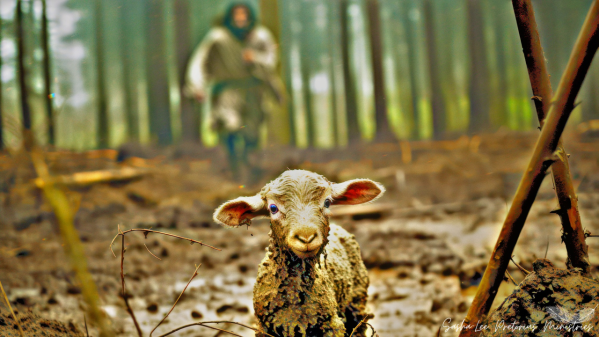
What makes us willing to face it, is knowing that there is a remedy – and there is! If we are “lost sheep”, we may know also that there is a “Good Shepherd” who gave his life to deliver his sheep from the horrors of their unfortunate condition.

Clive Every-Clayton

Blog at WordPress.com.

Up ↑