
After death – what?

Imagine asking an auditorium of 1,000 people to say where they expect to spend eternity – heaven or hell. (Of course, a number would refuse either option, preferring to think they will be annihilated). But I would imagine, out of the 1,000, maybe one person would admit they deserved hell. In other words, basically no-one ever seriously believes they will end up in hell. How about you?

Most religions have beliefs about life after death; it seems our human psyche requires some sense of justice being done in an ultimate divine assessment of our lives. The problem, of course, is to get anywhere further than a vague unfounded hope.

Some think that the idea of hell comes from the Old Testament with its God of fiery fury and righteous wrath. Interestingly, the Old Testament has only sparse allusions to anything like hell; for the most part its notion of the afterlife is hazy. Daniel 12.2 refers to the end-time possibilities of “everlasting life” and “shame and everlasting contempt”.

It was Jesus who spoke a lot about “eternal life” and the alternative that he called hell. He warns of being “cast into hell” (Mark 9.47), and in the Sermon on the Mount of those “in danger of hell fire” (Matthew 5.22). He describes it as a place of torment – “a fiery furnace – in that place there will be weeping and gnashing of teeth” (Matthew 13.42). The lost, he says, “will go away into eternal punishment” (Matthew 25.46). While some of the dead will be received into God’s presence along with Abraham the father of the faithful, Jesus describes others as being “in torment”, and “in anguish” (Luke 16.23-25).

This is so often overlooked because we consider Jesus as being essentially kind and ready to forgive: but for Jesus it was an act of kindness to warn us that there is a hell to avoid and yet an eternal life that can be ours after death.

How can we know truth in this hidden domain? God only knows, ultimately. But Jesus affirmed that he, the incarnation of God, had “come down from heaven” to “bear witness to the truth” and to say “whatever the Father told him to say” (John 6.38, 18.36, 12.49-50). 

Ultimately God alone knows what will happen to us after death. But in Jesus, he came down to tell us. More, he came to warn us – for hell is not merely for those guilty of committing the most horrific crimes. Hell will be the righteous punishment meted out to all sinners, “according to their works” (Matthew 16.27). And since the Bible clearly teaches that we have “all sinned” (Romans 3.23), it invites us all to be saved from hell by finding forgiveness and receiving the gift of eternal life, which Jesus promised to those who repent and believe in him.

Jesus came out of heaven not just to warn us of hell: he gave his life on the cross to make salvation possible. On that basis he promises eternal life to those who entrust themselves to him as Lord and Saviour. “To him all the prophets give witness, that everyone who believes in him receives forgiveness of sins through his name” (Acts 10.43). This is how to avoid hell. Jesus said, “Whoever hears my word and believes him who sent me has eternal life; he does not come into condemnation but is passed from death to life” (John 5.24). “God so loved the world that he gave his only Son, so that whoever believes in him should not perish [in hell] but have eternal life” (John 3.16).

Clive Every-Clayton
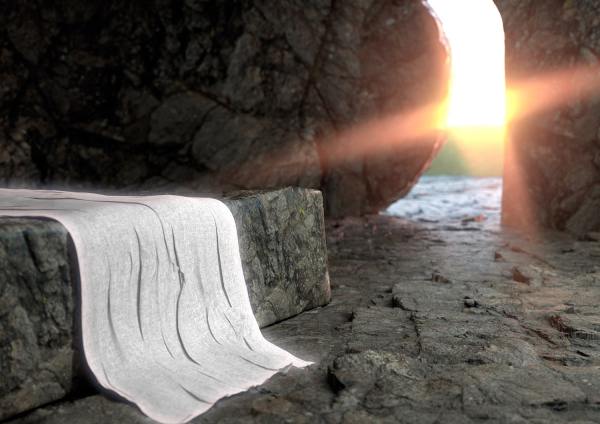
What’s so special about Easter?

From the beginning of the church, the first preachers proclaimed as an actual fact that Jesus, having been crucified, dead, and buried, rose to life and was seen by a number of his disciples over a period of about two months. They told how he had eaten and talked with them, showing them the wounds of his crucifixion to demonstrate that it was really himself. The preaching by these disciples in Jerusalem enraged the religious leaders who had brought about his crucifixion, and they did all they could to stamp out this new sect. They had the leading speakers imprisoned, beaten, and ordered them to stop preaching about this risen Jesus. The eyewitnesses of the risen Christ could not, however, be stopped, whatever they might suffer for proclaiming truth – they would neither lie nor be silent.

The religious authorities would have just loved to find the corpse of Jesus and put a stop to this new religion, but there was no corpse; his grave was empty.

As the first Christians proclaimed that their Master had risen from the dead, they quoted texts from the earlier Scriptures that had predicted that the Messiah would return from death. They remembered that Jesus himself had actually foretold several times that he would be crucified and then rise again “after three days” (Mark 8.31, 9.31, 10.33-34 – passages paralleled in Matthew and Luke). Because of that claim, the Jewish leaders set a guard to watch over the tomb where he was buried, lest anyone came and tampered with the corpse. But when an earthquake occurred, the guards were overcome with fear, seeing a shining angelic vision and could do nothing to prevent Jesus’ resurrection. 

The new faith grew rapidly; no-one could counter the fact of Jesus’ resurrection, attested by those witnesses who had seen Jesus alive after his death. The Christian church was thus founded on the proclamation that Christ died for our sins and rose victorious over death. The Jesus who during his lifetime had healed the sick and even three times raised the dead, was himself conqueror of death: and the most astonishing thing of all is that he had predicted he would rise from death after three days. His prediction was fulfilled! This is the most astounding prophecy and the most mind-boggling fulfilment in all human history! 

By this unique resurrection of Jesus the Son of God, his almighty Father demonstrated with power his approval, authenticating his life, teaching, and atoning work by raising him from death, subsequently taking him up to heaven at his ascension. Christianity was born by the events of Easter to which the apostles of Jesus testified in the town where he was killed. They boldly proclaimed that they had seen the risen Christ, and thousands believed and were baptised. 

A further aspect of the message which Jesus’ apostles proclaimed was that the Spirit of the risen Christ could enter people’s lives and transform them from sinners into saints. The many who were converted in those early weeks experienced that saving transformation as they heard the preaching of the Gospel, repented, and believed in Jesus. The biblical definition of the Gospel message is that “Christ died for our sins in accordance with the Scriptures, that he was buried, that he was raised on the third day in accordance with the Scriptures, and that he appeared to…” various people (1 Corinthians 15.1-6). The Christian faith is therefore based on historic events recorded in the early biblical documents which we now possess in the Bible, which give evidence for believing that Jesus was God incarnate. 

Clive Every-Clayton

Answering the problem of suffering (part 2)

There can be a real link between suffering and love: willingness to suffer for the good of another is a measure of real love. The more suffering one is prepared to suffer for another is a way of indicating the greatness of love for them. Jesus taught this principle: “Greater love has no-one than this, that he lay down his life for his friends” (John 15.13). And he demonstrated his love when he called himself the “Good Shepherd” who “lays down his life for his sheep” (John 10.11, 15). That’s how much Jesus loves you – he gave his life to save you from hell!

On the eve of his crucifixion, Jesus gave evidence of knowing how awful his suffering was going to be. That Roman death penalty was both horrible and excruciatingly painful. But Jesus’ prayer in the Garden of Gethsemane on that evening alludes to a deeper suffering he was to undergo. He asked that, if it were possible his Father would take away the “cup” from him. This expression is used in the Old Testament to describe the outpouring of God’s holy wrath on wicked sinners. Jesus was sinless: he did not deserve to die nor to suffer God’s punishment. But he had to drink the awful cup of the horror of Calvary: “The cup that the Father has given me, shall I not drink it?” he said (John 18.11). He thus fulfilled the Father’s plan of salvation to save us sinners as he surrendered to be crucified by the Roman soldiers. So, over and beyond the physical suffering, Jesus thus “bore our sins in his own body on the cross” (1 Peter 2.24). He “gave himself up for us… as a sacrifice to God” (Ephesians 5.2); “he died for sins once for all, the righteous for the unrighteous, to bring you to God” (1 Peter 3.18).

These passages and others tell us that Jesus (who was totally innocent) voluntarily took the place of sinners and suffered their eternal hell condensed into his infinite divine person for three hours on the cross; so when we turn from sin and commit in faith to Jesus, we can know God’s love for us personally. He “paid our debt”, so that we might go free. He did it because he loved us very, very much.

Perhaps you object to the idea of hell, as you consider the awful suffering that it represents. But think of this: first, it shows that our sins are indeed extremely serious in God’s sight and deserve terrible punishment. But second, the Son of God became a man so that he might endure in his person that very same terrible suffering. What he did is therefore the demonstration of the infinite love he has – even for hell-deserving sinners like you and me. So the awfulness of hell becomes a measure of Christ’s love for us! If we reject him still, after all he has done to save us from hell, we should realise what we deserve.

For those who repent and trust in him, Jesus promises eternal life, where, according to the Bible, “there will be no more death or mourning or crying or pain” (Revelation 21.4). Suffering will be forever over for those whom Christ has saved, when he comes back to judge the impenitent and set up the kingdom of God. Jesus teaches he will be the final judge, separating the sheep from the goats, and he ends by saying, “these (the lost) will go away into eternal punishment, but the righteous to eternal life” (Matthew 25.46).

Clive Every-Clayton

Divine abasement!

Here’s another carol that catches in verse the amazing abasement that it was for the Son of God to enter our human situation. “Thou who wast rich beyond all splendour, all for love’s sake, becamest poor”. We cannot imagine the wealth of glory that the Son of God left when he entered our world. The Bible puts it this way: “Though he was in the form of God, he did not count equality with God a thing to be grasped [or held on to at all costs], but made himself nothing, taking the form of a servant… Being found in human form, he humbled himself…” (Philippians 2.6-8). 

The God who calls us to humble ourselves in penitence before him, is a humble God! He did not disdain to fulfil his mission in becoming “nothing” – of no reputation in this world. He who was in the form of God took on “human form” to dwell among us. And “taking the form of a servant” means that he, the Almighty Creator, came to do us good – to serve us! Jesus himself said later that he had “come not to be served, but to serve, and to give his life as a ransom for many” (Mark 10.45). Jesus’ service for us was to give his life as a sacrifice that alone could atone for our sins, so that we might be forgiven! What an amazing kind of God this is! 

Another old carol expresses the profound descent of the Son of God into our world: “Hark, hark! The wise eternal Word like a weak infant cries; / In form of servant is the Lord, and God in cradle lies” (T Pestel). God in a cradle! Sharing our humanity from beginning to end! 

If the beginning of his earthly life is characterised by humility, his enduring the agony of death was the final act of service that he came to render. He “gave his life” to ransom us, who were captive as it were to evil powers; he came, the powerful Saviour, in humble love to redeem us by the payment of his own blood, given up in sacrifice on the cross. Such was his mission, and he fulfilled it to the end.

Another carol expresses the wonder of the Christ-child: “Thou didst leave Thy throne and Thy heavenly crown when Thou camest to earth for me / But in Bethlehem’s home there was found no room for Thy holy nativity.”  The Gospel of Luke tells us that when Mary was about to give birth in Bethlehem, “there was no room” available for them, so the humble incarnation took place in a stable, and the baby was laid in a manger. From the heights of glory to a cowshed! 

The same carol goes on to express that which alone could be our worthy response: “O come to my heart, Lord Jesus / There is room in my heart for Thee”. This enlightened poetry gives us all a challenge: what place have we given to the incarnate Son of God, the unique Saviour of humankind?

It is an astonishing thought that our heart can become the home of the Saviour. In a verse of the New Testament we see Jesus standing as it were at the door of our hearts: “Behold,” he says, I stand at the door and knock; if anyone hears my voice and opens the door, I will come in to him.” This is a word that we can put to the test. As he came to dwell physically on earth, so he can come and dwell spiritually in your heart if you invite him in.

Clive Every-Clayton

Born to save us from death

Once again the poets find words to express both the wonder and the depth of meaning of the incarnation of the Son of God: “Mild, he lays his glory by / Born that man no more may die”. Strange concept here! Born so that man may not die? What does this mean?

It’s a reference to something Jesus said when he was just about to raise a dead man named Lazarus back to life. “Whoever lives and believes in me shall never die” he said. He was obviously – as so often – using metaphorical or symbolic language, because he had just said, “he who believes in me will live, even though he dies” (John 11.25-26).

Jesus is referring to two kinds of death: physical death is one thing, but beyond that there is eternal death, “the wages of sin” (Romans 6.23). He says that those who believe in him may well die – as we all do – physically, but they will never die eternally but will have eternal life. This is a glorious promise Jesus made to those who come to trust in him: and the offer is still valid!

So the hymn writer, Charles Wesley, means that Jesus was born, and came into the world so that people, believing in him, may “no more” die. Then in the same carol, Wesley adds something else: “born to raise the sons of earth / born to give them second birth”. This also need unpacking! Though Jesus did teach that he, the Son of God, would bring about the resurrection of the dead at the last day, when he returns in glory (see John 5.26-29), here Wesley is alluding to another deep teaching of Jesus. 

A Jewish leader called Nicodemus came to Jesus to check him out, and Jesus spoke to him about this “second birth”. “Unless a person is born again,” he said, “he cannot see the kingdom of God” (John 3.3). He went on to insist, “You must be born again” (John 3.7). A person’s physical life begins when they are born; but they receive spiritual, eternal life when they are “born again”. The object of Jesus coming into the world was to make it possible for those of us who were under the threat of eternal death to obtain eternal life by being “born again”. So Wesley was quite right: Jesus was born to be the Saviour of the world so that those who trust in him might have this “second birth” into God’s kingdom.

How does this second birth come about? you may ask. Elsewhere the Bible teaches us how. We are born again “through the Word of Gd” (1 Peter 1.23). In other words, we have to hear God’s word, or read it in the Bible, listening for its application to one’s personal life, responding to its call to repent and believe in Jesus. This involves a personal commitment. 

But another verse at the beginning of John’s Gospel (1.11-13), speaks of the need of receiving Christ personally as Lord and Saviour: “He [Jesus] came to his own people but his own people did not receive him. But to all who did receive him, to those who believed in his name, he gave the right to become children of God who were born… of God”. When we receive Christ by faith, we receive new life in him; we become children of God; we are “born again”. This is just another way of speaking of the deep reason for Christ’s coming, as was said at his birth: “You shall call his name Jesus, for he shall save his people from their sins” (Matthew 1.21).

Clive Every-Clayton

Jesus, the Word of God

Another profound revelation given in the first chapter of John’s Gospel that is often read at Christmas time is the use of the expression, “Word” to signify the Lord Jesus Christ. This is clear in John 1.14: “The Word became flesh and dwelt among us”. 

The Gospel opens with the words “In the beginning was the Word, and the Word was with God, and the Word was God”. This is a phrase both dense and difficult to fathom – but it deals with both the nature of God and the incarnation, both of which are supernatural themes not easy to access. Let’s examine it more closely.

“In the beginning was…” – this both evokes the first verse of the Bible, “In the beginning God created…”; and yet the verb “was” depicts not an action but a presence. “In the beginning” brings us back to the very dawn of creation – or even to the deep mystery before creation took place. The “Word” was already there!

“The Word was with God”. Here the “Word” appears separate from God, but closely connected with him. “He was in the beginning with God” (verse 2). But who ever could have been there with the Creator at the beginning of creation? The Word was in eternity at God’s side; could he be God’s equal?

“The Word was God”. Now we are really confused: the Son, Jesus (the Word made flesh, v14) was not only with God. He was God! Later in the chapter John recounts the testimony of John the Baptist at the start of Jesus’ public ministry: “I have seen and have borne witness that this is the Son of God” (v34). The beginning of this Gospel therefore introduces us to the Son of God who was with God the Father at the eternal moment prior to creation. Christian theologians, reflecting on this and other passages of the New Testament where mention is made of “the Spirit of God”, concluded that in the one divine true God there is a tri-unity of Father, Son, and Spirit. This has always seemed out of reach of our human understanding, but that is the whole point: a god you can fully comprehend does not deserve the title of God. The Almighty Creator must always exceed our human grasp. “My thoughts are higher than your thoughts”, he says in Isaiah 55.8-9.

Next, John reveals that the Word was none other than the Creator: “All things were made by him, and without him nothing was made that was made” (verse 3). The Word, the eternal Son of God, was uncreated; indeed, he was the Creator of “all things”! So in Jesus’ birth, we see the Creator visiting his creation – even entering his own creation like the “undercover Boss”!

All this is true of that tiny babe in Bethlehem! “God contracted to a span, incomprehensibly made man”. Or as John puts it, “The Word became flesh and dwelt among us, and we have seen his glory, glory as of the only-begotten Son of the Father, full of grace and truth” (verse 14). Well may the angels of heaven burst out to worship at the sight of the one who had forever dwelt in the heights of heavenly glory taking on the nature of humanity! 

John evokes however the greatest of tragedies: “He [the Word] was in the world, and the world was made by him, yet the world did not know him” (verse 10). Some, however, did come to know him, and to receive him and love him. Are you one of them?

Why not take time to read and meditate on those first 18 verses of John’s Gospel?

Clive Every-Clayton

God became visible

One of the problems for faith is that God is not something or someone that you can see: he is Spirit, which means he is invisible. How can you prove the existence of someone who is invisible?

In the first 18 verses of the Gospel of John chapter 1, a biblical passage that is often read at Christmas time, an answer is given to this issue. Later in the Gospel (chapter 4.24) Jesus himself teaches that “God is spirit”, so Christianity does not try to hide the fact that God cannot be physically seen.
Indeed, John 1 verse 18 acknowledges that “No one has ever seen God”, but the apostle goes on to bring a clarification that is absolutely mind-boggling: “the only-begotten God, [i.e. Jesus] who is at the Father’s side, he has made him known”. The more modern New Living Translation renders this as: “the unique One, who is himself God, is near to the Father’s heart. He has revealed God to us”. Let’s unpack that profound sentence.

The verb “beget” signifies the fathering of a child. The mother “gives birth”, and the father begets. The biblical expression “only-begotten” implies the unique communicating of divine life from the Father to the Son, Jesus. So Jesus teaches in John 5.26, “As the Father has life in himself” [i.e. divine life], “so he has granted the Son also to have life in himself”. This is unique to Jesus – the “only-begotten Son”. He uses this word himself in John 3.16: “God so loved the world that he gave his only-begotten Son, that whoever believes in him should not perish but have eternal life”. 

So the “only-begotten God” is Jesus: he has made God the Father known. This is a major truth. The vital fact here stated is that: “Jesus has revealed God to us”. The word “revealed” brings us to a completely different level of reflexion on this difficult search for God. We have our ideas, (both small and confused and often far from correct) about God. But if God reveals himself – if the invisible becomes visible – we can have meaningful access to truth about him. This is indispensable if we are ever to know God. And this was one of Jesus’ essential roles in coming into the world.

Though we cannot see God in this life, he has shown himself in Jesus. That’s why Jesus could say, “Whoever has seen me has seen the Father” (John 14.9). In his sinless life of love, holiness, and compassion, Jesus showed forth the very nature of God. He lived among people who could realise that he was indeed “the image of the invisible God” (Colossians 1.15).

As we study the life of Jesus in the Gospels, we see God in human form. Or as Charles Wesley put it poetically: “Veiled in flesh the Godhead see / Hail the incarnate Deity / Pleased as man with man to dwell / Jesus our Emmanuel”. The biblical word Emmanuel means “God with us” (Matthew 1.23). That is who Jesus was – a totally unique incarnation of God. That’s why Christmas resonates with amazement and worship. For the only time in History, God entered the world as a small baby boy who grew up to live a sinless life, to teach about God as his Father, to do miraculous deeds, and when rejected and crucified, he rose triumphant from the dead and was seen and heard for forty days by hundreds of people before returning to heaven.

Nothing like that has ever happened elsewhere. God has revealed himself through Jesus. We do well to pay attention to his revelation.

Clive Every-Clayton

Answers? The basics

As people look for answers to our existential questions, the options are fairly easily categorised: there are basically two. 

The answers may come from human beings, or may be given by God. Centuries of human intellectual pursuit have failed to provide the answers that our hearts crave – answers that both clearly correspond to reality and that provide meaning and purpose to our existence. 

God may give answers. Indeed, if he is our creator, he would have the infinite wisdom to know why he created us the way we are; as any human inventor or creator, he would have a purpose in mind for his creation. If he created us with the capacity of communicating, he would logically have the ability to communicate also. So he could get a message through to us, answering our many queries.

But it would seem there are many gods with many conflicting messages about how we are to find fulfilment. How to be sure we have the real God?

Very few religions teach that God is our Creator. It is on the first page of the Jewish Bible; it is repeated in the Christian New Testament; it is alluded to in the Koran. What makes the difference  between these three? The fact that in Christianity alone, we have God becoming incarnate – coming down into our world in human form in the extraordinary person of Jesus. Both Jews and Muslims deny this; the Christian New Testament affirms, however, that the Lord Jesus Christ was himself the creator: He is presented as “the Word” who one day “became flesh and dwelt among us”; and he, “the Word” was the Creator, because “All things were made by him, and without him nothing was made that was made” (John’s Gospel, chapter 1, verses 1-18). “By him all things were created”, the New Testament repeats; “in him all the fulness of God was pleased to dwell” (Colossians 1.16-19).

As “the Word”, the Lord Jesus Christ had the divine wisdom of the Creator, and was able to communicate God’s will and truth to us human beings. He himself lived a sinless human life, taught profound truths about God and human goodness and, when he was rejected and crucified, he demonstrated his divine nature by rising alive from the dead three days later.

“I have come,” he said to the people, “that they might have life, and have it abundantly” (John’s Gospel 10.10). “For this purpose I was born and for this purpose I have come into the world – to bear witness to the truth” he declared (John 18.37). He therefore communicates truth we need to know in order to have abundant life. In other words, he brings the answers we need to our existential questions. 

By the historic life of Jesus, we can finally have access to the unique source of true answers; all we have to do is read and understand what he taught in the New Testament Gospels which, written by his close disciples, record his words of wisdom and truth. 

Speaking of Jesus, the New Testament explains, “all things were created by him and for him” (Colossians 1.16). Think about that for a moment: all things – including you and me – were created not only by Christ, but for Christ. We find fulfilment therefore, when we find Christ – for we were made for him. Our human confusion is that we are cut off from the only one – Christ – who can love us, forgive us, cleanse us, make us right with God and even dwell within us when we pray to him and ask him to come and save us from our sins. He is alive; he is divine; he can hear and answer our prayer as we call upon him. This is the way we will find the fulfilment our heart craves.

Clive Every-Clayton

How should I read the Bible?

Normally you begin a book at page one and read it through to the end. Of course there is sense in reading the Bible like that, but it would take quite a long time to get to the central message. It is, however, very useful to read the early chapters of Genesis, (the first of the 66 books contained within the Bible) for they lay the foundation of all that will be developed through the many pages to come. Genesis also introduces Abraham, called by God to become the father of a numerous posterity, the Jewish people.

The Bible is a book of history, and recounts the development of God’s people throughout numerous generations. The second book, Exodus, tells of the escape of the Israelites from bondage in Egypt, and how God gave them the Ten Commandments. Succeeding books reveal God’s dealings with his people through the centuries.

The central message of the Bible becomes clearer in the New Testament, where the four Gospels relate the life, teaching, miracles, death, and resurrection of Jesus, and this is the heart of the Bible’s message, so it is quite acceptable to move quickly into that. One way of reading the Bible is to read each day a chapter both of the Old Testament and of the New Testament. 

Different parts of the Bible have differing emphases and usefulness. For example, the Psalms are prayers of God’s people in a large number of diverse situations; they express their need of God in various ways, and uplift the spirit by their expressions of praise to God. The Book of Proverbs contains short adages of practical advice; the Book of Ecclesiastes illuminates the human dilemma, life seemingly meaningless without God. In the later prophetic books, we see God speaking to the Israelites words of reproach and warnings of judgment as well as promises of mercy and predictions of blessing when they repent. 

In the New Testament one of the Gospel writers, Luke, wrote a second book, the “Acts of the Apostles” which continues the history of the disciples of Jesus from AD 30 to AD 62. It shows how the early church began, what the apostles preached, and how they dealt with various issues as the Gospel went further out into the Roman Empire. This is a fascinating historical read.

What is very helpful for the believer are the letters written by the apostles, Paul, Peter, James, John, and Jude to the first believers. They contain eternal truths that all believers hold, especially developing the way God saves sinners through Christ. They also give numerous exhortations about living as Christian disciples in the world. These letters speak directly to the believer of today and are extremely helpful for our spiritual growth. Some are more complicated than others, for God’s truth is very deep and requires our serious study.

But how should one read? It is good to start by praying that God will speak to you through his Word and enable you to understand it. Then read with an open spirit, attentive to what God might say to you through the passage you read. The Bible is a living book: God still speaks through its pages to the hearts of believers today. 

Don’t rush your reading; take the time to think through what it means. It has been well said, “It is better to read little and think much than to read much and think little”. And as you think – or meditate – on the Bible’s message, you can also have a notebook and pen handy, to jot down any particular thought that inspires you or is applicable to your life. It does no harm to underline in the Bible those verses that speak to you. 

There are some helpful “Study Bibles” for sale that have notes assisting the reader to understand those passages that may seem unclear. Most of them are excellent and you may want to invest in purchasing one. Conversely, you may find it helpful to have a pocket New Testament that you can carry around with you, or download a Bible on your smartphone. That way, if you have time spare before your next activity, you can nourish your faith by a quick Bible reading.

Bible reading is meant not only to inform you, but to change you more into the likeness of Jesus. So don’t let your reading be merely to gain head knowledge – useful though that is. Keep asking yourself, what does this mean in my life? How should I apply this statement or this promise or this commandment in my life today? Reading the Bible with an open heart, submissive to God’s teaching, will enable you to grow in faith, love, and commitment to your Saviour.

Clive Every-Clayton

Walking with God

Our relationship with God is likened in the Bible to walking with God. Right at the earliest time in humanity there was at least one, Enoch, who “walked with God” (Genesis 5.24). In fact the New Testament uses the idea of walking to depict one’s way of life. For example, there are the unbelievers who “walk in darkness” (John 8.12); indeed, Paul describes them as walking “in the futility of their minds” before they came to know the Lord. Subsequently, they who “are light in the Lord. Walk as children of light” (Ephesians 4.17, 5.8).

This theme, recurring through the bible, teaches us something important: the Christian life is not just believing some facts or doctrines, nor just in practicing some religious acts. It involves maintaining a relationship with the Lord: walking with him means sharing our lives with him, talking to him about everything that worries us, asking his help in all kinds of situations. 

This is both a blessing and a challenge. To share our lives with Jesus is the way we show our love and attachment to him as our loving Saviour. It’s a way of speaking of our intimate prayer life. If you ever go for a solitary walk, that’s an opportunity to literally walk with God, opening up your heart to him, sharing your joys, your sorrows, your temptations, and your plans with him. It can be a time to offload your burdens, to entrust your difficulties into God’s hands, and to renew your confidence in his promises to help you.

But there is a challenge here too. 1 John 1.6, 7 points this up: “If we say we have fellowship with him while we walk in darkness, we lie and do not practice the truth”. But in verse 7 he adds “if we walk in the light, we have fellowship with one another” and with God himself. He goes on to encourage his readers to confess their sins to God, for as we keep close to God in our walk, we need to be cleansed of any deviations from the right path. So walking with God, keeping up a living relationship with him, will keep us from erring into sinful behaviours.

Here is a verse that is worth memorising : Paul, writing to converts in Colossians 2.6,7, exhorts them: “As you received Christ Jesus the Lord, so walk in him, rooted and built up in him and established in the faith, just as you were taught, abounding in thanksgiving”. This reminds us of how we started out on the Christian walk – we “received Christ” as our saviour and Lord. So we keep on, becoming more established in the faith, and growing in our obedience to our Lord.

To other believers he wrote similarly, “as you received from us how you ought to walk and to please God, just as you are doing, … do so more and more” (1 Thessalonians 4.1). Let’s learn to maintain an open and clear relationship with the one who loved us and gave himself for us, and is now living within us by his Spirit. So we will become more and more like him, so as to “walk in the same way in which he walked” (1 John 2.6).

Clive Every-Clayton

Blog at WordPress.com.

Up ↑