God is not just a theory

Sometimes believers and apologists for the Christian faith give the impression that you can argue others into having faith. They compare the poor arguments of scientific atheism with their proposing the Christian faith and want to show that the Christian “theory” is more plausible than any other.

While there is truth in this, it may have the result of leading the unbeliever to conclude that Christianity is just another theory, which sooner or later will be shown to fall short of what is required. In other words, the whole discussion remains at the level of argument and speculation. But this is not the way Christianity truly functions, because it is not just a philosophical position, setting forth the theoretical existence of God as its basis. No – Christianity has as its unique basis in the historical life, teachings, death and resurrection of the extraordinary historical person, Jesus, the Christ, i.e. the Messiah, the incarnate Son of God.

The ministry of Jesus was totally unique in the history of the world. The work of “evangelism” that Christians are committed to do consists not of arguing for the truth of the Christian faith but of announcing the historic facts of Jesus’ life and ministry. There is profound truth in the expression: “Christianity is Christ”. The life and teaching of Jesus Christ is a phenomenon of world history which calls for assessment. Everyone should know that his life and ministry occurred – indeed, two thousand years ago exactly his feet were walking on our planet. 

When you examine other religions, you find that they may make reference to historic events, but their teachings are ultimately man-made propositions about God (or the gods) and what the divinity demands. They offer supposed rewards in the next life, particularly for those who obey their moral requirements. They claim that these commandments are specified by their gods, and that those who obey them will enter the equivalent of heaven. That positive final destination is held out to those who faithfully obey the laws laid down by that religion.

It appears there is a sensitivity in the human soul that responds to such hope-giving teaching; so everywhere there are devout people who do their best to follow the path set out, hoping that their recompense will be great beyond death. However, those who made those religious promises did so before they died, and were ultimately as ignorant of the after-life as all the rest of us. Their promises were unfounded.

Here, Jesus is in a class by himself, for after his death by crucifixion, he rose from the dead and continued to teach for another forty days before returning to heaven where he had come from. Jesus is also unique in his teaching that he had come from God in heaven in the first place. And on two occasions, the Gospels relate, God spoke out audibly from heaven affirming: “This is my beloved Son, with whom I am well pleased; listen to him” (Matthew 3.17, 17.5).

Clive Every-Clayton

What’s so special about Easter?

From the beginning of the church, the first preachers proclaimed as an actual fact that Jesus, having been crucified, dead, and buried, rose to life and was seen by a number of his disciples over a period of about two months. They told how he had eaten and talked with them, showing them the wounds of his crucifixion to demonstrate that it was really himself. The preaching by these disciples in Jerusalem enraged the religious leaders who had brought about his crucifixion, and they did all they could to stamp out this new sect. They had the leading speakers imprisoned, beaten, and ordered them to stop preaching about this risen Jesus. The eyewitnesses of the risen Christ could not, however, be stopped, whatever they might suffer for proclaiming truth – they would neither lie nor be silent.

The religious authorities would have just loved to find the corpse of Jesus and put a stop to this new religion, but there was no corpse; his grave was empty.

As the first Christians proclaimed that their Master had risen from the dead, they quoted texts from the earlier Scriptures that had predicted that the Messiah would return from death. They remembered that Jesus himself had actually foretold several times that he would be crucified and then rise again “after three days” (Mark 8.31, 9.31, 10.33-34 – passages paralleled in Matthew and Luke). Because of that claim, the Jewish leaders set a guard to watch over the tomb where he was buried, lest anyone came and tampered with the corpse. But when an earthquake occurred, the guards were overcome with fear, seeing a shining angelic vision and could do nothing to prevent Jesus’ resurrection. 

The new faith grew rapidly; no-one could counter the fact of Jesus’ resurrection, attested by those witnesses who had seen Jesus alive after his death. The Christian church was thus founded on the proclamation that Christ died for our sins and rose victorious over death. The Jesus who during his lifetime had healed the sick and even three times raised the dead, was himself conqueror of death: and the most astonishing thing of all is that he had predicted he would rise from death after three days. His prediction was fulfilled! This is the most astounding prophecy and the most mind-boggling fulfilment in all human history! 

By this unique resurrection of Jesus the Son of God, his almighty Father demonstrated with power his approval, authenticating his life, teaching, and atoning work by raising him from death, subsequently taking him up to heaven at his ascension. Christianity was born by the events of Easter to which the apostles of Jesus testified in the town where he was killed. They boldly proclaimed that they had seen the risen Christ, and thousands believed and were baptised. 

A further aspect of the message which Jesus’ apostles proclaimed was that the Spirit of the risen Christ could enter people’s lives and transform them from sinners into saints. The many who were converted in those early weeks experienced that saving transformation as they heard the preaching of the Gospel, repented, and believed in Jesus. The biblical definition of the Gospel message is that “Christ died for our sins in accordance with the Scriptures, that he was buried, that he was raised on the third day in accordance with the Scriptures, and that he appeared to…” various people (1 Corinthians 15.1-6). The Christian faith is therefore based on historic events recorded in the early biblical documents which we now possess in the Bible, which give evidence for believing that Jesus was God incarnate. 

Clive Every-Clayton

Easter: the bizarre death of Jesus

This April 2025 Christians will celebrate Easter. This feast is a celebration and commemoration of what took place in history, almost exactly 2,000 years ago in Jerusalem. It can be considered as the pivot of world history, bringing in a change that reverberates still around the world today.

In this blog post and the next I want to explore the deep meaning first of Jesus’ death, and then of his resurrection from the dead, for these are the events we commemorate each Easter.

Jesus’ death was, in one sense, a grave miscarriage of justice: the Roman governor, pressured by self-righteous jealous religious leaders who stirred up the crowd against Jesus, condemned the innocent holy prophet to die. But there is much more to it than this. Jesus himself, the night before his crucifixion, said that his blood would be shed “for the forgiveness of sins”.

It is a little-known fact that on three occasions the Gospels relate how Jesus predicted not only his death but also his resurrection! Referring to his death he said he would “give his life as a ransom for many”, and as the “Good Shepherd” he would “lay down his life for his sheep”. In other words, in Jesus’ understanding, his death was for the benefit of others, indeed for their salvation, for he came, he said, “to seek and to save the lost”.

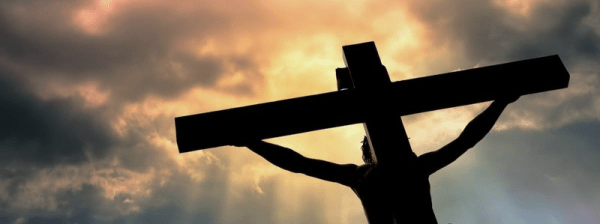
The reason why Christians celebrate the death of Christ and make an instrument of torture – the Cross – a symbol of their faith, is that they see it as having accomplished a work of atonement for their sins. Most religions see that sins have to be punished or “paid for”, and our conscience admits that as guilty offenders we deserve God’s righteous punishment. But while other religions propose that we can obtain salvation by the good works that we are able to do to “pay for” our sins, Christianity gives us a vitally different message. We need to realise that we cannot ever “pay for” our sins however much good we seek to do, because we ought to do those good things anyway. Instead it is Jesus who came to “pay for our sins”, to make atonement, and he did that by dying “for us”.

This is why the Christian message is called “Good News”. This is why the death of Jesus is celebrated in churches throughout the world. It was the accomplishing of our salvation, as Jesus’ work of atonement makes possible the forgiveness of our sins. It is the only objective grounds upon which a holy and just God can offer free forgiveness while fully respecting the demands of justice: the just penalty we deserve was taken by Jesus. Why? Because he loves us! His death for our salvation is the supreme demonstration of God’s love and mercy towards us. 

On the cross Jesus cried out, “It is finished!” He was telling us that he has finally accomplished his atoning work. In anticipation he had said in prayer to God his Father the night before he died: “I have finished the work you gave me to do”.

This does not mean that everyone is thereby automatically forgiven; every one of us needs to ask our Saviour to forgive us personally, on the basis of his death for us. We need to turn from our sins and turn to Jesus in prayer; we need to thank him for his sacrifice which makes forgiveness possible. Then we must receive him as our Saviour and commit ourselves personally to follow him as the new Lord of our lives.

Clive Every-Clayton

Born to save us from death

Once again the poets find words to express both the wonder and the depth of meaning of the incarnation of the Son of God: “Mild, he lays his glory by / Born that man no more may die”. Strange concept here! Born so that man may not die? What does this mean?

It’s a reference to something Jesus said when he was just about to raise a dead man named Lazarus back to life. “Whoever lives and believes in me shall never die” he said. He was obviously – as so often – using metaphorical or symbolic language, because he had just said, “he who believes in me will live, even though he dies” (John 11.25-26).

Jesus is referring to two kinds of death: physical death is one thing, but beyond that there is eternal death, “the wages of sin” (Romans 6.23). He says that those who believe in him may well die – as we all do – physically, but they will never die eternally but will have eternal life. This is a glorious promise Jesus made to those who come to trust in him: and the offer is still valid!

So the hymn writer, Charles Wesley, means that Jesus was born, and came into the world so that people, believing in him, may “no more” die. Then in the same carol, Wesley adds something else: “born to raise the sons of earth / born to give them second birth”. This also need unpacking! Though Jesus did teach that he, the Son of God, would bring about the resurrection of the dead at the last day, when he returns in glory (see John 5.26-29), here Wesley is alluding to another deep teaching of Jesus. 

A Jewish leader called Nicodemus came to Jesus to check him out, and Jesus spoke to him about this “second birth”. “Unless a person is born again,” he said, “he cannot see the kingdom of God” (John 3.3). He went on to insist, “You must be born again” (John 3.7). A person’s physical life begins when they are born; but they receive spiritual, eternal life when they are “born again”. The object of Jesus coming into the world was to make it possible for those of us who were under the threat of eternal death to obtain eternal life by being “born again”. So Wesley was quite right: Jesus was born to be the Saviour of the world so that those who trust in him might have this “second birth” into God’s kingdom.

How does this second birth come about? you may ask. Elsewhere the Bible teaches us how. We are born again “through the Word of Gd” (1 Peter 1.23). In other words, we have to hear God’s word, or read it in the Bible, listening for its application to one’s personal life, responding to its call to repent and believe in Jesus. This involves a personal commitment. 

But another verse at the beginning of John’s Gospel (1.11-13), speaks of the need of receiving Christ personally as Lord and Saviour: “He [Jesus] came to his own people but his own people did not receive him. But to all who did receive him, to those who believed in his name, he gave the right to become children of God who were born… of God”. When we receive Christ by faith, we receive new life in him; we become children of God; we are “born again”. This is just another way of speaking of the deep reason for Christ’s coming, as was said at his birth: “You shall call his name Jesus, for he shall save his people from their sins” (Matthew 1.21).

Clive Every-Clayton

What’s good about Good Friday?

Jesus told us to repent and to believe the “Good News” (which is what the word “Gospel” means). But we may well ask, what’s so good about this Good News? And why at Easter do we celebrate the day Jesus suffered the awful agony of his crucifixion, as “Good Friday”?

Jesus’ coming into the world should be seen as the greatest act of kindness possible for our holy Creator who is also our loving Saviour. Why? Because instead of intervening in human history to bring cataclysmic judgment for human sins, he came, Jesus affirmed, “to seek and save the lost” (Luke 19.10). 

Now anyone with a sensitive conscience can see two things: they are not perfectly righteous, but rather guilty of many sins; and that before a holy and righteous divine Judge, they cannot say they have been so good as to deserve heaven. So facing the coming of the divine Son of God is a fearful prospect. Yet when Jesus did come into the world, he said, “I came not to judge the world but to save the world” (John 12.47).

In the Bible we read these astounding words with a universal scope: “This is a faithful saying, and worthy of all acceptation, that Christ Jesus came into the world to save sinners” (1 Timothy 1.15). I had to acknowledge that I was a sinner in God’s sight; but as I did so, I realised that therefore Jesus came into the world to save me. (And you can have the same assurance).

Jesus’ way of saving sinners can be considered in two stages: first of all, our sin has to be paid for, for we are guilty in God’s eyes. But the only way we can pay is in hell for ever – that’s what our sins deserve. But Jesus came in order to pay for our sins. He did this by suffering our hell, condensed in his infinite person as he suffered on the cross. The God-forsakenness of hell is what Jesus suffered as well as the physical horror of crucifixion, for as he bore our sin, he cried out, “My God! My God! Why have you forsaken me?”

We cannot fathom the depth of what Jesus suffered, but the Bible sums it up: “He bore our sins in his body on the cross… Christ suffered once for sins, the righteous for the unrighteous, so that he might bring us to God” (1 Peter 2.24, 3.18). Without our just punishment being borne out of love by our saviour, we could never be justly forgiven. That’s why Good Friday was Good News!

But then, to be forgiven and saved, every individual must appropriate it for themselves. It is not automatically given to everyone. The way to receive it is to repent (see previous blog) and to “receive Christ” as your personal Lord and Saviour. That’s what “believing in Christ” really means: not just believing that he existed, or that he came from God, though that is essential. But also believing that Jesus’ death on the cross paid for your salvation and that he rose from the tomb, showing God’s full approval of his saving work; and then coming in prayer to Jesus to ask him, “Come into my life and be my Lord and Saviour; I thank you for loving me so much as to die for my salvation; in return I will follow you and live for you and grow in faith to love and trust you more and more as I read your word”. You may count on Jesus to answer that prayer as you commit yourself sincerely to him.

Three overwhelming things God did

Those who believe in God normally have some idea of what God is like. Though many imagine nice aspects of God and his character, it must be emphasised that God is not just a human idea. He is objectively there. He acts. He is capable of speaking. He loves. So we should expect to see some of his interventions and deeds, and hear or read some of his words. Otherwise he would be the God of deists who think God created the world, set it going, then vanished over the horizon never to be seen again (though somehow he maintains everything in existence.)

Against such feeble beliefs, the Christian Scriptures relate three overwhelming things that God has actually done (among many others). God has accomplished in our world, in history, these three mind-boggling deeds that are guaranteed to shake up anyone’s feeble and unclear ideas of the divine.
The first is the incarnation of God the Son. Luke, one of the best historians of his age, recounts the whole back-story of Jesus’ mother, Mary, being informed she would become pregnant and give birth to one who will be called the Son of God. Luke recounts how Mary checked out the truth of this divine message, and how she acquiesced to fulfilling this extraordinary project, having this unique baby without any sexual intercourse. Joseph, her fiancé, was informed and acted as a good father to the young Jesus. Their baby grew up to be the powerful preacher, miracle-worker, the greatest moral teacher of all time, the sinless man who gave his life for the salvation of men and women.

This leads us to the second astounding thing that God did: God the Son incarnate refused to use his miraculous powers or even to claim his human rights to obtain deliverance from death; he saw his mission as giving himself up to death on the cross – the most vile, shameful, humiliating, and painful death imposed upon him by those who thought they were acting according to law. Unknown to them, they were acting according to prophecy given centuries before, notably in the 53rd chapter of Isaiah which deserves close attention if you are not familiar with it. It explains that the coming Servant of God – Jesus Christ – would bear the sins of others, would be afflicted by God on their behalf, would intercede for them and obtain their justification, their forgiveness by his atoning death in their place. The fact that God, coming into the world, should suffer such agony in order to save us from the agony of hell is totally amazing and a demonstration of divine love.

The third thing is even more mind-boggling: God raised Jesus from the dead. Again the faithful historian Luke recounts how this took place and the apostle Paul recorded various encounters people had with the risen Christ. Despite the efforts of antagonistic non-believers to explain away Christ’s resurrection, it remains the major event which alone can explain both the extraordinary courage of the apostles who announced it as having been eye-witnesses, and the equally extraordinary expansion of the Christian faith as thousands right there in Jerusalem where Jesus was crucified, came to believe he was the risen Saviour and Lord.

Three outstanding accomplishments of what God alone can do: Incarnation, Atonement, Resurrection. Three pillars of the Christian faith. Three demonstrations of the fact that God intervenes in the world. Anyone wanting to prove that it’s true can entrust themselves to the risen Saviour; they will find in their experience that God’s power still works to transform sinners into saints.

Clive Every-Clayton

How do we know?

Maybe you’re wondering if all this is true, that Jesus’ death was a perfect atonement for our sin. Anyway, how can we know? How can we be really sure? 

The supreme proof of the whole truth of Christianity and the saving value of Christ’s death is the fact that he rose from the dead. This totally unique historic event demonstrates for all time the divine nature of Jesus, the Son of God. It was the first emphasis of the disciples’ proclamation, just seven weeks after the crucifixion, in the very town where Jesus had died. Having seen the risen Christ, spoken with him, eaten with him – even touched him, they were authentic eye-witnesses to the fact of Jesus’ resurrection from the dead. They simply proclaimed the powerful truth, and thousands were convinced and became the first believers of the Christian church in Jerusalem. 

Numerous efforts have been made by those antagonistic to the Christian faith to deny these historic events: none have proved to be compelling. The Master had taught the apostles to speak the truth. They would never have lied about his resurrection since they witnessed it. Liars do not keep lying in the face of the persecution, even to martyrdom; the disciples suffered for the truth that they would never deny. 

The apostle Paul sums up what he preached: “That Christ died for our sins in accordance with the Scriptures, that he was buried, that he was raised on the third day in accordance with the Scriptures, and that he appeared to Cephas [Peter], then to the twelve [apostles]. Then he appeared to more than 500 brothers at one time, most of whom are still alive… Then he appeared to James… Last of all … he appeared to me” (1 Corinthians 15.3-8).

The resurrection of Christ therefore proves at least three things:

  1. That Jesus had spoken the truth when he predicted he would rise again. Few people realise the astounding fact that on several occasions in his public speaking, Jesus had prophesied that he would rise from the dead after three days. No-one else has ever predicted their resurrection, have they? If they did, did it happen? Of course not! But Jesus did! (Check it out: Mark 8.31; 9.31, 10.33-34, similarly reported by Matthew, and by Luke). Jesus also made other allusions to his resurrection. He declared: “I lay down my life of my own accord. I have authority to lay it down, and I have authority to take it up again” (John 10.17). The night he was arrested he fixed a meeting place with his disciples: “After I am raised up, I will go before you into Galilee” (Matthew 26.32). This is surely mind-boggling!
  2. That Jesus was indeed the divine Son of God. He was “declared to be the Son of God with power by his resurrection from the dead” (Romans 1.4). This is an integral part of who Jesus was. Christians believe it because the evidence is right there in the historic records.
  3. That his sacrificial death for the saving of sinners was approved by God the Father who raised him from the dead. The resurrection was the Father’s way of showing that the atoning sacrifice had been perfectly accomplished.

This means that God has intervened in history; he has spoken to mankind; he has created the way for sinners to be forgiven by Christ’s atoning death. Jesus has conquered death; he is alive and able to receive all who turn to him in repentance and faith. That furnishes experiential proof, so believers know it is true.

Clive Every-Clayton

Blog at WordPress.com.

Up ↑