
Is faith too simplistic?

Some may protest that the Christian message is too easy: is all you have to do to have access to eternal heaven, to believe in Jesus? Is that what Jesus meant when he said, “God so loved the world that he gave his only Son, that whoever believes in him should not perish but have eternal life”? Just believe in Jesus – is that all?

While that appears quite simple, you need to think a bit more: you can’t just decide to believe in something without taking it seriously as true. In fact, faith means trusting in the truth of what is said. And if we consider a speaker to be not serious and trust-worthy we just can’t believe all he says.

On the other hand, there are those who think that becoming a Christian involves a whole lengthy study of all the aspects of deep theology which, like the principles of Buddhism, require considerable effort to really grasp. Of course, when we deal with God almighty we may expect there are issues that cannot easily be understood. Then some would say, “Don’t bother trying to understand – just believe”. That option, however, errs on the side of the simplistic and misunderstands what’s involved in truly believing. 

What we need, for a clear and real kind of faith, is to find the happy medium between the simplistic on the one hand, and the hyper-complicated on the other. What’s necessary in order to have faith that saves the soul? What exactly is that sincere faith in Christ that leads to a real conversion to Christ?

Essentially three things:

  1. To know the basic facts of Jesus’ life, death, and resurrection.
  2. To realise that these facts call for a personal response
  3. To make that response in a commitment of repentance and trust in Christ which is formulated in a prayer.

Let’s think those three things through.

First, the Bible itself says, “How are people to believe in him of whom they have not heard?” (Romans 10.14). Obviously, in order to believe and trust in Christ, we must know who he is and what he has said and done. That’s why the Gospels were written. John ends his account of Jesus’ life saying, “Now Jesus did many other signs in the presence of his disciples, which are not written in this book, but these are written so that you may believe that Jesus is the Christ, the Son of God, and that by believing you might have life in his name” (John 20.30-31). Becoming familiar with the Gospel records of Jesus’ life is therefore basic to believing in him. Such biblical information does not necessarily lead to faith, but it is essential to know the Gospel facts about who he was, what he said and particularly, that he died to save us. 

Secondly, Jesus’ teaching calls us to “come to him” (Matthew 11.28), to “trust in him” (John 14.1), “to follow him” (Matthew 4.19), and to “love and obey him” (John 14.21,23). He consistently teaches that his followers must commit to living in a real relationship with him, their risen Lord and Master. He insists there needs to be a turning from all evil and a decision to live a new life following him.

Thirdly therefore, faith in Jesus shows itself by turning in prayer to Jesus, asking him to come into our lives as our own personal Lord and Saviour, promising to put away all sins that he disapproves of, and to live the rest of our lives as his faithful followers.

If you haven’t done that yet, maybe now is the time. 

Clive Every-Clayton
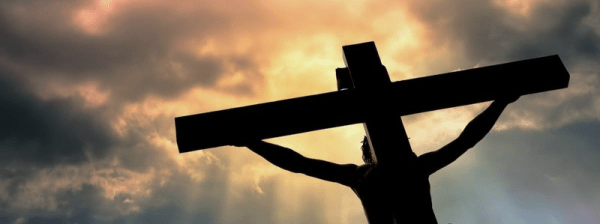
Easter: the bizarre death of Jesus

This April 2025 Christians will celebrate Easter. This feast is a celebration and commemoration of what took place in history, almost exactly 2,000 years ago in Jerusalem. It can be considered as the pivot of world history, bringing in a change that reverberates still around the world today.

In this blog post and the next I want to explore the deep meaning first of Jesus’ death, and then of his resurrection from the dead, for these are the events we commemorate each Easter.

Jesus’ death was, in one sense, a grave miscarriage of justice: the Roman governor, pressured by self-righteous jealous religious leaders who stirred up the crowd against Jesus, condemned the innocent holy prophet to die. But there is much more to it than this. Jesus himself, the night before his crucifixion, said that his blood would be shed “for the forgiveness of sins”.

It is a little-known fact that on three occasions the Gospels relate how Jesus predicted not only his death but also his resurrection! Referring to his death he said he would “give his life as a ransom for many”, and as the “Good Shepherd” he would “lay down his life for his sheep”. In other words, in Jesus’ understanding, his death was for the benefit of others, indeed for their salvation, for he came, he said, “to seek and to save the lost”.

The reason why Christians celebrate the death of Christ and make an instrument of torture – the Cross – a symbol of their faith, is that they see it as having accomplished a work of atonement for their sins. Most religions see that sins have to be punished or “paid for”, and our conscience admits that as guilty offenders we deserve God’s righteous punishment. But while other religions propose that we can obtain salvation by the good works that we are able to do to “pay for” our sins, Christianity gives us a vitally different message. We need to realise that we cannot ever “pay for” our sins however much good we seek to do, because we ought to do those good things anyway. Instead it is Jesus who came to “pay for our sins”, to make atonement, and he did that by dying “for us”.

This is why the Christian message is called “Good News”. This is why the death of Jesus is celebrated in churches throughout the world. It was the accomplishing of our salvation, as Jesus’ work of atonement makes possible the forgiveness of our sins. It is the only objective grounds upon which a holy and just God can offer free forgiveness while fully respecting the demands of justice: the just penalty we deserve was taken by Jesus. Why? Because he loves us! His death for our salvation is the supreme demonstration of God’s love and mercy towards us. 

On the cross Jesus cried out, “It is finished!” He was telling us that he has finally accomplished his atoning work. In anticipation he had said in prayer to God his Father the night before he died: “I have finished the work you gave me to do”.

This does not mean that everyone is thereby automatically forgiven; every one of us needs to ask our Saviour to forgive us personally, on the basis of his death for us. We need to turn from our sins and turn to Jesus in prayer; we need to thank him for his sacrifice which makes forgiveness possible. Then we must receive him as our Saviour and commit ourselves personally to follow him as the new Lord of our lives.

Clive Every-Clayton

You are loved

One of our most fundamental needs is to be loved. Oh the joy of knowing you are loved! You can put up with anything if you know you are truly loved. How our heart hungers and longs for love! “Love is (almost) all you need”. But a plaintive song in “Half a Sixpence” laments, “Where is love?” How many hearts are burdened by lovelessness! We appreciate any kindness shown to us, but oh! the deep personal longing to love and to be loved! And what anguish when relationships break up and love is lost!

One of the huge blessings of the Christian faith is to know that God loves us, and it is uniquely satisfying because his love is eternal, faithful, strong, forgiving, never-ending. God’s love starts in eternity past – before the creation of the world: “I have loved you with an everlasting love” he says. What comfort that gives the believer! “Underneath are the everlasting arms”: his love enfolds us in a warm eternal embrace.

How do we know? Jesus came from “the bosom of the Father” to tell us, and even to show us how great is his love. The Bible tells us, “God is love” (1 John 4.8) and love radiates unceasingly from God as the warmth radiates from the sun. As the children’s song says, “You can’t stop God from loving you”!

Most people think that God would love them if they were really, really good people, but they know they aren’t so they’re afraid God is against them. But Jesus teaches us that God even loves people who he calls sinners. Jesus’ self-giving on the Cross, for us unworthy sinners, is the great demonstration of how much he loves us. “God proves his love toward us, in that while we were still sinners, Christ died for us” (Romans 5.8). “Greater love has no-one than this, that he lay down his life for his friends” (John 15.13). “I am the Good Shepherd; the good shepherd lays down his life for the sheep” (John 10.11). God has shown how much he loves you by sending his Son to die on the Cross, so that through his sacrifice your sins may be forgiven, and you may be welcomed into a loving relationship with him forever.

The amazing thing about God’s love is that you do not have to earn it. You just have to believe it and turn to him, opening your heart to receive him as your Lord, your Saviour, and your Friend.

This is how Jesus stated it: “God so loved the world that he gave his only Son, so that whoever believes in him should not perish but have eternal life” (John 3.16). God’s love is a giving love: he gave his Son up for us; the Son gave up his life for us; on that basis, God is eager to give you eternal life as a “free gift” (Romans 6.23) if you will come to the risen Christ and receive him. “He who has the Son, has eternal life” (1 John 5.12).

How do you receive Christ? You do that by praying to God, right where you are; he hears you as you tell him you are sorry for your sins, you are turning away from them, and you want him to come into your heart to make you a true child of God. He will answer, because he loves you and desires to save and forgive you. If you are sincere, you will see how he answers that prayer, changing your life profoundly as you become a follower of Jesus.

Clive Every-Clayton

What about our failures?

There is one further aspect to the Christian’s struggle with ongoing sin in his or her life that I need to deal with. It is the universal experience of believers, albeit born again justified and children of God, that at times they still sin. Indeed, the new Christian may well feel more conscious of his moral imperfection after his conversion, whereas his sins didn’t bother him before. The new believer may be distraught when he sees that despite his conversion, he still falls into sin sometimes. (I refer principally to what we may consider lesser sins such as selfishness, ill temper, untruth, pride, jealousy, and covetousness – though this problem would also arise with worse sins). What does a good Christian do when he is conscious of having sinned? Might our sins annul our justification?

Here again, the Bible has the answer and it is good to read the first letter of John chapter 1 verse 8 to chapter 2 verse 2. This passage shows that no Christian is perfectly without sin. So we all have to deal with our failures as Christians. The passage tells us what to do, and gives a wonderful promise: “If we confess our sins, he is faithful and just to forgive us our sins and to cleanse us from all unrighteousness” (1 John 1.9).

To confess our sin means to acknowledge the wrong we have done and to tell God we are sorry. We need not confess our sins to any person, unless we have sinned against someone and we feel we should apologise for what we did. But as we confess our sin to God, we recommit to living as best we can without sinning.

God’s promise is that as we confess our sin, “he is faithful and just and will forgive our sin”. He is faithful to his fatherly promises to be gracious to his children; we can count on him to wipe them all away and never to come back at us to reproach us about them. When he forgives, he forgets. More: the promise says he will “cleanse us from all unrighteousness”. Christ’s blood was spilt so that we might be cleansed from our sins, and God’s faithfulness renews his fatherly forgiveness whenever we confess.

Technically, there is a difference between God’s fatherly forgiveness of his saved children and the full legal forgiveness granted as supreme judge, when he justifies the sinner when he believes, freeing him of all condemnation. God’s legal forgiveness is forever given. God’s fatherly forgiveness is ongoing: as we repent and confess sins committed in our Christian walk, he forgives them and cleanses them away. By this fatherly forgiveness, he renews his love towards us, his erring children, and as we return from our devious ways, submitting afresh to him in repentance, our fellowship with God is renewed.

In the Lord’s Prayer, Jesus tacitly recognised the imperfection of his disciples, when he taught them to pray, “Forgive us our sins as we also forgive those who sin against us”. In our confession, we ask and receive by faith the forgiveness our Father promised. But we are reminded in this prayer that we must show to others the like kindness that God has shown in forgiving us. This is a kind of spiritual law: the one who is forgiven must forgive. Indeed, refusal of forgiveness, according to Jesus, is a serious sin. We are to forgive others because we have been forgiven. Harmony is restored in our relationship both with God and with others as we confess our sins and forgive others. 

Clive Every-Clayton

Already saved? So why not sin?

The believer may count on the promises of the saviour, that he is saved, forgiven, and has eternal life: “Truly, truly, I say to you, whoever hears my word and believes him who sent me has eternal life. He does not come into judgment, but has passed from death to life” (John 5.24). The believer who is justified by faith in Christ is accepted by God as righteous and needs fear no final condemnation in God’s ultimate judgment. 

So one might wonder: why not therefore sin as much as I want, since I am justified and accepted at God’s final judgment? This question has its full answer in the teaching of the Bible. 

First, as I wrote in the previous post, the justification of the one who repents and believes in Jesus remains intact. God has promised it and we can count on him. Jesus in the verse already quoted promised “he will not come into judgment”: the ultimate salvation of the true convert is assured.

Two factors in our experience confirm this truth for us: first, at conversion, we repented and made a commitment not to sin any more. We obviously cannot stretch out our right hand to receive God’s forgiveness while our left hand continues committing all kinds of sin. We are saved from sin – not only from its punishment, but also from its grip on us. We dedicate ourselves therefore, as sinners forgiven by grace, not to betray God’s kindness. Rather, motivated by gratitude for our salvation, we will honour our commitment to follow Jesus as our master and Lord by doing his will, overcoming temptation and refraining from sin.

The second factor is vital in this: no-one is justified by faith who is not also, at the same time, born again by the Holy Spirit. They are both operations of the same conversion experience. And being “born of the Spirit” is a life-changing dynamic, as the Holy Spirit comes to make his dwelling in our hearts, and there proceeds to the work of purifying us. He gives new aspirations for a holy life, new love for God and a desire to please him. The Holy Spirit communicates the presence of Christ within us: the result is that we no longer desire to sin, but rather to obey and please our saviour. This is, in fact, the deep reason why the true believer does not continue in sin. The believer who experiences this has reassuring proof that the Lord Jesus has indeed saved him.

So God justifies you by granting you full legal forgiveness and a status of being accepted as righteous before God; he can do that because he also gives you the Holy Spirit to energise you in the way of holiness with new desires and new power to conquer sin. You have to commit to continual repentance, of course, taking a stand against all sin in your life. You will understand progressively what that entails, but conversion involves the decision in principle not to displease your Saviour. He has called you to be his disciple, he has called you to holiness, and your growth in Christian living involves further repentance of whatever sinful deed the Holy Spirit reproves you of.

Having said that, we are not totally delivered from sin in this life; there will always be a struggle between the old sinful pre-Christian nature, the “flesh”, and the nature renewed by the Spirit: hence the call and the promise, “Walk according to the Spirit and you will not fulfil the desires of the flesh” (Galatians 5.16).

Clive Every-Clayton

What does salvation mean?

The Bible makes clear that everyone needs salvation, and it is wonderful to know that “By grace you have been saved, through faith” as the apostle Paul writes to believers in Ephesians 2.8. The Bible word “salvation” summarises a number of spiritual blessings that every believer receives from the moment he is touched by God’s saving grace. 

Notice three things of importance in that quote from Ephesians. First, you “have been saved”; salvation has happened to you if you have repented and believed in Christ. It is no longer something you have to seek after or try to obtain. The verb is in the past tense: you have been saved, or as Jesus put it, you have “passed from death to life” (John 5.24). Secondly – the reason for that is that God has blessed you “by grace”. That means without you having to deserve it. God is so kind, he grants salvation freely by pure grace to those who could never deserve or merit it. Paul adds in Ephesians 2.9, “it is not because of works, lest anyone should boast”. So, thirdly, salvation is by faith, the faith that receives Christ as Saviour and Lord. Saving faith is not merely believing some facts; it is entrusting your life and your eternity into the hands of the Lord Jesus, beginning a new life in relationship with him. It is called “saving faith” because by that commitment or conversion a sinner is saved from sin and its consequences.

What does salvation mean, then? It means the believer, counting on Jesus’ promise, may know that he has become a child of God, that he has eternal life; he is saved from being eternally lost at the judgment. He is now reconciled to God, in good relationship with God. Salvation sums up all that and more: specifically the forgiveness of our sins is an important part of salvation.

When we are saved we receive the full forgiveness of all our sins. God wipes them all away. Furthermore, the Lord declares the believer in Christ to be acceptable to him in the day of final judgment. We are saved from the eternal negative consequences of our sins – we are free from condemnation. We have been saved from hell. 

The technical word for this is “justification”: “Since we have been justified by faith,” Paul writes in Romans 5.1, “we have peace with God”. We do not have to fear final rejection at the judgment day; we are accepted in Christ. We live our Christian lives therefore not in order to be saved from that judgment, but because, by God’s grace, we are already assured by his word that we are saved, justified, accepted as righteous, and free from ultimate divine condemnation. This is no small blessing!

Justification abolishes our guilt before God. Forgiveness clears our conscience from all that might accuse us. It’s all gone; our salvation is assured, so Paul uses the past tense when he writes to his colleague, “God saved us and called us to a holy calling” (2 Timothy 1.9). And note, he calls us to a holy life.

You might be thinking, “If my final salvation is assured, I could commit any sins I want, because I’m already justified”. Interestingly, Paul saw that response coming: “Shall we continue in sin, so that grace may abound?” His answer is categorical: “By no means!” (Romans 6.1, 2). For as God saves, forgives, and justifies us, he also calls us to holiness, giving us the Holy Spirit to transform us into saints! My next post will explain that more fully.

Clive Every-Clayton

Clarifying your identity

Many young people these days are confused about their identity. Some believe that by stating their chosen preferred identity, the problem is resolved – at last they know who they are. This is not the best way to go about this deeply personal and potentially complex issue.
The fact of deciding to follow Jesus brings the question of identity into a whole new perspective. The only one who ultimately knows us totally and can define who we are is our Maker and Saviour. By creation he has made us in his image, either male or female; but due to the entry of sin into human existence, an essential element of our identity is that we are fallen: “if we say we have no sin, we deceive ourselves and the truth is not in us” (1 John 1.8).

So there is something glorious in our human constitution – “in the likeness of God!” Yet there is something humbling too: we are sinners in need of redemption. As I shall explain further on, once you believe in the Lord Jesus Christ, you are redeemed: your status is radically altered. You have a new identity as “a sinner saved by grace”. But much more is involved in your new identity.

Your becoming a child of God is an important element in your new identity as a Christian believer. As a result you have become a brother or a sister of all the others who by trusting Jesus have become children of the same heavenly Father as you. You are a member of God’s family, which is also called the church. (The church, in its biblical meaning, is the company of born-again believers in Jesus). So as you meet up to worship with others who know the same saviour as you do, you find the family atmosphere of brothers and sisters in Christ.

A surprising word used in the New Testament to describe the believers is “saints”. This is not to be confused with the Middle Ages’ idea of super-good Christians with halos round their heads. Rather, when the apostles wrote their letters to quite ordinary believers, they greeted them as saints. It was a perfectly normal way of speaking about the believers in the local churches: Paul writes his letter to “the saints in Ephesus, the faithful in Christ Jesus” (Ephesians 1.1; see also 2 Corinthians 1.1, 1 Corinthians 1.1.) In Romans 1.7 they are “called [to be] saints”, that is, committed to a life of goodness, truthfulness, and obedience to God. Saintliness is in fact living a good down-to-earth Christian life, doing what Jesus wants his followers to do; and we receive help from the Holy Spirit to live as saints in the modern world.

So we are brothers and sisters, saints, beloved children of God, forgiven sinners, members of the family of God… the list goes on. All this because we have become believers: believers in Jesus who gave his life that we might be saved; and believers in God our Father who has “adopted” us (that concept is in the Bible too) as his dear children. This new identity that you received upon believing in Jesus, in many ways boosts your self-image; but it should do so in a way that keeps you humble, for all these blessings were granted out of God’s loving heart by grace. It was he who he drew you to himself. We do not deserve such kindness from Him, but he acts towards us not according to what we deserve, but out of his grace, which means his undeserved favour. 

Clive Every-Clayton

Being “born again”?

“Unless one is born again he cannot see the kingdom of heaven”, is Jesus’ categorical teaching. He insisted, “You must be born again” (John 3.3, 7). God operates this new spiritual birth, granting new life to people who turn in faith and repentance to the Lord Jesus Christ. It is the indispensable doorway into the kingdom of God; and it happened to you if you believed.

Another verse in John’s Gospel (1.12-13) makes this clear: “To all who did receive [Jesus], who believed in his name, he gave the right to become children of God, who were born … of God”. To be born of God (not by human descent) makes you a child of God.

How is a person born again, born of God? What does this verse say? By “receiving the Lord Jesus and believing in his name”. Have you trusted in Jesus for your salvation? By that faith you were born again.

The apostle Peter picks up this idea in his first letter as he writes to encourage believers: “Blessed be God! … According to his great mercy he has caused us to be born again” (1 Peter 1.3). He encourages his readers further on in verse 23: “you have been born again… through the living and abiding word of God”. This verse fleshes out the image of being spiritually like a new-born baby, born however not by a human process, but “born of the Spirit” (John 3.8) through the “seed” of the word of God.

The concept of being “born again” means that as the Gospel is received by faith, so the Holy Spirit of God communicates new life to the believer.

When this happens to you, what are the consequences? There are at least two: a new life has begun for you; you have become a child of God.

Let’s consider the first of these. When a baby is born he or she receives physical, human life. When you as a believer are born again, you receive life of a different kind: it is spiritual life, called “eternal life” and also “abundant life” (John 10.10). It adds an extra dimension to the life that you lived up till now. As physical life starts out very small, so new life in Christ has humble beginnings. Some babies are born screaming, while others are calm. Even so, some new believers are so overwhelmed by their experience of God’s saving power that they are instantly transformed by God’s saving love. Others, also born again by faith in Christ, experience God’s presence more quietly, almost imperceptibly.

But as the new-born baby slowly grows, so the new-born-again believer is called upon to grow. Peter continues this theme: “Like new-born infants, [you should] long for the pure spiritual milk [the milk of God’s word], that by it you may grow up into salvation” (1 Peter 2.2). We will look again at the whole aspect of spiritual growth, but here, the key element that Peter underlines is God’s Word, the Bible. It was the seed of God’s Gospel that fell into the prepared ground of your heart and began to bring forth fruit in a new life; that life is nourished by reading, studying, and meditating on further truths revealed in God’s Word.

So the Holy Spirit communicates a fresh upsurge of holy life in newly born-again Christians, promoting spiritual growth as they read the Bible and apply it in their particular circumstances. 

The Christian life is not therefore just acquiring new religious practices: it is the uprising of new life that needs to be nourished and encouraged.

Clive Every-Clayton

How to believe in Christ?

Whatever may have been your previous acquaintanceship with the person of Jesus, you have come, as it were, to hear his call, “Come, follow me”. Like those in the Gospels, you arose and followed him. It was a personal decision; you may not have understood too much about what it all involved, but you decided to open your heart and you asked Jesus to be your Saviour.

When out for climbing in some great mountains, it is indispensable to procure the services of a guide: the situation may prove perilous ahead. As you journey through life you may now have the services of Jesus, the only reliable Guide to human living at its best. You may trust him to lead you in the right path. There is no better Spiritual Master.

Jesus made numerous promises to those who would believe in him. That’s not simply to believe he existed, nor even to believe he was the Son of God, though these facts about him are foundational. Rather he was referring to a personal commitment between the believer and himself.

When I came to believe in Christ, the evangelist compared what I was about to do to the way a young couple get together. He said that the guy likes the girl and wants to get to know her over time, learning to love her, and desiring to enter a long-lasting relationship. “But,” he said to me, “the two are not married until they stand before the minister who asks them “Do you want to have this woman (or man) to be your lawfully wedded spouse?” In the same way, he said, Jesus says to you, “Do you want me to be your personal Lord and Saviour?” Then he asked me, “What do you want to say to him?” I acquiesced: I wanted to believe. Then he added, “Whenever anyone asks Jesus, ‘Do you want to accept this sinner as your disciple?’ He never says no!”

Maybe like me, you prayed that the Lord would “come into your heart” and save you. After I left the evangelist, I went for a walk, thinking that I had made an important decision that day. It was Easter Sunday afternoon, and I felt that as one “dead in trespasses and sins” I had now become alive in and with the risen Christ (Ephesians 2.5). 

So to “believe” in Jesus has that kind of meaning. He promised “eternal life” to those who believe in him (see John 3.16, 5.24, 6.47, 11.26). Eternal life is the gift of God; he gives it as we believe and receive Christ as Saviour and Lord, committing ourselves to him, to follow and obey as our new friend and Master. 

If I asked you, “Have you believed in Jesus like that? Have you received him as your Lord and Saviour?” – how would you reply? It helps our faith when we tell someone else that we have decided to follow Jesus. This is sometimes called “confessing Christ” and it allows you to exteriorise before a friend the decision that you have taken in your heart.

If you’re not sure if you’ve actually taken that step, there’s no harm in turning in prayer, just by yourself, and saying, “Lord Jesus, thank you for coming into the world to seek and save the lost like me; I open the door of my heart and receive you as my Lord and Saviour. Help me from now on to grow in my faith and to live as a Christian. Amen”

Jesus will gladly welcome you as his follower. 

Clive Every-Clayton

What is this new Life in Christ?

The Bible says we are to welcome those who are not yet strong in the faith, and as a mature believer I would welcome you if you are starting out as a Jesus-follower. New believers require help in reorienting their lives, both to understand what it’s all about, and to discover the steps towards spiritual growth. 

A new believer, returning into her habitual milieu, was asked after a while, “What’s happened to you?” She didn’t need to say she had turned to Jesus, but it became evident to her friends by a certain joy and peace that now characterised her life. But how would she – or you – answer that question: what’s happened to you? 

Well, the first thing that I trust has happened to you is that You have heard the good news of Jesus.

Whether you heard it on the internet, in a local meeting, or read it in a book, you have come to understand that “Jesus Christ came into the world to save sinners” (1 Timothy 1.15). This is the essence of the Good News (which is what the word “Gospel” means). It is good news because we are all to some extent sinners and therefore we all need to be “saved”.

When Jesus’ mother Mary was still a virgin, Jesus’ arrival by a miraculous birth was announced to Mary by an angel. Joseph, Mary’s fiancé, was stunned and confused by the news, until he too had an angelic visitation.  An angel appeared to him in a dream, explaining that it was God’s miraculous work that had made Mary pregnant: “she will give birth to a son,” said the angel of God, “and you are to give him the name Jesus, because he will save his people from their sins” (Matthew 1.20-21).

Jesus came, therefore, to save people from their sins. When you heard this message, you began to understand  that in God’s sight you were in the category of “sinner”. Probably this was quite a humbling experience – no-one likes to be called a sinner; but the Bible is clear: “all have sinned and fall short of the glory of God” (Romans 3.23). None of us is perfect as we should be; we all have a bad conscience and know we have done wrong. 

Not only that, but you were made to realise that you were in a serious predicament before a holy and just God. You needed his forgiveness. Then you heard the Good News, the essence of what the apostles preached: “Christ died for our sins… and was raised from the dead” (1 Corinthians 15:1-4). Though our sins deserved God’s just punishment, Jesus stood in for us and bore that penalty by dying “for our sins” on the cross. This is the message that Jesus wants diffused throughout the world: “preach the Good News to all creation”, he said, adding, “Whoever believes and is baptised will be saved” (Mark 16.15-16).

As you heard this message, you were encouraged to turn to the Saviour, the Lord Jesus Christ. You opened your heart to him in prayer and faith, calling on him to save you. You put your trust in Jesus and he welcomed you as one of his followers, his “disciples”; this essentially means a learner, an apprentice in the art of good living. Your new life had begun, developing into a process of spiritual growth.

At Jesus’ school there is a lot to learn: spiritual growth, like physical growth, takes time; the important thing for you today is to say to yourself, the process has begun.

Clive Every-Clayton

Blog at WordPress.com.

Up ↑