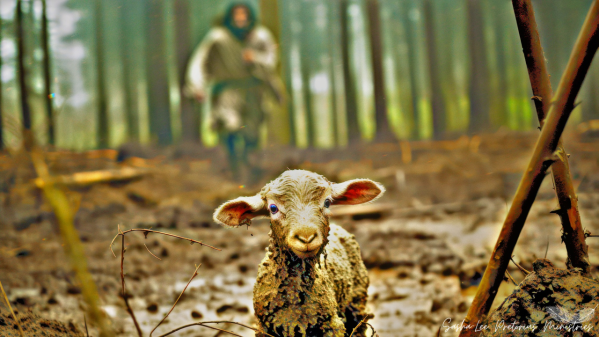
Understanding the human condition

One element of our human reality is our moral awareness. We are able, albeit imperfectly, to distinguish right from wrong. There is another more perturbing element of our reality, however: we are obliged to acknowledge at times a degree of “wrong” both in our conduct and in our inner feelings and desires. To face up to this reality is not a pleasant exercise – but it can be salutary.

The experience of well-known writer and Oxford don C.S. Lewis, when he was a young teacher at the university, shows exemplary honesty. He had a deep antagonism towards the Christian faith, but little by little he saw himself obliged to yield to the unremitting evidence of “Spirit” (as he called God at that time) and he discerned that God was coming closer and closer to him. He admits he was no more in search of God than a mouse was in search of a cat. But he was blessed with a conscientious spirit; where others would have shrugged their shoulders and carried on, he realised he must face reality and he needed a deep remedy. An important step came when, as he wrote in his biographical account, “For the first time I examined myself with a seriously practical purpose. And there I found what appalled me; a zoo of lusts, a bedlam of ambitions, a nursery of fears, a harem of fondled hatreds.” Rare are those who have such insight to the depth of their human reality.

The fact is that all humans suffer from a strange dual reality: we are capable of great compassion and devotion to duty, pouring out our energies into assisting the sick, the needy, the dying. Yet we also feel at times such fury when our wills are crossed that we could seriously harm those who antagonise us. Our inner being is deeply self-centred, imperiously requiring the fulfilling of our selfish desires, claiming the freedom to do as we wish and ready to overcome anyone who stands in our way.

I have previously quoted Blaise Pascal’s brilliant analysis of this dual reality; he says it is dangerous to explain to man his beastliness without pointing out his greatness also. But he adds, “it is also dangerous to make too much of his greatness without his vileness. It is still more dangerous”, he concludes, “to leave him in ignorance of both, but it is most valuable to represent both to him” (Pensée §121/418). 

Maybe now is the time to consider this more personally. We are not, of course, obliged to deny the positive aspects of our reality. But we all need the honesty of a C.S. Lewis to admit how deep evil runs within our hearts. When we acknowledge this, we should know that we are not alone in this destabilising discovery; “All we like sheep have gone astray; we have turned – every one – to his own way”. This is the universal human condition, and we must understand it, humbling though it is. 

What makes us willing to face it, is knowing that there is a remedy – and there is! If we are “lost sheep”, we may know also that there is a “Good Shepherd” who gave his life to deliver his sheep from the horrors of their unfortunate condition.

Clive Every-Clayton

God calls people

When God comes to call us, he doesn’t softly say, “Do you mind if…? Rather, he comes as the sovereign Lord that he is, rightful supreme master of the universe with all the weight of his glory… yet, for all his rightful power, he does come asking a question. This is specially his approach when he comes to a person who has sinned: “Adam, where are you? … Have you eaten of the forbidden fruit?” (Genesis 3.9-11). God doesn’t ask such questions to get information, of course. Rather it is his way of gently inviting a response of humble admission of sin.

When a woman taken in the very act of adultery was dragged by the Jews before Jesus, he first deals with the accusers, and when they leave, duly humbled, his first words to her are, “Woman, where are they? Has no-one condemned you?” Then he sets her free: “neither do I condemn you” (John 8.3-11).

When God “arrested” the fiery aggressive persecutor Saul of Tarsus on the Damascus road, yet again he asks a question: “Saul, Saul, why are you persecuting me?” (Acts 9.4).

Isn’t that astonishing? How would you expect God would come and speak to you? You may be afraid of his almighty judgment; you may expect him to come down on you like a ton of bricks and condemn your moral failings. But no: he would ask you a question. Like: “How are you doing?” If God asked you that, it would make you think, wouldn’t it? Well, how are you behaving? Do you need God’s forgiveness? Would you like God to wipe away those things you have on your conscience from the inglorious days of your past?

Jesus actually asked people, “What would you like me to do for you?” So maybe God would ask, “Would you like the forgiveness, the peace, and the joy that I would like to give you?” Or again, “Are you finding life tough going?” Or, “would you like to know the way to real human fulfilment?”

After giving us pause for thought by posing questions like those that make us conscious of our need of God’s mercy, then he would come with his imperious advice – which is more of a command than a suggestion!

Maybe God is coming to you right now, saying: “The time is ripe: mercy is available. I love you in spite of how you have behaved: turn right around, ‘come to me and I will give you rest’ (Matthew 11.28) – the inner rest and peace you’ve always longed for. You’ve been looking in the wrong place. I will welcome you if you repent and turn to me. I will make you anew”.

Clive Every-Clayton

What is faith?

Faith is essentially very simple, though it is deeply profound. We all have faith in people every day – we have faith in the bus driver, in our teacher, in our doctor, in the lady down the road who passes on the latest gossip, though we may sometimes doubt her.

The young couple about to get married have faith in the love and faithfulness of each other, so they make their commitment “until God shall separate them by death”. 

The scientist has faith that the world runs – and will continue to run – according to consistent order; he has faith in the scientific research papers he reads, without knowing how truthful the academic who wrote them really is.

Even the atheist has faith in his ideas – for his atheism is a “faith system” according to one-time atheist Alister McGrath.

Whatever religion people may have, they have faith in it. The question is: is that faith well placed? How do they know that what is proposed is reliably true? People who always ask that question can end up totally sceptical, because it is not easy to find a basis for our trust that is 100% watertight. In fact, the only basis that qualifies for that degree of truth would be a God of absolute truth.

I have set forth that basis as we looked at Jesus, who affirmed, “I am the truth” (John 14.6) and that he “came down from heaven” to “teach just what God the Father had taught” him to say; so “whatever I say is just what the Father has told me to say,” and his “word is truth” (see John 6.38; 8.28 and 40; 12.50; 17.17).

As we listen carefully to Jesus’ words, and consider the purity of his life and the wisdom of his teaching, we are led to believe that he could indeed be the unique incarnation of God and the Saviour of the world. As we consider what he taught about salvation and forgiveness through his death for us, and examine the evidence for his resurrection from the dead, we are logically led to the conclusion that he must indeed be who he said he was. This is the first step of faith.

On that basis, we must go further, because real faith goes beyond simple belief in facts; it must lead us to trust. Faith as trust is essential in every human relationship, and so it is in our relationship with God. When Jesus calls people to follow him, he makes promises, and invites us to trust him to fulfil them. His promises are recorded in the Gospels and are open to “whoever believes in him” (John 3.16). 

Even if we’re not fully convinced that he came from God, as we pay attention to his words, faith and trust grow in our hearts. Jesus promises rest of soul, spiritual new birth, forgiveness of sins, abundant life and eternal life – the full, true meaningful life we deeply long for. All this and more is included in the restoring of a harmonious loving relationship between the forgiven sinner and God our gracious Saviour. This is – I keep repeating – the human fulfilment in life that we were created for, and we come to experience it as our faith expresses itself in trust.  In a prayer of commitment, we receive Jesus as our Saviour, to forgive our sins; we acknowledge him as our Master whose teaching we will believe and follow, and we commit ourselves to him as our Lord whom we will learn to love obey from now on.

Have you expressed your faith in that kind of prayer? 

Clive Every-Clayton

Justified by faith

My recent posts have emphasised God’s amazing grace both in sending his Son to bear the just penalty of our sin, in our place, on the cross, and – on that basis – offering full, total, and free forgiveness of all our misdeeds, however awful they may have been. I explained that the divine forgiveness God grants takes the fuller form of “justifying” us. That means, he declares us officially not guilty and free from all condemnation.

This is a weighty theme, and one that is not as well-known and understood as it deserves, so I will clarify it here once more. It is the answer to a really profound question, formulated by theologian R.C. Sproul as “what may be the deepest existential problem a human being can ever face: how can a sinner, an unjust person, ever withstand the judgment of a holy and just God?” If we are all moral failures, it would seem we cannot survive in such a judgment. BUT… this is where justification comes in.

It helps to consider how God manages to justify the guilty sinners that we are – under three aspects that are expressed in the Bible. First, sinners such as me and you can be “justified by grace” (Titus 3.7); that means God grants this status, this salvation, purely out of his heart of love to the undeserving. We don’t have to earn it – indeed, we cannot. It is a gift freely given; that is the meaning of grace. This fact gives hope to the most awful of sinners. 

Secondly, we are justified on account of Jesus’ death, through the “redemption” accomplished through the shedding of his blood, (Romans 3.24-25, and 5.9), whereby he made a full atonement for our sins. This is unique in all the world’s religions – a full, perfect, and sufficient sacrifice for the sins of the world has been accomplished by the only one who ever could accomplish it – Jesus, the incarnate Son of God. Without that, the Just Judge of all the earth could not pardon a sinner without violating the requirements of Justice. That’s why God can justify us through Jesus’ work, for he alone fully paid for our sins in our place.

I have dealt with those two bases in past posts, but I have not yet mentioned how this full total pardon can be yours. If God is so eager to forgive – and he is – what do you have to do to be justified? The Bible’s answer is that we are “justified by faith in Jesus Christ” (Galatians 2.16, Romans 5.1). That means we are totally forgiven and justified by God when we place our trust in the Lord Jesus and in the atoning work he did for us. This is the authentic and radically marvellous message of Christianity: the apostles made it clear in their early proclamation of the Gospel – for example, “All the prophets bear witness to Jesus, that everyone who believes in him receives forgiveness of sins through his name” (Acts 10.43). And again, “Through Jesus the forgiveness of sins is proclaimed to you, and by him all who believe are justified from all things from which you could not be justified by the law” (Acts 13.38-39).
So we who are guilty before God can be exonerated, acquitted, justified –

1. By God’s gracious kindness

2. Because Jesus died for sinners, and 

3. When we repent and put our trust in the Lord Jesus, calling on his name to save us.

It is this last faith commitment that clears away the barrier between us and God so that we experience his reality, his love and his transforming power. 

Clive Every-Clayton

The unmentionable

No-one in polite society ever talks of death – yet everyone, deep down, is afraid of it. Howard Inlet in Collateral Beauty expressed it: “At the end of the day, we long for love, we wish we had more time. And we fear death”.

When I was an adolescent I remember one night lying awake at night thinking about death and the great Beyond. I was so perturbed I finally got out of bed, crossed the landing to my brother’s room (a year and a half older than I) to try and get some reassurance. It was only some years later that the true answer came to us both and ultimately made us into workers for the Gospel.

One Bible verse I did know in my teens was, “The wages of sin is death” (Romans 6.23). The Bible, right from the beginning, makes it clear that death comes as a punishment for sin; we all die, because we are all sinners. God is kind enough not to inflict the penalty immediately when we sin; he allows time for people to remain alive and repent and find forgiveness.

The “death” that is the “wages of sin”, however, is not merely physical death. It is also what the Book of Revelation calls “the second death”, which is hell. This is described by Jesus as a place of “torment” where there is “weeping and gnashing of teeth”. There are sobering warnings throughout the Bible of the awful reality of eternal punishment; there are also wondrous depictions of eternal bliss and eternal life for those who have found mercy, obtained grace and been forgiven.

It is because “the soul that sins shall die” (Ezekiel 18.4) that the atoning work accomplished by Jesus had to take the form of his death. The sinner must die – so justice will be done; but if a representative bears the penalty in the place of the guilty, they may go free. That is why Jesus died: he said he would “give his life as a ransom for many” (Mark 10.45). “Christ also once suffered for sins, the righteous for the unrighteous, that he might bring us to God” (1 Peter 3.18). “He himself bore our sins in his body” on the cross (1 Peter 2.24).  He came to deal with our sin problem, “to put away sin by the sacrifice of himself” (Hebrews 9.26). It was the supreme demonstration of his love for you and me: “Greater love has no-one than this”, said Jesus, “than to lay down his life for his friends” (John 15.13). “I am the Good Shepherd”, he said, “The Good Shepherd lays down his life for the sheep” (John 10.11).

If you ever doubt that God loves you, look with the eye of faith at the cross where Jesus bore your sin and your death penalty, to save you from eternal death. This is the great message of the Gospel: “God shows his love for us in that while we were still sinners, Christ died for us” (Romans 5.8).

This loving service, indispensable for our forgiveness, was accomplished by Jesus in human history, at Jerusalem, almost 2,000 years ago, and its value is such that on that basis any sinner may turn to Christ in faith and find salvation.

Our response must logically be that of thankful faith. Once we grasp what Jesus did for us, how can we but turn from sin and open our hearts in grateful love to such a Saviour? Once we do that, we need no longer fear death: the verse that begins, “The wages of sin is death”, ends, “but the gift of God is eternal life through Jesus Christ our Lord” 

Clive Every-Clayton

A good conscience

The philosopher Emmanuel Kant was impressed, he said, by two things: the starry sky at night and the moral law within. The stars tell of the greatness of the Creator; the conscience speaks of his holiness.

When the holy Creator made persons in his likeness, he inscribed into the depths of our inner nature a consciousness of right and wrong. This is one of the outcomes of our species being made “in the image of God”. Indeed, our conscience speaks with a quasi-divine authority, warning us of temptations and reproving our faults.

Did you ever stop to think that everyone without exception knows what it is to have a bad conscience? Our conscience tells us, in spite of ourselves, when we’ve done wrong and it makes us feel bad. It is our inner sense of justice. When we sin, it tells us we are guilty.

It is important to know how to deal with this uncomfortable feeling of guilt. The wise Swiss Doctor Paul Tournier penned a book entitled, “True and False Guilt”, showing that false guilt is that which comes from being criticised by people, and we can feel guilty when we have actually not done wrong.

Our conscience judges our actions by the light of our own “inner law”. The voice of conscience is a universal experience, but the “inner law” by which we judge ourselves varies from person to person, and we can either educate it or relax it, consciously or unconsciously.

Although our conscience is not therefore an infallible moral guide, it does make us aware of the wrongness of temptations, and if we listen, it makes us conscious of our sins. Happy the one who has a good clean conscience!

We are endowed with conscience so that we are constantly reminded that we should do good, not evil. The reason that the experience of a bad conscience is universal is that we are all morally imperfect; we all err, make moral mistakes, fall short of our duty. So through our conscience, God is telling us that we are sinners and we need forgiveness.

Forgiveness is one of our heart’s deep needs; without it, people have been led to despair, to suicide, to hopelessness and even to madness. The problem, and the good news, are expressed in the words of Psalm 130.3-4: “If you, O Lord, kept a record of sins, O Lord, who could stand? But with you there is forgiveness”. Yes, God is in the business of forgiving sinners!

And when God forgives, he does it well! He wipes the slate completely clean! “I will forgive their wickedness and will remember their sins no more”, he says (Hebrews 8.12). “Though your sins are like scarlet they shall be as white as snow” (Isaiah 1.18). Nothing else in all the world can work that miracle of real forgiveness; it is God’s own speciality. If you need forgiveness (and who doesn’t?) you must apply to Him.

And getting forgiveness is the gateway into the harmonious relationship with God that we were made for, that gives true human fulfilment. So how do we get it?

I’ll take a few more blog posts to make it clear, as it is so vital and wonderful. But just realise this first: you can’t buy it, you can’t earn it, you don’t deserve it. It is a gift! God gives it because he is a God of grace.

Clive Every-Clayton

Blog at WordPress.com.

Up ↑