
I have been busy these last weeks preparing and giving lectures here in the Highlands of Scotland on a better way to conceive of our human reality.
Whether we like it or not, we in the West live in an atmosphere fashioned by a secular mind-set, and through this grid we seek to understand the way people think and behave. Some months ago, certain leading intellectual thinkers, politicians and academics meeting in London insisted that we have not been well served by the modern secular “story” – the worldview beclouding our western society with its morose and unhelpful ideas about our human meaning and value.
These thinkers are proposing a different approach, and although not all would adhere to a religion, there is a basic realisation that without a Transcendent framework, society tends to descend into a kind of hopeless moral relativism that brings on the anguish we see increasingly in the West.
As a Christian, I wholly concur that we need a “better story”, and my lectures have been addressing that need in various areas of our self-understanding. My basic thesis has been that the atheistic materialism underlying the secular story is unhelpful and psychologically damaging. It is a factor contributing to people’s confusion about their human reality, the rise of mental ill health, and the prevailing sense of hopelessness and despair. It is the hidden cause of a lot of the deterioration of our modern society that we have been sadly witnessing these last fifty years or more.
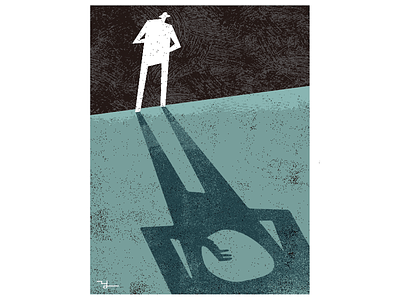
Why is the materialist-atheist scenario so harmful? Because it proclaims that we all have come ultimately from an impersonal beginning – an immense explosion of energy and matter which, over billions of years, instead of obeying the second law of thermodynamics and deteriorating progressively into total disorder, has somehow managed – by some unaided process – to actually bring about the world we see around us with all its life, variety, beauty, and splendour. The essential blind spot of this “story” is its absence of any original personal Creator as the valorising ground of our human personality.
Dr Francis Schaeffer discerned this years ago, when, commenting on the thesis that “man is the product of the impersonal, plus time plus chance”, he wrote: “no-one has succeeded in finding personality on that basis, though many have tried. It cannot be done”.
This means that if you begin by adopting the atheistic materialist explanation of the origin of all things in an impersonal explosion of matter and energy, there is no way you are going to be able to establish the reality of human personality. That first assumption leads inexorably to an understanding of the human condition which cannot account for – and indeed undermines – all the marvellous enjoyable realities of our personal existence: our intelligence and rationality, our emotional nature, the reality of love, freedom to choose and to exercise our own will, our ability to communicate, and our moral sensitivity. All these much appreciated aspects of our personal lives have no real basis following the story told by secular materialism; it contradicts our well-known reality and would undermine our true personhood. This makes evident the falseness of that story: we know that our personal faculties are real and precious, so any explanation that cannot account for them must be wrong.
Instead of assumptions that do not explain in positive terms who and what we are – but rather confuse us – what a relief to turn to the “better story” that an infinite and personal Creator made humankind in his image; that both valorises us and truly explains who we really are.
Clive Every-Clayton
 Authentic Hope for Answers